Where does your backyard cat go when the rain starts? If the honest answer is “under the car,” it’s time for an outdoor cat house. I’m a dog person, but my neighbour’s cat, Ginger, spends more time in my garden than my beagle does. After one soggy week of watching her shelter under a wheelbarrow, I built her a proper den. Here are ten ideas that work, plus the safety rules I follow.
What a Good Shelter Needs
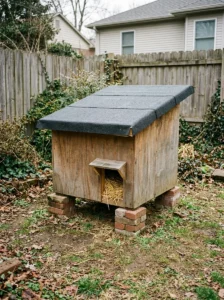
Short answer: dry, snug, and safe. Cats warm a small space with their own body heat, so an interior around 18 to 24 inches works better than a mansion. Raise the floor off damp ground, slope the roof so rain runs off, and keep the doorway about six inches wide. Face it away from the wind.
Think about who’s using it. Your own cat? A neighbour’s? A stray that’s turned up? If the cat isn’t yours, check with the owner or a local rescue before you build. And if a cat looks thin, injured, or unwell, call a vet or rescue instead of relying on a box.
10 Outdoor Cat House Ideas for Backyard Cats
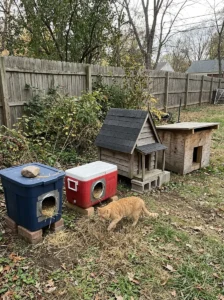
Quick builds
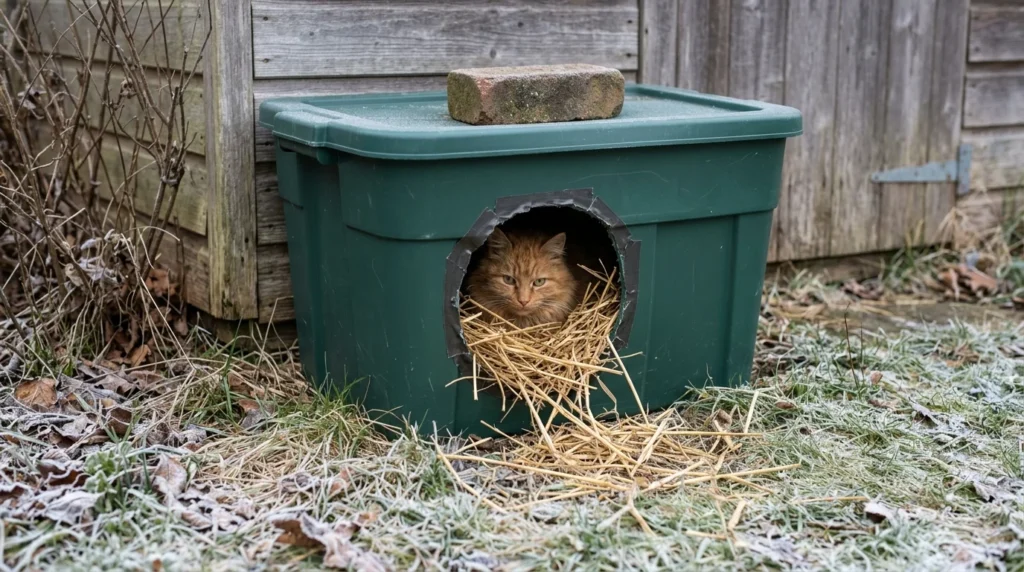
1. The Storage Tub Den. Cut a doorway in a plastic tub, add straw, and set it on bricks. Waterproof and ready in thirty minutes. Sand the cut edge smooth.
2. The Tub-in-a-Tub. Nest a smaller tub inside a bigger one and pack the gap with foam or straw. Cut matching doorways. Much warmer than a single tub.
3. The Cooler House. An old foam cooler already insulates. Cut a doorway and cover the inside with thin plywood so nobody nibbles the foam.
4. The Crate Cottage. Turn a sturdy wooden crate on its side, add a plywood roof with a small overhang, and line the floor. Rustic and cheap.
Weekend builds
5. The Double-Wall Wooden House. Two plywood boxes, one inside the other, with insulation in between. Slope the roof slightly. It lasts for years.
6. The Dog House Makeover. Dog owners, this one’s ours. Shrink the big doorway with a wooden panel, line the walls with foam board, and add straw. Free, sturdy, and already weatherproof.
7. The Flap-Door Shelter. Hang a flexible plastic flap over the entrance to block wind. Test that it swings easily from the inside.
8. The Two-Room Den. A small entry chamber leads to the sleeping chamber. The first room catches the draft, and the second stays cozy.
9. The Porch Platform House. Build on short legs and add a tiny porch. Cats love sitting at the door and watching the garden.
10. The Under-Deck Hideout. Tuck a box shelter beneath a deck or porch, out of rain and wind. Keep the doorway clear of snow and leaves.
The Bedding Mistake Almost Everyone Makes
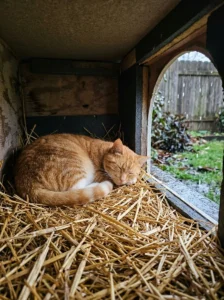
Here’s what I got wrong at first. I stuffed Ginger’s den with a soft old blanket. Looked lovely. But blankets and towels soak up damp, and once they’re wet, they stay cold. In freezing weather they can turn stiff as a board.
Straw is the better choice. It sheds moisture and keeps its fluff. Make sure it’s straw, not hay, which holds water and can go moldy. Fluff it every few days and swap it when it’s damp.
Picture a freezing midnight, wind rattling the fence, and a cat tucked into a golden nest with only her nose poking out. That’s the goal.
A Real Example From Next Door
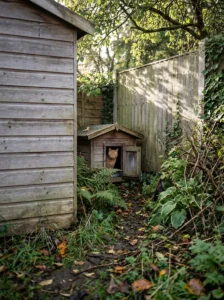
Ginger ignored her first shelter for a week. I’d put it right by the back door, where the dog and I walked past all day. So I moved it behind the shed, facing a wall, with the flap angled away from the wind. Two mornings later, a damp patch of straw told me she’d moved in. Cats like quiet corners, not busy ones.
Mistakes and Safety Warnings
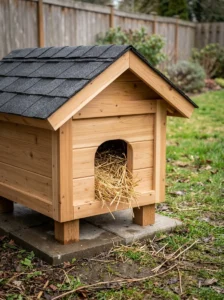
Skip electric heating unless the product is made for outdoor cat shelters, and keep every cord out of reach. Add tiny vent holes near the top so damp air can escape. Never seal a cat inside, and check the shelter often.
Sand every edge, sink every screw, and use non-toxic paint, dried fully. Keep antifreeze and other chemicals well away, because they’re dangerous to cats. Check water bowls daily, since they freeze fast.
Keep dogs away from the shelter, too. Even friendly ones can frighten a cat out of her hideout. And if a cat seems sluggish, cold to the touch, or unwell, call your vet straight away.
Ready to Build an Outdoor Cat House?
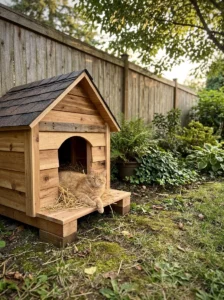
You don’t need all ten. Pick one design, keep it small, fill it with straw, and tuck it somewhere quiet. A good outdoor cat house is dry, snug, and out of the wind. Build it, check it now and then, and let the cat decide when to move in.
Got a dog at home, too? Have a look at my post on cozy dog beds that don’t wreck your living room. And tell me: which backyard visitor are you building for?