Dog odor in the house is one of those things that can creep up gradually enough that you stop noticing it yourself, until a visitor’s reaction (or a particularly honest family member) makes it clear the situation needs addressing. This guide covers what’s actually worked for keeping our home smelling genuinely clean, despite having two dogs who spend plenty of time indoors.
Addressing the Source: Your Dog’s Own Hygiene First
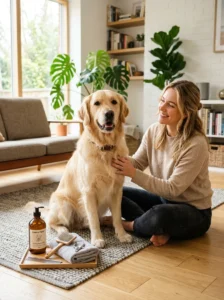
Before focusing purely on household cleaning strategies, it’s worth confirming your dog’s own hygiene routine is appropriately managed, since persistent odor often traces back to the dog rather than purely environmental buildup. Our bathing frequency guide and troubleshooting persistent odor guide cover this in detail — addressing any underlying cause (ear issues, dental problems, skin conditions) matters more than household cleaning alone if the odor is genuinely originating from your dog rather than accumulated environmental sources.
Bedding: A Major, Often-Overlooked Odor Source
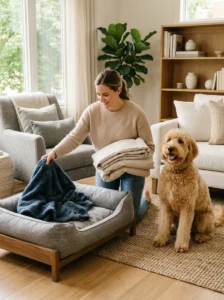
Your dog’s bedding absorbs oils, dander, and general odor over time, making regular washing genuinely important, not just an occasional nice-to-have. Washing dog beds, blankets, and any other regularly-used fabric items every one to two weeks, using a pet-safe detergent, makes a significant difference in overall household odor that’s easy to underestimate until you actually establish this habit.
Furniture and Carpet: Where Odor Accumulates Over Time
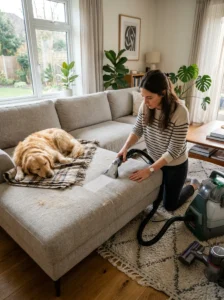
Beyond visible hair, covered in our pet hair removal guide, furniture and carpet absorb odor-causing oils and dander over time, even without an obvious accident or spill. Regular vacuuming helps, but periodic deeper cleaning — steam cleaning carpets, or using an enzymatic cleaner on upholstery — addresses embedded odor that surface cleaning alone doesn’t fully resolve.
Enzymatic Cleaners: Why They Work Better Than General Cleaners for Pet Odor
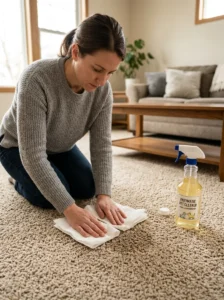
This was a genuine discovery for us — general household cleaners often mask odor temporarily without actually breaking down the organic compounds causing it, while enzymatic cleaners, specifically formulated to break down biological material like urine, saliva, and other pet-related residue, address the actual source rather than just covering it up. For any specific accident spots, particularly on carpet or upholstery, an enzymatic cleaner genuinely outperforms general-purpose cleaning products.
Addressing Specific Accident Spots Properly
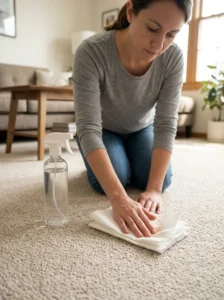
If you’re dealing with a specific area where an accident occurred, proper treatment matters significantly for fully resolving the odor, not just visible cleanup:
1. Blot up as much liquid as possible immediately, rather than rubbing, which can push the liquid deeper into carpet or upholstery padding
2. Apply an enzymatic cleaner specifically formulated for pet odor, following the product’s instructions for application and dwell time
3. Allow the cleaner to fully dry rather than rushing the process, since enzymatic cleaners need time to actually break down the residue
4. Avoid using ammonia-based cleaners on pet accident spots, since the smell can actually resemble urine to a dog, potentially encouraging repeat marking in the same area
Air Quality and Ventilation
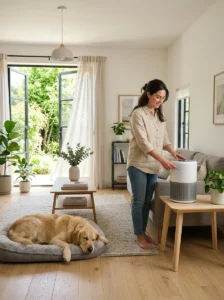
Beyond direct cleaning, general household ventilation and air quality management support overall odor control. Regular use of exhaust fans, opening windows when weather allows, and considering an air purifier with appropriate filtration can all contribute to a fresher-smelling home, complementing rather than replacing the direct cleaning strategies covered throughout this guide.
Managing Litter Box or Designated Indoor Bathroom Areas
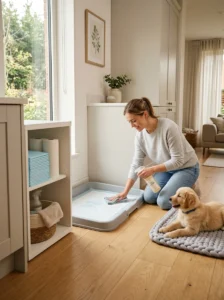
If you use puppy pads, an indoor designated bathroom area, or any similar setup, particularly relevant during house training covered in our potty training guide, keeping this area scrupulously clean and changed frequently prevents it from becoming a significant, concentrated odor source within your home.
Why Scented Products Alone Don’t Solve the Problem
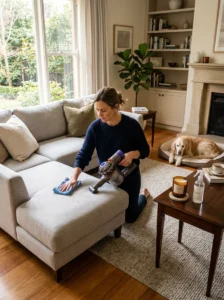
It’s worth being direct about this: air fresheners, scented candles, and similar products mask odor temporarily without addressing the underlying source, and in some cases, the combination of pet odor and strong artificial fragrance can actually be more unpleasant than the original issue alone. These products work best as a complement to genuine cleaning, not a substitute for it.
Building a Sustainable Household Odor Management Routine
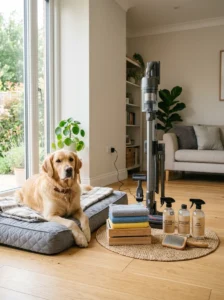
Rather than reactive cleaning only when odor becomes noticeable, building consistent habits — regular bedding washes, periodic deeper furniture and carpet cleaning, and prompt attention to any accidents — tends to keep overall household odor manageable without requiring intensive periodic deep cleans to address significant accumulated buildup.
When Persistent Odor Suggests a Bigger Issue
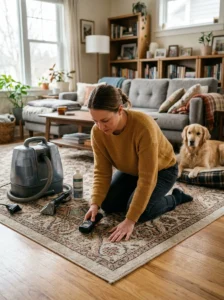
If you’ve addressed your dog’s hygiene, washed bedding regularly, and done thorough cleaning of furniture and carpets, but odor persists significantly, it’s worth considering whether there’s an accumulated issue requiring more intensive intervention — professional carpet cleaning, or in cases of significant, longstanding accidents, sometimes even carpet padding replacement if odor has penetrated that deeply over time.
Litter Box Adjacent Considerations for Cat-Dog Households
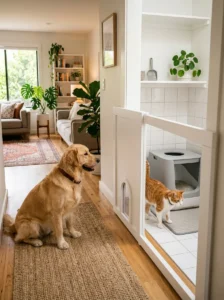
If your household includes both dogs and cats, it’s worth knowing that litter box odor and cleanliness, while not directly a dog-grooming topic, can contribute to overall household odor perception in a multi-pet home, and dogs sometimes show interest in litter boxes in ways that can create their own complications. Keeping litter boxes in a separate, dog-inaccessible area, alongside the dog-specific odor management covered throughout this guide, supports better overall household odor management in mixed-pet households.
How Humidity Affects Household Odor Perception
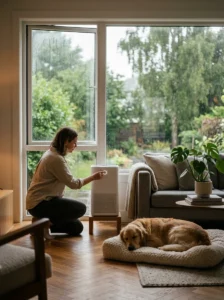
Living somewhere with significant seasonal humidity variation has taught me that odor seems to become more noticeable during humid periods, even without any actual change in your dog’s hygiene or your cleaning routine. This isn’t purely imagined — higher humidity can affect how readily odor compounds become airborne and noticeable, which is part of why some households notice odor seeming to fluctuate seasonally even with consistent care practices. During particularly humid stretches, slightly increasing ventilation efforts or air purifier use can help offset this seasonal perception shift.
Odor Management for Multi-Dog Households Specifically

With two dogs, odor management involves coordinating care for both simultaneously, which can create more cumulative household odor than a single-dog household if not actively managed. We’ve found that staggering bath schedules slightly (rather than both dogs needing baths at exactly the same time) and being particularly diligent about bedding rotation, given that two dogs’ worth of bedding accumulates odor more quickly than one, has helped keep our overall household odor genuinely manageable despite having double the potential source.
The Connection Between Diet and Household Odor
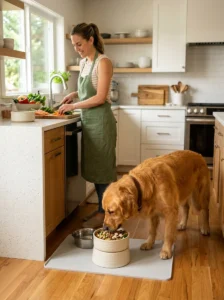
Beyond your dog’s own grooming and hygiene, diet quality can indirectly affect household odor through its impact on both skin oil production (covered in our shedding and skin guides) and stool odor, which contributes to household smell particularly if you have an indoor designated bathroom area or simply during regular outdoor cleanup. A high-quality, appropriately digestible diet generally produces less pungent waste than lower-quality options with poorly digestible filler ingredients, which is worth considering as part of a holistic approach to household odor management beyond direct cleaning strategies alone.
Building Odor Management Into Your Home’s Overall Design

For owners building or renovating with pets specifically in mind, a few design considerations can make ongoing odor management genuinely easier — choosing flooring that doesn’t readily absorb odor (tile or sealed hardwood rather than untreated carpet in high-traffic pet areas), ensuring adequate ventilation in spaces where your dog spends significant time, and creating a designated, easily-cleaned space for food and water bowls, which can otherwise become an overlooked odor source if spilled water or food residue isn’t promptly addressed.
When to Suspect a Source Beyond Your Dog Entirely
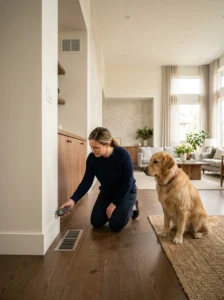
It’s worth acknowledging that not all household odor problems actually originate with your dog, even in a pet-owning household where it’s natural to assume that’s the source. Mold, plumbing issues, or other unrelated household problems can sometimes be mistakenly attributed to pet odor simply because a dog is the most obvious potential source in the home. If you’ve genuinely addressed all the dog-related factors covered throughout this guide and odor persists in a way that doesn’t seem to track with your dog’s actual presence or activity patterns, it’s worth considering whether an entirely separate, non-pet-related source might be contributing.
Seasonal Deep-Cleaning as Part of Odor Prevention
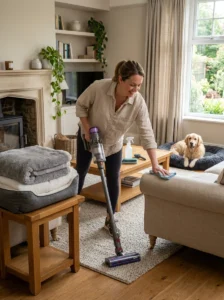
Beyond the regular maintenance habits covered throughout this guide, scheduling a more thorough seasonal deep clean — professional carpet cleaning, a comprehensive furniture cleaning session, and a full review of bedding and fabric items throughout the home — provides a periodic reset that ongoing regular maintenance alone sometimes can’t fully achieve. We’ve found that timing this seasonal deep clean to align with the heaviest shedding transitions, covered in our shedding management guide, makes practical sense, since we’re already dealing with increased grooming and cleanup demands during these periods anyway.
A few quick answers: How often should I wash my dog’s bedding — Every one to two weeks for regular maintenance, though more frequently if your dog has had any accidents on the bedding or if you notice odor building up faster than this general schedule would suggest.. Are baking soda and vinegar effective for pet odor, or is this just a myth — Both can offer some genuine odor-absorbing or neutralizing benefit for general household freshening, though for specific pet accident spots, dedicated enzymatic cleaners tend to be more thoroughly effective at breaking down the actual source material.. Can professional carpet cleaning fully resolve long-standing pet odor — Often yes, particularly for odor that’s penetrated beyond what home cleaning methods can reach, though very long-standing, significant odor sometimes requires even more intensive intervention if it’s penetrated into carpet padding or subflooring.. Does neutering or spaying reduce dog-related household odor — This isn’t a primary motivation for the procedure, but some owners report a modest reduction in certain odor-related behaviors (like marking) afterward, though this varies by individual dog and isn’t a guaranteed or primary benefit to expect..
Getting genuinely on top of household odor management took building several habits simultaneously — addressing Bruno and Mishi’s own hygiene, staying consistent with bedding washes, and using the right cleaning products for actual accident spots rather than just masking odor temporarily. The combination has made a real, lasting difference compared to our earlier, more reactive approach to this challenge.
For related guidance, our guides on removing pet hair and troubleshooting persistent dog odor are excellent next reads.