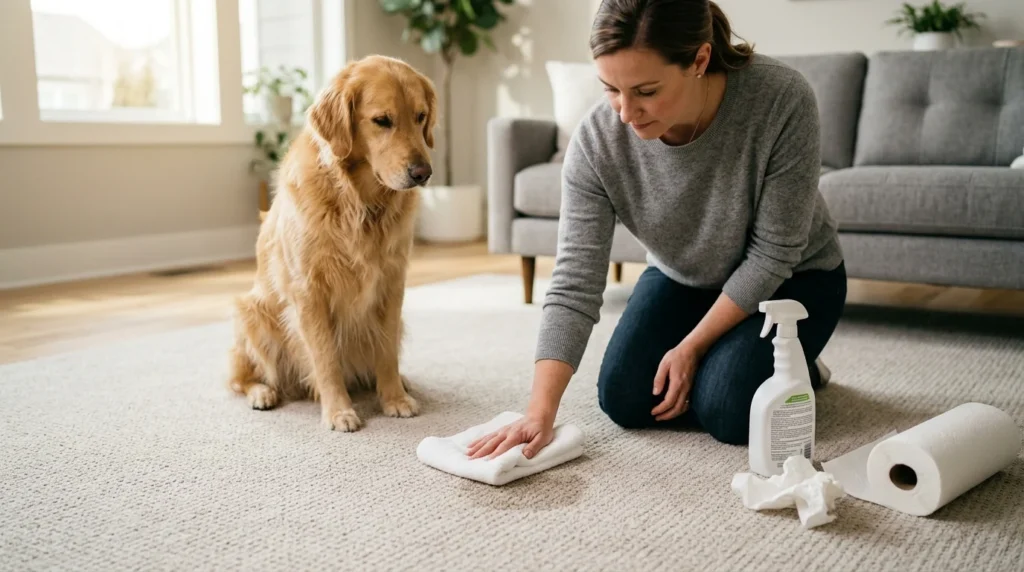
Between Bruno’s heavy seasonal shedding and Mishi’s more consistent year-round fur, pet hair management has become something I’ve genuinely had to get strategic about, since a single vacuum pass clearly wasn’t cutting it during our heaviest shedding weeks. This guide covers what’s actually worked for us across different surfaces, beyond just the basic “vacuum more” advice.
Why Pet Hair Is Trickier Than Other Household Mess
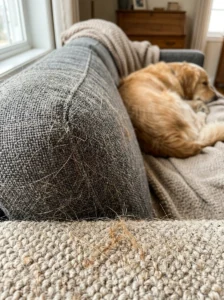
Pet hair has a tendency to embed into fabric fibers and carpet pile in a way that regular debris doesn’t, particularly on textured surfaces. This is part of why a standard vacuum pass sometimes leaves visible hair behind even after what seems like thorough cleaning — the hair is genuinely woven into the fabric structure, not just sitting loosely on top.
Carpets and Rugs
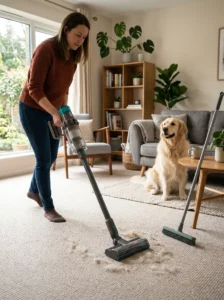
Use a vacuum specifically designed for or well-suited to pet hair. Many vacuums now market pet-specific attachments or settings, often featuring specialized brush rolls designed to lift embedded hair more effectively than standard attachments.
Vacuum in multiple directions, not just back and forth in one pattern — going over carpet from different angles helps dislodge hair embedded at different angles within the pile.
Try a rubber broom or squeegee before vacuuming for particularly stubborn embedded hair — the rubber surface creates static and friction that helps loosen hair, which can then be vacuumed up more effectively afterward.
For area rugs, taking them outside periodically and shaking or beating them out can remove a surprising amount of embedded hair that vacuuming alone misses.
Upholstered Furniture
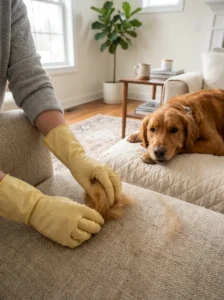
Rubber gloves work remarkably well for couches and chairs — simply dampen rubber gloves slightly and run your hands across the upholstery, which creates static that pulls hair together into easily removable clumps.
Pet hair removal brushes or rollers, specifically designed with rubber or silicone bristles, work similarly well and are worth keeping accessible near frequently-used furniture for quick touch-ups.
Washable furniture covers in areas your dog frequently rests genuinely simplify this entire category of cleanup — covers can be removed and washed regularly rather than needing to deep-clean the actual furniture upholstery itself.
Clothing and Fabric
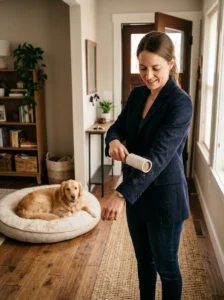
Lint rollers remain a genuinely effective, simple solution for clothing, ideally kept in multiple convenient locations (by the door, in the car) rather than a single spot you might forget to use before heading out.
Dryer sheets, rubbed directly across fabric, can help reduce static and make hair easier to brush away, useful as a quick touch-up method.
Adding a specific amount of white vinegar to your laundry’s rinse cycle can help loosen embedded pet hair from washable fabrics before the spin cycle, making it easier for the washing machine to actually remove rather than just redistribute the hair.
Drying clothes with dryer balls before the final cleaning step can help lift hair that then collects in the lint trap, rather than remaining embedded in the fabric.
Hard Flooring
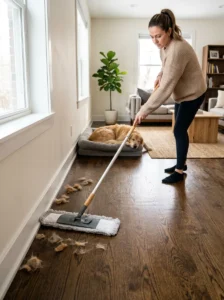
While pet hair is generally less embedded in hard flooring compared to carpet, it tends to gather into visible clumps, particularly in corners or against baseboards. A microfiber mop or dust mop, used regularly, handles this surface type efficiently, often more effectively than a standard vacuum for hard floors specifically.
Car Interiors
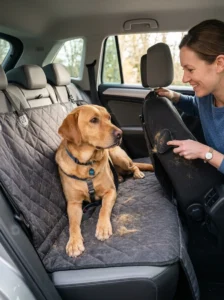
Given how much time many of us spend transporting dogs, car interiors deserve specific mention. Seat covers designed for pet transport simplify this significantly, protecting the actual upholstery from direct hair contact. For hair that does end up on car seats, the same rubber glove or pet hair roller techniques used for home furniture work well in this context too.
Building a Sustainable Cleaning Routine, Not Just Reactive Cleanup
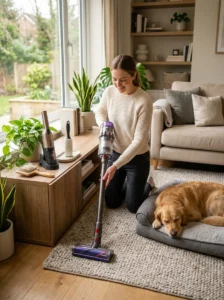
Rather than only addressing pet hair when it becomes visibly noticeable, building a consistent routine — regular vacuuming on a set schedule, periodic deeper cleaning of upholstery, and consistent grooming to reduce the amount of loose hair in the first place, covered in our shedding management guide — tends to keep the overall situation more manageable than constant reactive cleanup during particularly visible buildup.
How Regular Grooming Reduces Household Hair Burden
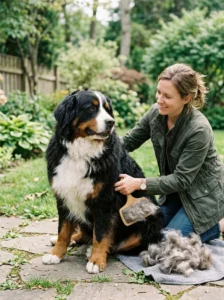
This connects directly back to grooming habits covered throughout our other guides — the more loose fur you remove through regular brushing before it falls out naturally, the less ends up on your carpets, furniture, and clothing in the first place. During Bruno’s heaviest shedding weeks, increasing brushing frequency has a genuinely noticeable downstream effect on how much we’re dealing with around the house, beyond just managing the coat itself.
Seasonal Cleaning Adjustments
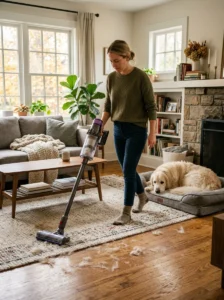
Similar to how grooming needs shift seasonally, household cleaning routines often benefit from adjustment during heavy shedding periods — increasing vacuum frequency, doing a more thorough furniture cleaning session, and simply accepting that more frequent maintenance is needed during these weeks compared to calmer periods of the year.
Choosing a Vacuum Specifically for a Multi-Pet Household
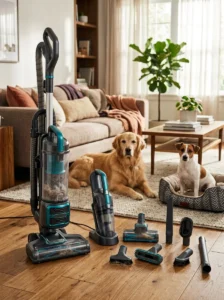
Beyond general pet-hair-suitable vacuums, households with multiple pets, particularly different coat types, sometimes benefit from a vacuum with adjustable settings or multiple specialized attachments to handle different hair types effectively. We’ve found that having both a primary vacuum with strong suction and pet-specific attachments, alongside a smaller handheld vacuum for quick touch-ups, covers the range of cleanup needs across both Bruno’s heavier shedding and Mishi’s different coat pattern more effectively than relying on a single tool for everything.
Mattress and Bedroom Considerations
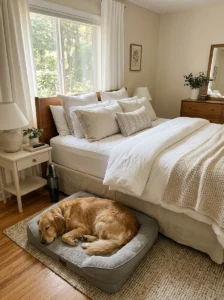
If your dog has access to bedrooms or sleeps on or near beds, mattress and bedroom-specific hair management deserves its own attention beyond general furniture care. Mattress protectors, similar in concept to furniture covers, simplify this significantly, while regular washing of bedroom linens (not just your dog’s own bedding) helps manage hair that accumulates in this specific space through general proximity and shedding throughout the time your dog spends there.
Pet Hair in HVAC Systems and Air Quality
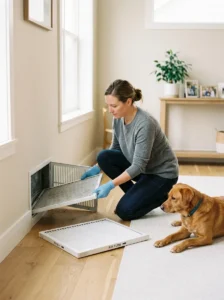
Beyond direct surface cleanup, it’s worth knowing that pet hair and dander can accumulate within your HVAC system over time, potentially affecting both system efficiency and air quality, covered in more detail in our air vents guide. Regular filter changes and periodic vent cleaning complement the surface-level strategies covered throughout this article, addressing the less visible accumulation that direct surface cleaning alone doesn’t reach.
Choosing Pet-Friendly Fabric and Furniture Materials Going Forward

If you’re in a position to make furniture or fabric choices with a shedding pet specifically in mind, certain materials genuinely make ongoing hair management easier than others. Tightly woven fabrics tend to trap less hair than looser weaves, leather or faux leather surfaces allow hair to be wiped away rather than embedding into fibers, and darker or pattern-busy fabrics can simply make visible hair less immediately noticeable between cleaning sessions, even though the actual hair presence is the same regardless of fabric color. This isn’t always practical to fully redesign around, but it’s worth keeping in mind for future furniture purchases if pet hair management is a significant ongoing concern in your household.
Static Electricity’s Role in Pet Hair Behavior
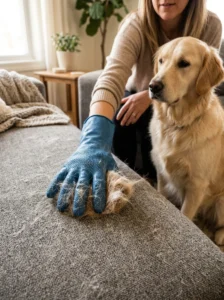
Understanding why pet hair clings so persistently to certain surfaces helped me approach cleanup more strategically. Static electricity causes hair to cling to fabric and other surfaces, which is part of why techniques that address static specifically — dryer sheets, slightly damp rubber gloves, anti-static sprays — tend to be more effective than dry methods alone for stubborn hair that seems to resist simple brushing or wiping away.
A Realistic Weekly Cleaning Schedule for Pet Hair Management
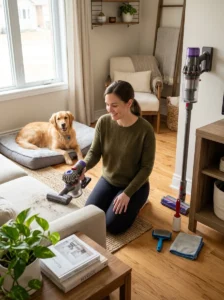
To make this more concrete, here’s roughly how we’ve structured our own weekly approach: a quick daily pass with a handheld vacuum or lint roller on the most frequently used furniture, a more thorough full vacuum of carpets and furniture every few days, and a deeper cleaning session (including the often-overlooked spots covered in our air vents guide) roughly monthly, with this frequency increasing during heavy shedding seasons specifically.
Managing Pet Hair During Guest Visits or Special Occasions
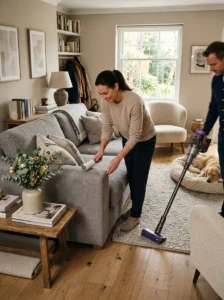
If you’re preparing for guests or a special occasion and want your home looking particularly clean, a few targeted strategies help beyond your regular routine — a thorough vacuum pass focused specifically on the most visible, high-traffic areas guests will actually see, a quick lint-roll of any furniture where guests might sit, and if time allows, the rubber glove technique covered earlier for a final, thorough furniture pass. This kind of targeted, occasion-specific cleanup, layered on top of your regular routine, tends to be more efficient than attempting an exhaustive whole-house deep clean under time pressure before guests arrive.
A few quick answers: Are robot vacuums effective for pet hair management — Many modern robot vacuums handle pet hair reasonably well, particularly for daily maintenance between more thorough manual cleaning sessions, though very heavy shedding periods may still benefit from supplemental manual vacuuming for the most thorough results.. Does the type of carpet affect how much hair gets embedded — Yes — looser, higher-pile carpets tend to trap more hair than tighter, low-pile options, which is worth considering if you’re choosing flooring with a shedding pet specifically in mind.. How often should I deep-clean upholstery in a pet household — This varies by how much time your dog spends on furniture and your specific shedding situation, but many pet owners find a deeper cleaning every few months, supplemented by regular quick touch-ups, keeps things manageable without requiring constant intensive effort.. Can certain detergents help remove pet hair from laundry better than others — Specific pet-hair-focused laundry products exist and can help, though the vinegar rinse-cycle technique and using a lower spin speed (which can prevent hair from binding more tightly to fabric) are generally accessible, effective options without needing specialized products..
Managing pet hair across our entire home took some genuine trial and error to figure out what actually worked versus what just felt like effort without much payoff. The combination of consistent grooming (reducing hair at the source) and the right cleaning techniques for each specific surface has made our heaviest shedding weeks feel manageable rather than overwhelming.
For related guidance, our guides on managing excessive shedding and getting rid of dog odor in your house are excellent next reads.