Most diarrhea cases in otherwise healthy dogs come down to a handful of common, identifiable culprits — which is worth knowing upfront, because the instinct in the moment is usually to assume the worst.
Dietary indiscretion. This is the catch-all term vets use for “your dog ate something they shouldn’t have” — table scraps, something found on a walk, garbage, or a new treat that didn’t agree with them. It’s by far the most common cause I’ve dealt with personally.
Abrupt food changes. Switching dog food too quickly is a near-guaranteed way to upset a dog’s digestive system. Even switching to a higher-quality food can cause loose stool if it’s done overnight instead of gradually. We go into this in detail in our guide to switching dog food without stomach upset.
Stress. Boarding, travel, a new home, a thunderstorm, or even a stressful vet visit can trigger temporary diarrhea in otherwise healthy dogs. I noticed this with Mishi the first time we boarded her — she came home with loose stool that resolved within a day or two once she settled back into her normal routine.
Parasites. Intestinal parasites like giardia, roundworms, or hookworms are a common cause, especially in puppies or dogs that spend time around other dogs’ waste, contaminated water, or soil.
Bacterial or viral infections. These can range from mild to serious, and often come with other symptoms like vomiting, fever, or lethargy.
Food intolerances or allergies. Some dogs have ongoing sensitivities to specific ingredients that cause recurring digestive upset. If diarrhea keeps happening with certain foods, it’s worth discussing with your vet — our guide to dog allergies covers this in more detail.
Eating spoiled food or garbage. Dogs are notorious scavengers, and a trip through the trash can almost guarantee an unpleasant 24 hours afterward.
Diarrhea is one of those topics nobody wants to write or read about, but if you’ve owned a dog for any length of time, you’ve dealt with it — usually at the worst possible moment, like right before guests arrive or in the middle of the night. I’ve cleaned up more carpet messes from both Bruno and Mishi over the years than I’d like to admit, and somewhere along the way I learned to stop panicking and start paying attention to the actual pattern of what was happening. I’m a longtime owner, not a vet, so treat what follows as the practical framework that’s worked for us rather than a diagnosis.
Reading the Actual Pattern, Not Just “Diarrhea = Bad”

One of the most useful things I’ve learned is to actually look at consistency, color, and frequency rather than reacting to the loose stool itself in isolation.
Generally less concerning (but still worth watching):
⦁ A single loose stool, with your dog otherwise acting completely normal
⦁ Diarrhea that resolves within 24 hours on its own
⦁ No blood, no mucus, normal energy and appetite
Generally more concerning, warranting a vet call:
⦁ Diarrhea lasting more than 24-48 hours
⦁ Blood in the stool (bright red or dark, tarry-looking)
⦁ Diarrhea combined with vomiting
⦁ Lethargy, weakness, or refusing to eat or drink
⦁ Visible weight loss over time with recurring episodes
⦁ A puppy with diarrhea, especially one not fully vaccinated
⦁ A senior dog with sudden, unexplained diarrhea
⦁ Signs of dehydration (gums that feel tacky or dry, skin that doesn’t snap back quickly when gently pulled up)
Acute vs. Chronic: Two Genuinely Different Situations
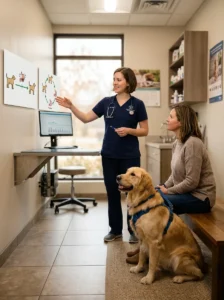
It helps to think about diarrhea in two broad categories, since the approach to each is genuinely different.
Acute diarrhea comes on suddenly and typically resolves within a few days, usually tied to an identifiable cause like dietary indiscretion, a food change, or a brief stomach bug. This is the type most owners deal with occasionally and can often manage at home, assuming there are no red flags present.
Chronic diarrhea, on the other hand, persists or recurs over weeks, sometimes coming and going rather than being constant. This pattern points toward something that needs proper investigation rather than home management — possible causes include food intolerances, inflammatory bowel conditions, parasites that weren’t fully treated, or other underlying issues that won’t resolve with a bland diet alone.
Mishi went through a stretch of chronic, recurring diarrhea a while back — not severe in any single episode, but persistent over a few weeks, coming and going in a way that didn’t match a typical short-term stomach bug. That pattern was what prompted our vet to dig deeper rather than treating each episode as standalone, eventually identifying a mild food sensitivity as the underlying cause.
What I Actually Do at Home for Mild Cases
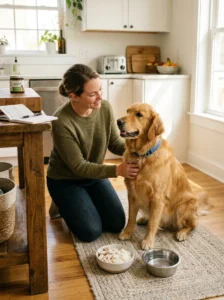
For mild, short-term diarrhea in an otherwise healthy, alert dog, here’s the general approach I’ve used — always within guidance from our vet over the years rather than guessing on my own:
Withhold food briefly, but never water. A short fasting period (typically recommended for adult dogs, not puppies or dogs with health conditions) can give the digestive system a chance to settle. Water should always stay available.
Introduce a bland diet gradually. Plain boiled chicken (no skin, no seasoning) and plain white rice in small portions is the classic recommendation, slowly transitioning back to regular food over several days once things improve.
Avoid giving human medications. This one matters a lot. Over-the-counter anti-diarrheal medications made for humans can be genuinely dangerous for dogs depending on the ingredients and dosage. Never give your dog any medication without checking with your vet first.
Keep a record. I started doing this after Mishi’s diarrhea kept recurring for a few weeks and I couldn’t remember exactly when it started or what she’d eaten beforehand. Now I jot down the date, what she ate recently, stool consistency, and anything else unusual. It made our vet visit so much more useful because I could actually answer her questions with specifics instead of “I think it started a few days ago, maybe?”
The instinct to rush to the vet for every loose stool is understandable, especially for new owners, but it’s also not always necessary. What changed things for me was learning to watch the whole picture — energy, appetite, water intake, and how long it’s actually lasting — instead of reacting to the diarrhea in isolation.
When to Skip “Wait and See” Entirely

Some situations don’t call for managing it at home. Call your vet right away if you notice:
⦁ Diarrhea lasting more than two days
⦁ Blood or black, tarry stool
⦁ Your dog seems weak, lethargic, or is in visible pain
⦁ Repeated vomiting alongside the diarrhea
⦁ Known or suspected ingestion of something toxic
⦁ A puppy under 16 weeks old with diarrhea
⦁ Signs of dehydration
⦁ A senior dog with sudden onset, especially with other symptoms
This applies doubly for puppies, since they dehydrate much faster than adult dogs and have less reserve to handle prolonged illness.
The Gut-Brain Connection Is More Direct Than I Expected

I mentioned stress as a cause earlier, but it’s worth expanding on, since it genuinely surprised me how directly connected this can be. Dogs, like people, have a gut that’s sensitive to their nervous system and stress levels. Boarding, travel, loud environments, changes in routine, or even the stress of a vet visit itself can all trigger temporary digestive upset.
This doesn’t mean every instance of diarrhea following a stressful event is “just stress” and safe to ignore — the same warning signs (blood, lethargy, prolonged duration) still apply regardless of the likely trigger. But understanding this connection has helped me be a little less alarmed by mild, short-lived digestive upset that clearly coincides with something stressful, like Mishi’s first boarding stay, versus something that seems to come out of nowhere.
Probiotics: Worth Asking Your Vet About
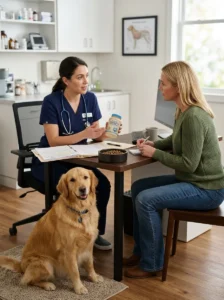
Some vets recommend a probiotic supplement, either during a bout of diarrhea or as ongoing support for dogs prone to digestive sensitivity, to help restore a healthy balance of gut bacteria that can be disrupted by illness, dietary changes, or antibiotic treatment.
I asked our vet about this after Mishi’s recurring diarrhea episode, and she recommended a specific vet-formulated probiotic rather than a generic human product, since the bacterial strains and dosing relevant to dogs differ from what’s formulated for people. It’s not a guaranteed fix for every case, but it’s a reasonable, low-risk addition worth discussing if your dog deals with recurring digestive sensitivity.
Managing It in a Multi-Dog Household
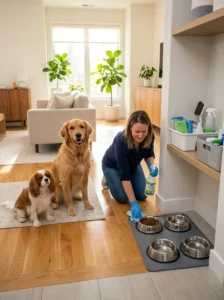
With two dogs in the house, I’ve also learned to think about cross-contamination during a diarrhea episode. If one dog is affected, keeping water bowls and food separate, cleaning up accidents promptly with a pet-safe disinfectant, and washing your hands between handling each dog can help reduce the chance of the issue (particularly if it’s parasite or infection-related) spreading to the other dog. This matters more in cases caused by something contagious than in cases clearly tied to an individual dog’s diet or a one-off scavenging incident.
A related, practical note: when cleaning up, especially if you suspect parasites or infection, wearing disposable gloves and using a pet-safe disinfectant (rather than just water or a generic household cleaner) reduces the risk of spreading whatever’s causing it. Disposing of waste promptly and washing your hands thoroughly afterward has become automatic for us during any stretch where one of the dogs is dealing with ongoing digestive upset.
Preventing It Going Forward
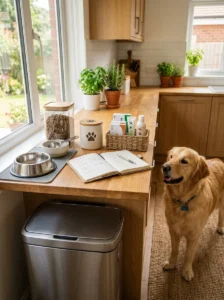
A few habits have genuinely reduced how often we deal with this in our house:
⦁ Transition foods gradually over 7-10 days whenever switching brands or formulas
⦁ Keep the trash secured — both Bruno and Mishi have learned to associate an open kitchen trash can with an opportunity, so a lidded bin made a real difference
⦁ Be consistent with treats rather than introducing several new ones at once
⦁ Stick to a regular feeding schedule, since erratic feeding patterns can contribute to digestive upset
⦁ Keep up with parasite prevention, since intestinal parasites are a common, preventable cause
A few quick answers to questions that come up a lot: diarrhea lasting more than 24-48 hours generally warrants a vet visit, don’t wait it out longer than that. Never give human medication like Pepto-Bismol or Imodium without checking with your vet first — some are genuinely dangerous for dogs depending on the ingredients and your dog’s size. A dog with diarrhea but otherwise acting completely normal is less urgent than one paired with lethargy, though it’s still worth monitoring. And yes, puppies do tend to get diarrhea more often given their more sensitive digestive systems and tendency to eat things they shouldn’t — but because they dehydrate faster, it’s worth being quicker to call the vet than you might be with an adult dog.
Diarrhea is genuinely one of the least glamorous parts of dog ownership, but it doesn’t have to be a constant source of panic. Learning to watch the broader picture — energy, appetite, hydration, and how long it’s lasting — has made all the difference for me in knowing when to manage it at home and when to get our vet involved.
For related digestive concerns, our guides on why dogs vomit and when to worry and dog allergies round things out.