This was genuinely one of the first questions I had as a new dog owner — Bruno would come back from a walk looking and smelling like he needed a bath, but I had no real sense of whether that instinct was accurate or whether I’d be overdoing it. Years later, with two dogs whose coats and lifestyles differ meaningfully, I’ve learned this question has a more nuanced answer than a single universal number.
(I’m an experienced dog owner, not a veterinary dermatologist. This reflects general guidance — dogs with diagnosed skin conditions may need a specific bathing protocol from your vet that differs from general recommendations.)
Why There’s No Single Universal Answer

Bathing frequency depends on several genuinely variable factors: coat type and length, activity level and how much dirt or odor your dog typically accumulates, skin sensitivity, and whether your dog has any underlying skin conditions affecting appropriate care. This is why “how often should I bathe my dog” doesn’t have one correct number that applies equally to every dog.
General Guidelines by Coat Type
Short-coated breeds generally do well with bathing every 4-8 weeks, since their coat doesn’t trap dirt and oils as readily as longer or denser coats.
Double-coated breeds typically need bathing every 6-8 weeks under normal circumstances, though this can increase during heavy shedding seasons when bathing (alongside brushing) helps manage loose undercoat.
Curly or wire-coated breeds, like Poodles covered in our dedicated breed guide, often need more frequent bathing, sometimes every 3-4 weeks, particularly if maintained with a shorter professional clip.
Oily-skinned breeds may need more frequent bathing to manage natural oil buildup, while breeds with notably dry skin may need less frequent bathing to avoid further drying out their coat and skin.
Signs Your Dog Needs a Bath Sooner Than Scheduled
Beyond a general schedule, a few practical signs suggest it’s time regardless of when the last bath happened:
⦁ Noticeable odor that wasn’t present before
⦁ Visible dirt, mud, or debris that brushing alone won’t remove
⦁ Oily or greasy-feeling coat
⦁ Rolling in something genuinely unpleasant during a walk, which happens to most dogs eventually
Signs You Might Be Bathing Too Often
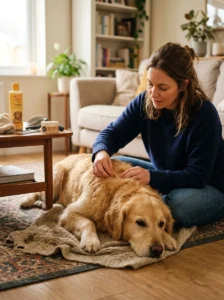
Over-bathing is a genuinely common mistake, particularly among well-intentioned new owners. Watch for:
⦁ Dry, flaky skin
⦁ A dull, brittle-feeling coat
⦁ Increased itching or visible irritation
⦁ Skin that seems more sensitive or reactive than usual
If you notice these signs, extending the time between baths, and confirming you’re using an appropriate dog-specific shampoo rather than anything stripping too much natural oil, often resolves the issue.
How Our Bathing Routines Differ Between Bruno and Mishi

This illustrates the individual variation well. Bruno’s denser coat and tendency to get into things during walks means he typically needs bathing roughly every 5-6 weeks. Mishi, with a different coat type and somewhat more sensitive skin, does better with a slightly longer gap between baths, alongside a gentler, specifically formulated shampoo our vet recommended after noticing her skin reacted to more frequent washing. Having two dogs on genuinely different schedules reinforced for me how much this really does come down to the individual dog, not just a general breed guideline.
Choosing the Right Shampoo
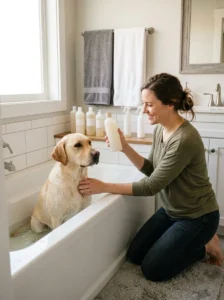
Always use a dog-specific shampoo, never human shampoo, which has a different pH balance than what’s appropriate for canine skin and can contribute to dryness or irritation with regular use. Within dog shampoos, there’s genuine variety worth knowing about:
General-purpose shampoos work well for most healthy dogs without specific skin concerns.
Medicated or specially formulated shampoos, sometimes recommended by your vet for dogs with skin conditions, allergies, or specific issues covered in our skin problems guide.
Puppy-specific formulas, generally gentler, appropriate for young dogs with more sensitive skin still developing.
Bath Time Technique for Best Results
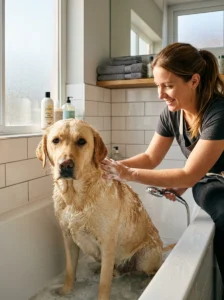
Beyond simply how often, doing the bath itself well matters for overall coat and skin health:
1. Brush before bathing, removing loose fur and any tangles or mats before they become more difficult to manage once wet
2. Use lukewarm water, never hot, testing temperature before starting
3. Work shampoo in thoroughly but gently, avoiding the eyes and being careful around the ears
4. Rinse completely — this is genuinely the step most likely to be rushed, but leftover shampoo residue can cause real irritation
5. Dry thoroughly, particularly important for double-coated or floppy-eared breeds, where trapped moisture can contribute to skin or ear issues covered in our 5. ear infection guide
Bathing Puppies: What’s Different
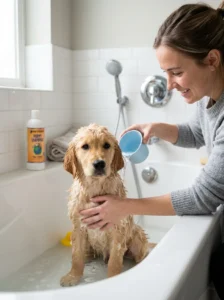
Puppies generally need bathing less frequently than adult dogs, partly because very young puppies haven’t yet built up the same activity-related dirt accumulation, and partly because their skin is more sensitive and developing. Most vets recommend waiting until a puppy is at least a few weeks old before their first bath, and using particularly gentle, puppy-specific products when you do begin.
Seasonal Adjustments to Bathing Frequency
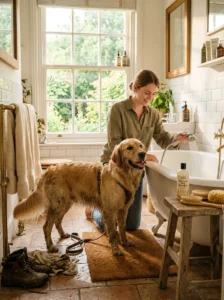
Living somewhere with genuinely hot summers, we’ve found that bathing frequency naturally shifts somewhat seasonally — slightly more frequent during hot, dusty summer months when both dogs accumulate more dirt and sweat-related odor during outdoor time, and slightly less frequent during cooler months when they’re naturally cleaner between baths.
How Climate Affects Ideal Bathing Frequency
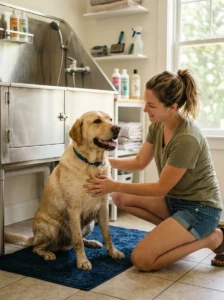
Beyond coat type, your local climate plays a genuine role in appropriate bathing frequency, something I hadn’t fully appreciated until living somewhere with such intense seasonal extremes. During Lahore’s hottest, most humid summer months, both dogs accumulate dirt, sweat-related odor, and general grime faster than during cooler, drier periods, which naturally shifts our bathing frequency toward the more frequent end of the general guidelines. Owners in different climates should expect their own ideal frequency to shift similarly with their local seasonal patterns, rather than assuming a single year-round number applies regardless of climate.
The Cost of Professional Bathing vs. Home Bathing

For owners weighing whether to handle bathing at home versus using professional grooming services for this specific task, it’s worth factoring in both the cost difference and the genuine bonding value of doing this yourself. We’ve generally handled regular bathing at home, reserving professional grooming primarily for more complex coat maintenance needs, which has kept costs more manageable while also building the kind of regular positive handling that supports overall comfort with physical contact and care routines.
Drying Time and Technique
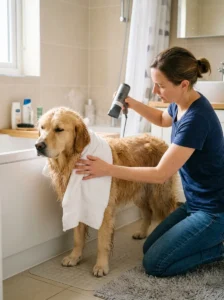
Proper drying deserves its own attention beyond the bathing process itself. For double-coated breeds especially, thorough drying — using towels initially, then either air-drying in a warm space or using a pet-safe dryer on a low, cool setting — matters for preventing the damp-skin conditions that can contribute to irritation or, in more severe cases, a condition called hot spots, covered in our skin problems guide. Allowing a heavily-coated dog to air dry naturally without any assistance can take hours, during which trapped moisture against the skin creates exactly the kind of environment that supports unwanted bacterial or yeast growth.
Building Bath-Time Cooperation From an Early Age
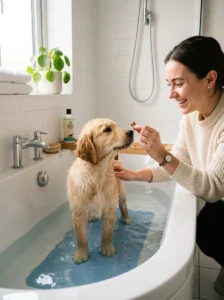
If you’re working with a puppy, building positive bath-time associations early genuinely pays dividends for years of more cooperative bathing ahead. Short, low-pressure introductory sessions, lukewarm water, plenty of treats and praise throughout (not just at the end), and not rushing the process all contribute to a puppy who grows into an adult dog that tolerates, rather than dreads, this regular routine.
Bathing Senior Dogs: What Changes
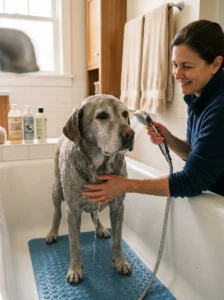
As dogs age, a few bathing-related considerations shift, similar to broader senior care principles covered in our senior dog guide. Senior dogs may have thinner, more sensitive skin, making gentle, fragrance-free products particularly important. Joint stiffness can make standing for an extended bath uncomfortable, which is worth factoring into session length and any need for additional support, like a non-slip mat specifically positioned where your senior dog bathes. We’ve adjusted Mishi’s bathing routine somewhat as she’s settled into her senior years, keeping sessions a bit shorter and more efficient than they might have been in her younger years.
When Bathing Frequency Should Be Determined by Medical Need, Not General Guidelines

Some skin conditions specifically call for more frequent, medicated bathing as part of active treatment, which can mean a temporary bathing schedule far more frequent than general guidelines would suggest, prescribed and monitored by your vet for a specific therapeutic purpose. This is different from routine bathing frequency and should follow your vet’s specific protocol rather than the general guidance covered throughout this article, since the goal during active medical treatment is different from simple ongoing maintenance.
A Simple System for Tracking Bath Schedules

With two dogs on different bathing schedules given their different coat and skin needs, I’ve found it genuinely useful to keep a simple note tracking each dog’s last bath date, which removes the guesswork of trying to remember exactly when each dog was last bathed. This small habit has helped us stay reasonably consistent with appropriate frequency for each dog individually, rather than defaulting to whatever feels convenient in the moment or losing track entirely between bathing sessions.
A few quick answers: Is it bad to bathe my dog every week — For most dogs, weekly bathing is more frequent than necessary and can contribute to dry skin and coat issues over time, unless specifically recommended by your vet for a particular medical reason.. Can I bathe my dog too little — Yes — infrequent bathing can allow dirt, oil, and odor to build up significantly, and for some skin conditions, regular bathing is actually part of the recommended treatment, making “never bathing” just as inappropriate as over-bathing.. Do indoor dogs need baths less often than outdoor dogs — Generally yes, since indoor dogs typically encounter less dirt and environmental debris, though this varies based on individual activity level and any outdoor time they do get.. What if my dog has particularly sensitive skin — Work with your vet to identify an appropriate bathing frequency and shampoo specifically suited to your dog’s skin sensitivity, since general guidelines may not apply the same way to a dog with diagnosed skin sensitivity or allergies..
Learning that Bruno and Mishi genuinely needed different bathing schedules, rather than following one generic rule for both, taught me to pay closer attention to each dog’s individual coat, skin, and lifestyle rather than relying purely on general guidelines. If you’re unsure about your own dog’s ideal frequency, starting with the general guidelines in this guide and adjusting based on what you actually observe is a reasonable, practical approach.
For more on grooming fundamentals, our guides on the complete grooming guide and dog skin problems are excellent next reads.