Does your dog really need a way up onto the bed? If they’re small, older, heavy, or built long and low, probably yes. Dog steps for bed take the strain off that daily leap, and you can build a set for next to nothing. Here are thirteen ideas, plus the safety rules I’d follow on every one.
Who Actually Benefits From Dog Steps for Bed
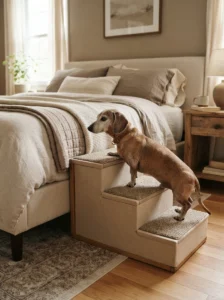
Dachshunds, Corgis, and other short-legged breeds. Seniors who hesitate before every jump. Puppies who are still growing. Big dogs who land with a thud. Some dogs find steps gentler on their joints, and plenty of owners say their pups look more confident using them.
But steps are a comfort tool, not a fix. If your dog suddenly stops jumping, limps, or yelps, call your vet before you pick up a saw.
Now measure. Check the height from the floor to the top of your mattress, bedding included. People always forget that bit. For small dogs, aim for risers about four to six inches high. Go a little taller for bigger dogs. Fewer, wider steps beat lots of skinny ones. And build for more weight than your dog actually is, because wobbly is worse than nothing.
13 DIY Dog Stairs, From Zero Effort to Full Weekend
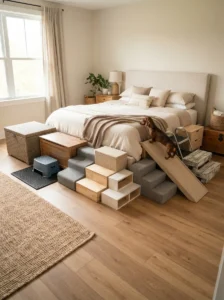
Quick fixes with no tools
1. The Sturdy Ottoman. Slide a low, solid one beside the bed. Check it doesn’t skate across the floor.
2. The Storage Bench. A short bench at the foot of the bed doubles as a platform and a place to dump blankets.
3. The Plastic Step Stool. Grab the one from the kitchen cupboard. Add a rubber mat and grip tape on top.
4. The Foam Steps. Firm foam blocks under a washable cover are light and soft, which suits tiny dogs. Make sure the foam is dense enough that it doesn’t squash flat.
Weekend builds
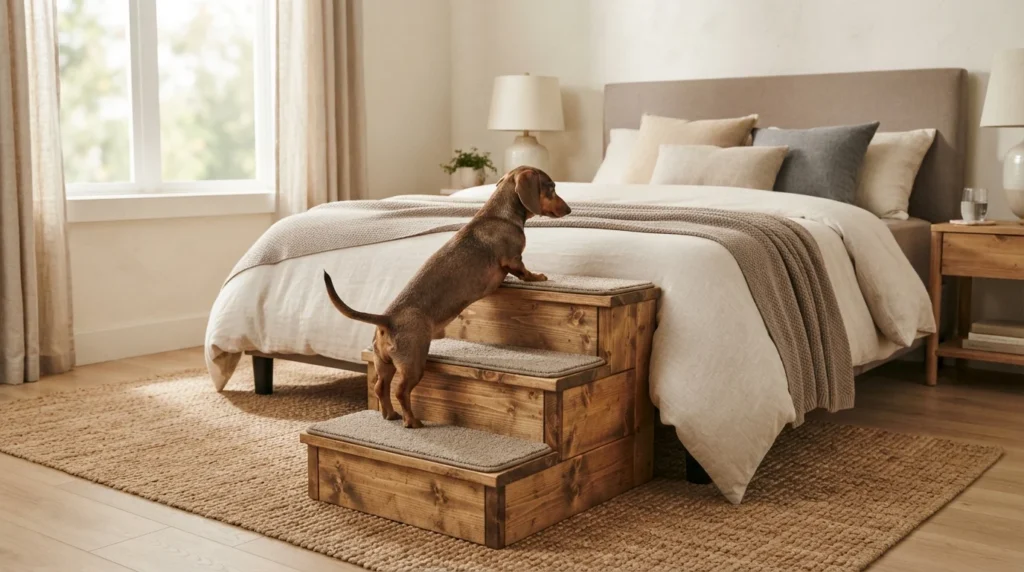
5. The Plywood Two-Step. Two boxes of different heights, glued and screwed together. Sand every edge round. Top with carpet.
6. The Carpet-Covered Stair Box. Staple carpet offcuts over the whole thing for grip. Cheap and cheerful.
7. The Bookshelf Steps. Turn a low bookcase on its side and use the shelves as treads. Anchor it so it can’t tip.
8. The Upholstered Steps. Wrap a plywood frame in batting and fabric to match your bedroom. Looks lovely, and it’s soft underfoot.
9. The Storage Steps With Drawers. Each tread hides a drawer for toys and leads. A bit of work. Worth it.
10. The Foldaway Steps. Hinged so they tuck under the bed in the morning. Brilliant for small rooms.
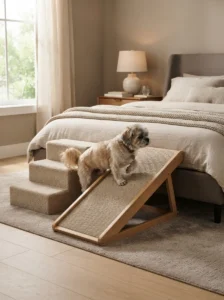
11. The Gentle Ramp. A long, low slope with grip strips. Some seniors find a ramp easier than steps. The catch is the floor space it eats.
12. The Pallet Wood Steps. Rustic and pretty. But sand like you mean it, because splinters aren’t welcome.
13. The Trunk at the Foot of the Bed. A low wooden chest makes a handy first step, with a cushioned top for sitting. Check the lid is fixed shut.
The Tip That Surprised Me
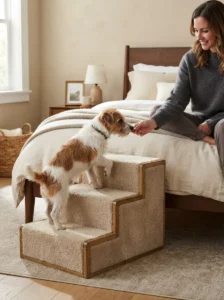
Put the steps where your dog actually jumps, not where they look tidy. My terrier always leaps from the left corner. I built the first set on the right, and he ignored it for three days.
And teach the climb slowly. Place a treat on the bottom step, then the next, and praise every paw. Picture a nervous senior dog hesitating at the base while you cheer from the pillow. Patience beats pushing. Never lift a scared dog onto steps and leave them there.
A Real Example From My Neighbour Priya
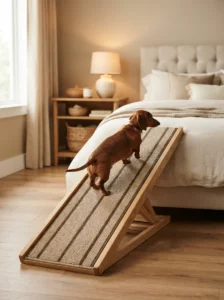
Priya’s dachshund, Mango, adored the bed. His back is long, and her vet had suggested limiting big jumps, so she built a ramp. The first attempt was too steep. Mango refused it flat.
She swapped in a longer board to halve the angle, glued carpet on top, and added strips of grip tape. Now he strolls up like royalty. Her takeaway? If a slope looks steep to you, it looks worse to a dog.
Mistakes and Warnings Worth Knowing
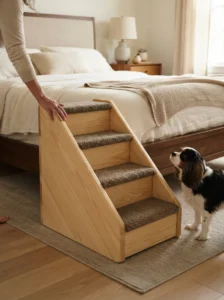
Slippery surfaces cause most accidents. Bare wood or laminate is trouble, so add carpet, rubber, or grip tape to every tread.
Watch the gap between the steps and the mattress. A dog’s leg can slip in, so push everything flush against the bed frame.
Test for wobble by standing on it yourself first. Anything that rocks goes back to the workshop.
Hide screws, nails, and staples. Sand every corner. And keep puppies and chewers supervised, because swallowed foam or wood isn’t something you want to explain to the vet.
Wipe steps regularly. Muddy paws and drool make them slick.
And if your dog keeps avoiding the steps, or seems stiff or reluctant, check in with your vet. It might not be about the steps at all.
Quick Questions
Are steps or ramps better?
It depends on your dog. Many manage steps happily. Some seniors find a gentle ramp easier. Ask your vet if you’re unsure.
Can puppies use them?
Yes, with supervision. Young dogs are curious and wobbly, and they chew things.
How do I stop steps from sliding?
Rubber backing, a non-slip mat, or small rubber feet underneath. Then test it again.
Ready to Build Your Dog Steps for Bed?
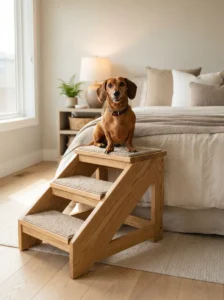
You don’t need all thirteen. Measure your bed, pick one idea that matches your dog and your skills, and make it this weekend. The best dog steps for bed are sturdy, grippy, and easy to climb. Add a treat on every step and watch that tail wag.
Want a reward for your brave climber? Have a look at my post on easy homemade dog treats. And tell me: does your dog leap onto the bed, or wait to be lifted?