My brother-in-law Tom once spent a whole Saturday building a cat tree for his tabby, Mango. He sanded, painted, and carried it into the living room like a proud dad. Mango sniffed it, walked past, and curled up in the cardboard box the screws came in. Then she finally leapt onto the top shelf and the whole thing toppled. I’m a dog person, but I helped him rebuild it, and I’ve since helped on two more. Here are 15 DIY cat tree and cat tower plans worth your weekend, plus what I’d do differently.
The Problem With Most Homemade Towers
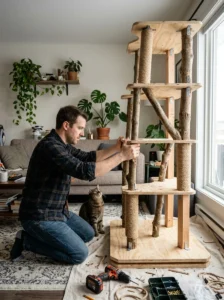
They wobble. Or they’re too tall, too narrow, or parked in a spot nobody likes. Cats leap with real force, so a tower that feels fine when you shake it can shift under a landing. And a cat who gets a fright once may never trust it again.
Plan before you cut. Measure your floor space, ceiling height, and your cat. Heavier cats need wider bases and thicker posts. If your cat is older or struggles to jump, ask your vet, and keep platforms low.
15 DIY Cat Tree & Cat Tower Plans
Small and speedy
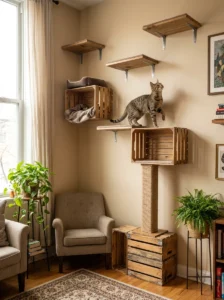
1. The Two-Shelf Wall Tower. Two sturdy shelves, one above the other, fixed into studs. Takes an hour.
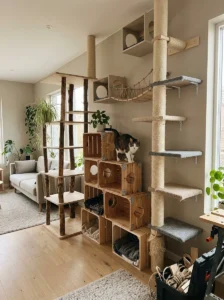
2. The Crate Stack. Stack wooden crates in a staggered pattern and screw them together. Cheap, rustic, and cats love the cubby holes.
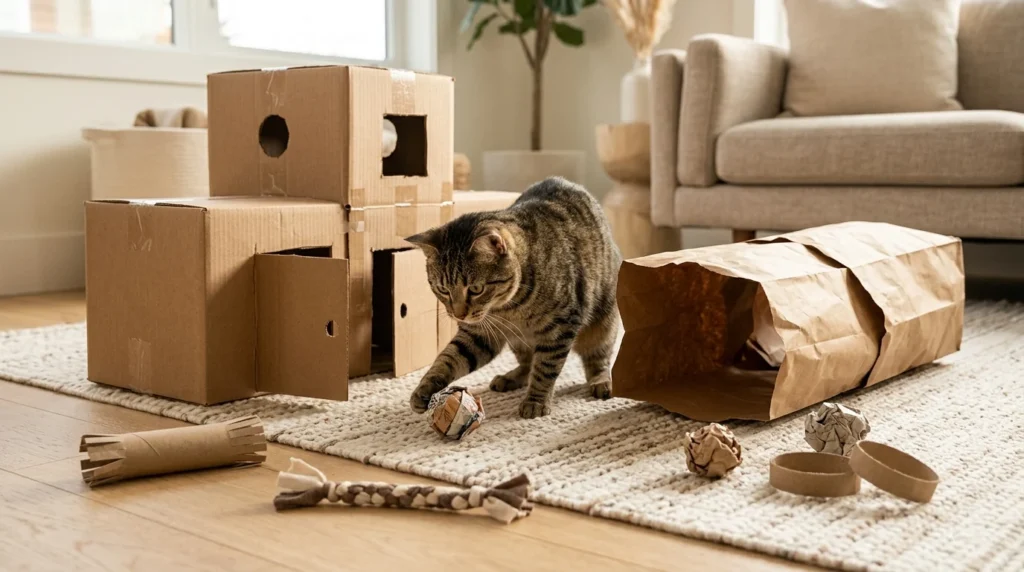
3. The Cardboard Castle. Glue sturdy boxes into a tower with cut-out windows. Short-lived, but great for testing what your cat likes before you commit to wood.
4. The Ladder Shelf. Lean a wooden ladder against a wall and add flat boards across the rungs. Anchor the top.
Weekend builds
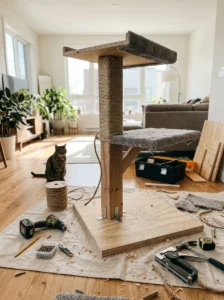
5. The Classic Post-and-Platform. A wide base, one thick post wrapped in sisal rope, and two platforms. The beginner’s favorite.
6. The Corner Tower. Fits snugly into a room corner and uses both walls for support. Smart for small flats.
7. The Floor-to-Ceiling Pole. A tension pole with platforms between floor and ceiling. Check it’s rated for your ceiling and your cat’s weight.
8. The Bookcase Conversion. Turn an old bookcase into a tower with carpeted shelves and rope-wrapped sides. Fix it to the wall.
9. The Tree Branch Tower. Use a sturdy, dry, bark-free branch as the main post, set in a heavy base. Looks gorgeous. Sand off every splinter, and check for pests.
10. The Hammock Tower. Add a fabric hammock between two platforms. Cats love lounging a level above the action.
Ambitious plans
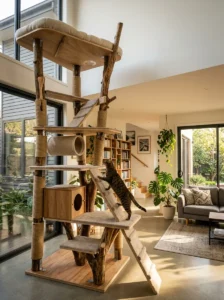
11. The Window Perch Tower. A tall structure ending in a wide shelf right at the window. Basically cat TV.
12. The Multi-Level Playground. Platforms, tunnels, ramps, and hideouts. Give yourself a full weekend and a friend.
13. The Wall-Mounted Climbing Route. Shelves, steps, and bridges across a wall, so your cat can travel without touching the floor.
14. The Tower With Hidden Litter Box. A cabinet base with an entrance for the box and perches on top. Make sure the box area has ventilation.
15. The Indoor-Outdoor Catio Tower. Connect a tower to a window catio. Brilliant, though it needs proper planning.
The Tip That Surprised Me
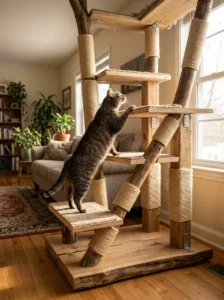
Build wider than you think. Seriously. Everyone focuses on height, but stability comes from the base. Tom’s rebuilt tree has a base twice as wide as the first one, and it hasn’t budged since.
And match the first platform to your cat’s jump. Picture Mango eyeing a shelf that’s too high, then sulking. Lower the first step, and she’ll climb the whole thing. Cats like a ladder of easy wins.
A Real Example From My Friend Priya
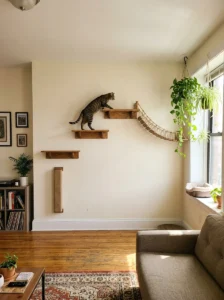
Priya’s flat is tiny, so she skipped the floor-standing tower and built a wall-mounted route. Three shelves, a rope-wrapped post, and a little bridge to the windowsill. Her cat, Mochi, had it figured out in an afternoon. Total spend was under eighty dollars, and the floor stayed clear.
Mistakes and Warnings Worth Knowing
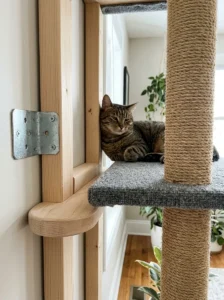
Skipping the wall anchor. Tall towers should be fixed to a wall or ceiling. Always.
Using weak screws. Choose long, sturdy fixings, and check them every few weeks. Wood shifts, and screws loosen.
Leaving sharp edges. Sand everything and cover staples. Use non-toxic glue and paint, and let them dry fully.
Choosing slippery tops. Add carpet, sisal, or felt so claws can grip.
Ignoring chewers. If your cat chews fabric or rope and swallows bits, call your vet straight away, and swap the material.
Placing it somewhere dull. Put it near a window or where the family hangs out.
Quick Questions
How tall should it be?
Start with what your cat will happily jump. Many cats enjoy height, but go gradually.
Will my cat actually use it?
Usually, if it’s stable and well-placed. A treat or toy on each level helps.
Can dogs use cat towers?
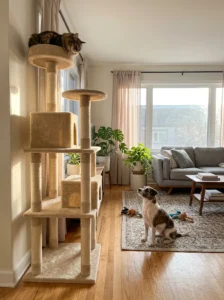
Small dogs sometimes try. Keep them supervised, and give your cat a spot the dog can’t reach.
Ready to Build Your DIY Cat Tree?

You don’t need all fifteen. Pick one plan, measure carefully, and build wider than you think. The best DIY cat tree and cat tower plans are sturdy, grippy, and placed where your cat actually wants to be. Test it yourself before she does.
Got a dog in the house, too? Have a look at my post on cozy dog beds that don’t wreck your living room. And tell me: does your cat prefer the highest shelf or the lowest cubby?