A dog’s ear canal is shaped differently than a human’s — it’s L-shaped, with a vertical canal that turns into a horizontal canal before reaching the eardrum. That shape, while functional, means moisture and debris get trapped more easily than in a human ear, which partly explains why infections are so much more common in dogs generally, and especially in breeds with floppy ears that further reduce airflow. Infections themselves happen when yeast or bacteria already present in the ear overgrow, usually because the environment inside becomes warm, moist, and hospitable to that growth.
Some dogs are simply more prone to this than others, including:
⦁ Dogs with floppy ears, since the ear flap reduces airflow and traps moisture
⦁ Dogs with allergies, since chronic inflammation in the ear canal creates conditions where infections take hold more easily
⦁ Dogs that swim frequently, since water trapped in the ear canal creates a moist environment
⦁ Dogs with excessive ear hair or wax buildup
⦁ Dogs with a history of previous ear infections, since damaged tissue and altered ear canal shape can make repeat infections more likely
Mishi has always had the kind of floppy ears that make her irresistibly cute and, as I learned eventually, much more prone to ear infections than I expected. The first time it happened, I had no idea what I was looking at — she kept shaking her head and scratching at one ear, and there was a smell I genuinely couldn’t place. Once our vet walked me through the list above, it made a lot more sense why Mishi — with her floppy ears and mild seasonal allergies — kept dealing with this more than Bruno, whose ears stand up and stay much better ventilated. (I’m not a vet myself, to be clear — this is what several rounds of dealing with it has taught me, not a substitute for actual diagnosis.)
What’s Actually Driving the Infection
It helps to understand that an ear infection is usually a symptom of an underlying imbalance, not a random occurrence. Common underlying triggers include:
Allergies (environmental or food-related) — chronic ear infections are one of the most common signs of an underlying allergy that vets look for, which is part of why a dog with recurring infections often gets evaluated for allergies rather than just treated for the ear issue each time.
Moisture trapped in the ear, from swimming, bathing, or humid weather
Excess wax buildup that creates a breeding ground for yeast or bacteria
Foreign objects, like grass seeds or debris, that get lodged in the ear canal
Mites, particularly in puppies or dogs that have been around other infected animals
Catching It Early
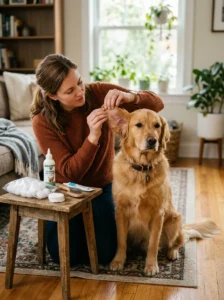
Catching this early makes a real difference in how quickly it resolves and how uncomfortable your dog has to be in the meantime. Watch for:
⦁ Frequent head shaking or tilting
⦁ Scratching at one or both ears
⦁ A strong, unusual odor coming from the ear
⦁ Redness or swelling inside the ear flap or canal
⦁ Dark discharge — can look brown, yellow, or black depending on the cause
⦁ Sensitivity or pain when the ear is touched
⦁ Visible discomfort, rubbing the ear against furniture or the floor
⦁ In more advanced cases, a head tilt that persists even when not actively scratching
The smell is usually the giveaway for me now. There’s a distinct, slightly yeasty or musty odor that I’ve learned to recognize almost immediately, well before Mishi starts visibly scratching at it. Catching it at that stage means a much shorter, easier course of treatment than waiting until she’s clearly uncomfortable.
Yeast vs. Bacterial: A Distinction That Changes the Treatment
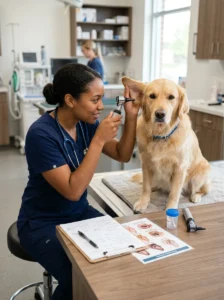
Something I didn’t understand until our vet explained it during one of Mishi’s infections: not all ear infections are the same underlying issue, and treatment differs depending on the cause.
Yeast infections tend to produce a darker, sometimes brownish discharge with that distinctive musty or slightly sweet odor I mentioned earlier. They’re often connected to excess moisture or an underlying allergy creating conditions where yeast (which is normally present in small amounts) overgrows.
Bacterial infections can produce discharge that’s more yellow or sometimes has a different, often stronger odor, and may be more likely to cause visible pain or swelling.
Mixed infections, involving both yeast and bacteria, are also common, which is part of why your vet typically wants to actually examine the ear and sometimes take a sample rather than guessing based on symptoms alone, especially for recurring cases. Using the wrong type of treatment — say, an antibacterial product for a primarily yeast-driven infection — often won’t resolve things effectively, which is exactly why proper diagnosis matters more than reaching for whatever product is available.
How It’s Actually Treated
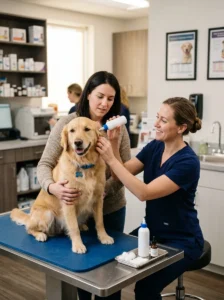
This part is worth being clear about: ear infections generally need veterinary treatment, not home remedies alone. A proper diagnosis usually involves your vet looking inside the ear canal and sometimes taking a sample to determine whether it’s bacterial, yeast-based, or a combination, since the treatment differs depending on the cause.
Treatment typically involves a prescribed ear cleaner and/or medicated drops, used for a specific course of days even after symptoms seem to improve. I learned this lesson with Mishi’s first infection — I stopped the drops a couple of days early because she seemed back to normal, and the infection came back within a week. Since then, I always finish the full course exactly as prescribed, even if everything looks fine sooner.
A few things I’ve learned not to do, sometimes the hard way:
⦁ Don’t use cotton swabs deep in the ear canal. This can push debris further in or cause injury — the curve of the canal means you can’t see what you’re doing past a certain point. Stick to cleaning the visible parts and let your vet handle anything deeper.
⦁ Don’t use human ear-cleaning products or random home remedies (like vinegar solutions) without your vet’s specific approval, since the wrong product can irritate an already inflamed ear.
⦁ Don’t stop prescribed treatment early, even if symptoms clear up before the course is finished.
⦁ Don’t assume every head shake means infection. Occasional shaking is normal; persistent, repeated shaking combined with other symptoms is what warrants attention.
When to Actually See the Vet
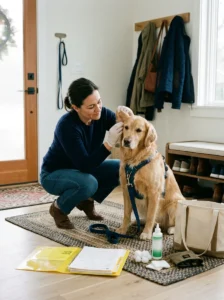
Any time you notice the symptoms listed earlier — odor, discharge, redness, persistent scratching, or head tilting — it’s worth a visit rather than waiting to see if it resolves on its own. Ear infections that go untreated can become more painful, harder to treat, and in some cases lead to more serious complications affecting the middle or inner ear. If your dog has a head tilt that doesn’t go away, seems disoriented, or shows signs of significant pain, treat this as more urgent and contact your vet promptly.
Building a Routine That Actually Prevents Repeat Infections
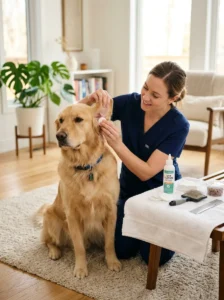
While treating an active infection needs your vet, there’s a lot you can do at home to reduce how often infections happen in the first place. For a dog like Mishi who’s more prone to this, I’ve found that the routine matters more than any single product.
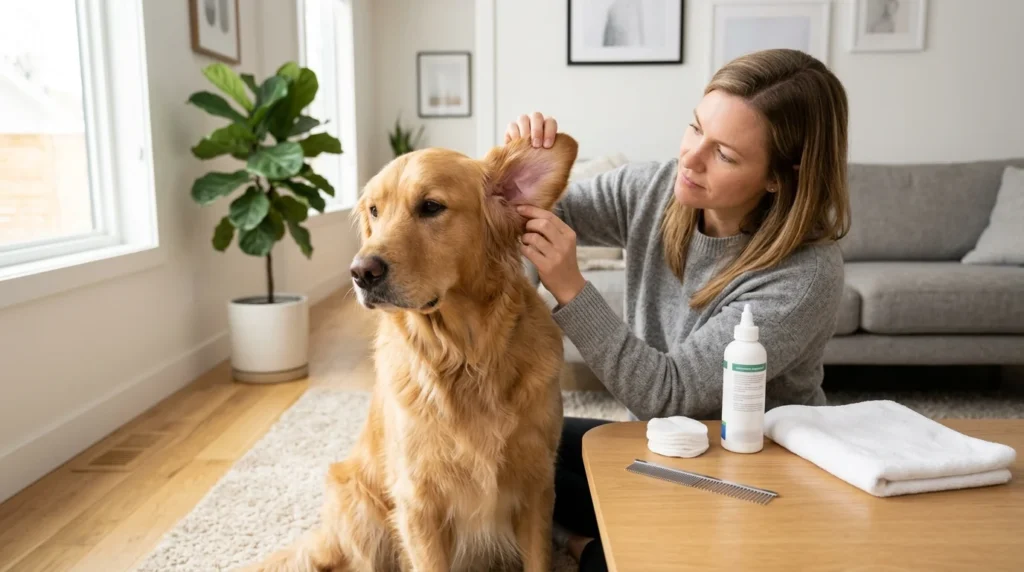
Regular ear checks, tied to an existing habit rather than a separate schedule to remember. I check her ears during our regular Sunday grooming session — attaching it to something already routine has made it far more likely to actually happen consistently.
Routine cleaning for prone dogs, using a vet-approved ear cleaner applied according to her specific instructions rather than guessing at frequency.
Drying ears after swimming or baths. Moisture is one of the biggest contributors, so thoroughly drying the ear flap and gently drying around (not deep inside) the ear canal after water exposure makes a real difference.
Keeping ear hair trimmed, for breeds prone to excessive hair growth in the ear canal — a groomer or vet can help if you’re not comfortable doing it yourself.
Addressing underlying allergies, since chronic ear issues often resolve significantly once an underlying allergy is identified and managed. Our guide to dog allergies goes into this in more depth.
Keeping supplies visible and accessible. Her ear cleaner stays in the same spot as her other grooming supplies — a small thing, but it removes the barrier that used to mean I’d sometimes skip it simply because finding the bottle felt like a hassle in the moment.
Making it positive, not stressful. I pair ear checks with a treat afterward, which has made Mishi genuinely tolerant of, rather than anxious about, having her ears handled — something that wasn’t always the case early on.
For dogs that swim regularly, extra ear vigilance is worth building in specifically. Beyond thorough drying after each swim, some vets recommend a preventive ear-drying solution (different from a treatment-focused cleaner) formulated to help evaporate trapped moisture. If you have a swimming-enthusiast dog, it’s worth asking your vet whether this makes sense for your situation, since ongoing moisture exposure genuinely elevates infection risk.
A few quick answers to common questions: recurring infections are often a sign of an underlying issue — commonly allergies — rather than bad luck, worth discussing as a broader evaluation rather than treating each episode individually. Yes, regular gentle cleaning with a vet-approved product can genuinely help, especially for infection-prone breeds; ask your vet to show you correct technique. Most ear infections aren’t immediate emergencies but should be treated promptly, since they tend to worsen over time — a persistent head tilt or signs of severe pain warrant faster attention. And most infections resolve within one to three weeks of proper treatment, provided you complete the full prescribed course even if symptoms improve sooner.
Dealing with Mishi’s ear infections over the years taught me that this is one of those health issues where a little prevention genuinely goes a long way. Catching early signs, sticking to a regular check-and-clean routine, and not cutting treatment short have made a real difference in how often we deal with this now compared to a few years ago.
If your dog deals with skin or allergy issues alongside ear problems, our guides on dog allergies and dog skin problems cover related territory.