Bruno’s feeding schedule has changed more times than I expected over the years — from four small meals a day as a tiny puppy, down to two meals as an adult, and now with some adjustments as he settles into middle age. Meanwhile, Mishi, adopted as an adult and now well into her senior years, has needed her own distinct schedule and adjustments along the way. Managing both has taught me that “feeding schedule” isn’t a single fixed thing — it genuinely shifts across a dog’s life.
This guide breaks down appropriate feeding schedules and frequency at each major life stage, plus the signs that tell you it’s time to transition.
(Worth noting upfront: I’m an experienced dog owner, not a veterinarian or nutritionist. These are general guidelines — your vet can offer specific recommendations based on your dog’s breed, health, and individual needs.)
Why Feeding Frequency Changes Across Life Stages
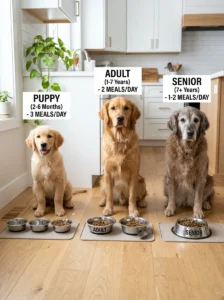
Younger, growing dogs generally need more frequent meals to support their higher metabolic demands and smaller stomach capacity relative to their nutritional needs. As dogs mature, their digestive systems and metabolic needs stabilize, generally allowing for fewer, larger meals without the same risk of energy crashes or digestive strain that more frequent feeding addresses in puppies.
Puppy Feeding Schedule (8 Weeks to 12 Months)
8-12 weeks old: 4 meals per day, spaced relatively evenly throughout waking hours. Puppies this young have small stomachs and high energy needs, making frequent, smaller meals more appropriate than fewer large ones.
3-6 months old: Transition to 3 meals per day as your puppy’s stomach capacity increases and their growth rate begins to moderate slightly.
6-12 months old: Transition to 2 meals per day, generally aligning with what will become their adult feeding schedule going forward.
Toy and small breed considerations: Very small puppies are more prone to hypoglycemia (low blood sugar) if meals are spaced too far apart, which is part of why frequent feeding matters even more for toy breeds during the youngest puppy stage.
Large breed considerations: Large-breed puppies benefit from controlled, steady growth rather than rapid growth, which is part of why large-breed-specific puppy formulas and feeding guidance exist — overfeeding during this stage can contribute to developmental joint issues. Our hip dysplasia guide touches on this connection.
From my experience: Bruno’s puppy feeding schedule felt relentless at first — four feeding times meant constantly thinking about his next meal throughout the day. But watching how reliably his energy and mood tracked with that consistent schedule made it clear how much young puppies genuinely benefit from this frequency, even though it demands more from the owner’s schedule too.
Adult Dog Feeding Schedule (1-7 Years, Varies by Breed)

Two meals per day is the most commonly recommended approach for adult dogs, generally spaced roughly 8-12 hours apart. This tends to support more stable energy and blood sugar levels throughout the day compared to one large meal, and can also help reduce the risk of bloat in breeds prone to this condition, since a single very large meal is sometimes associated with increased risk.
Some owners use one meal per day for adult dogs, which can work for certain dogs and lifestyles, though this is generally considered less ideal than two meals, particularly for breeds prone to bloat or dogs who tend to eat too quickly when very hungry from a longer gap between meals.
Consistency matters more than exact timing. While the exact hour doesn’t need to be identical every single day, maintaining a generally consistent schedule helps with digestion, house training reliability (in younger adult dogs still solidifying this), and overall routine predictability that many dogs seem to find genuinely reassuring.
Senior Dog Feeding Schedule

This is where Mishi’s routine has evolved the most as she’s aged. Senior dogs often benefit from continuing two meals per day, sometimes with portion adjustments rather than frequency changes, since metabolism often slows somewhat with age even if activity level hasn’t dramatically changed.
Watch for changes in appetite or eating behavior, which can sometimes indicate dental issues, an underlying health condition, or simply changing nutritional needs that warrant a vet conversation rather than just adjusting the schedule independently.
Some senior dogs benefit from smaller, more frequent meals again, similar to puppies, particularly if they have digestive sensitivities or conditions that make larger meals less comfortable. This isn’t universal, but it’s worth discussing with your vet if your senior dog seems to struggle with their current schedule.
We adjusted Mishi’s portions (not frequency) as she’s aged, working with our vet to make sure the changes track her actual body condition and energy needs rather than guessing based on age alone.
Sign It’s Time to Transition Feeding Frequency

For puppies moving toward fewer, larger meals:
⦁ Consistently finishing meals promptly without seeming distressed by hunger between feedings
⦁ Stable energy levels throughout the day, without obvious dips suggesting blood sugar crashes
⦁ Steady, appropriate weight gain tracked at vet visits
For adult dogs potentially needing a schedule adjustment:
⦁ Significant changes in activity level, weight trends, or overall health
⦁ Digestive issues that might be related to meal timing or size, worth discussing with your vet
For aging dogs potentially needing senior-stage adjustments:
⦁ Noticeable changes in appetite, interest in food, or eating behavior
⦁ Weight changes despite a previously stable feeding routine
⦁ Any dental issues affecting comfortable eating, covered in more detail in our ⦁ dental care guide
Feeding Schedule and Training Considerations
If you’re actively working on training, particularly with a puppy, scheduled meal times (rather than free-feeding) can actually support training goals, since food motivation tends to be stronger around regular mealtimes, and a predictable schedule supports house training reliability as well.
Multi-Dog Households and Scheduling

With Bruno and Mishi on somewhat different schedules and portions given their different life stages, we feed them separately, at the same general time, but with individually appropriate portions and monitoring. This avoids the food-competition dynamics that can develop if dogs with different needs are fed together from a shared source, and makes it much easier to track whether each dog is actually eating their full appropriate portion.
What Happens If You Skip the Gradual Transitions

Jumping straight from four puppy meals to two adult-style meals, rather than transitioning gradually through the recommended stages, can sometimes cause digestive upset or leave a still-developing puppy without adequate calorie intake during the adjustment period. Following the gradual stage-based transitions, rather than skipping ahead based on convenience, tends to produce a smoother experience for both puppy and owner.
How Feeding Schedule Connects to Bloat Risk

This is worth understanding specifically for deep-chested or larger breeds, where bloat (gastric dilatation-volvulus) is a genuine, serious concern. Some research suggests that a single very large meal, rapid eating, and vigorous exercise immediately before or after eating may all contribute to bloat risk, which is part of why two smaller meals rather than one large meal is often specifically recommended for breeds predisposed to this condition, alongside avoiding strenuous activity in the hour or so surrounding mealtimes. If you have a breed known to be at elevated bloat risk, discussing feeding schedule specifically with this consideration in mind is worth raising directly with your vet, beyond the general life-stage guidance covered in this article.
Travel and Feeding Schedule Disruptions

Maintaining a consistent feeding schedule gets genuinely harder during travel, boarding, or other disruptions to normal routine. A few things that have helped us keep Bruno and Mishi’s schedule reasonably consistent during these situations: packing pre-measured portions for trips rather than estimating on the go, communicating specific feeding times and amounts clearly to anyone else caring for them temporarily, and accepting that minor schedule shifts during travel are generally fine as long as the overall daily amount and rough timing stays reasonably close to normal, rather than stressing over perfect precision during an inherently disrupted period.
Feeding Schedule Adjustments After Illness or Surgery

If your dog has been ill or undergone surgery, your vet may recommend temporary feeding schedule adjustments — smaller, more frequent meals during recovery, for example, even for a dog who normally does well on two meals a day as an adult. This is a good reminder that the schedules covered in this guide represent general healthy-dog guidance, and any specific medical situation should defer to your vet’s tailored recommendations for that particular circumstance, rather than rigidly maintaining a “normal” schedule during a period where your dog’s needs have genuinely changed.
The Connection Between Feeding Schedule and Behavior

Beyond the digestive and metabolic reasons for consistent scheduling, we’ve noticed a genuine behavioral benefit too — both Bruno and Mishi seem calmer and more settled with predictable mealtimes, compared to periods (usually during travel or unusual circumstances) when feeding has been less consistent. This tracks with what trainers often note about dogs generally responding well to predictable routines across many aspects of their care, not just feeding specifically, reinforcing that a consistent schedule offers benefits beyond the purely nutritional considerations covered throughout this guide.
Quick Reference

On the question of Is it bad to feed my adult dog just once a day?: It’s not inherently dangerous for every dog, but two meals is generally considered preferable for most adult dogs, particularly breeds prone to bloat or dogs who tend to eat too quickly when very hungry. On the question of Should feeding times be exactly the same every single day?: Close consistency is more important than exact precision — being within an hour or so of a regular schedule generally provides the routine benefits without requiring rigid exactness every day. On the question of My senior dog seems less interested in food than before — is this normal?: Some decrease in appetite can be a normal part of aging, but a notable or sudden change is worth discussing with your vet to rule out dental issues or other underlying health concerns. On the question of When exactly should I switch my puppy from 3 to 2 meals a day?: This generally happens somewhere between 6-12 months, though the exact timing can vary by breed size and individual development — your vet can help confirm the right timing for your specific puppy based on their growth pattern and overall development. On the question of Does the time of day I feed my dog matter, or just the frequency?: Frequency and overall consistency matter more than the exact time of day, though many owners find that aligning mealtimes with other daily routines (morning walk, evening wind-down) makes the schedule easier to maintain consistently over the long term.
Watching Bruno’s feeding schedule evolve from puppyhood through adulthood, alongside Mishi’s adjustments into her senior years, has shown me how much feeding really is a moving target across a dog’s life, not a single routine to set once and never revisit. Staying attentive to your own dog’s changing needs, rather than assuming an old schedule still fits, makes a genuine difference in their comfort and health at every stage.
For more on feeding fundamentals, our guides on how much to feed your dog and puppy health in the first 8 weeks are excellent companion reads.