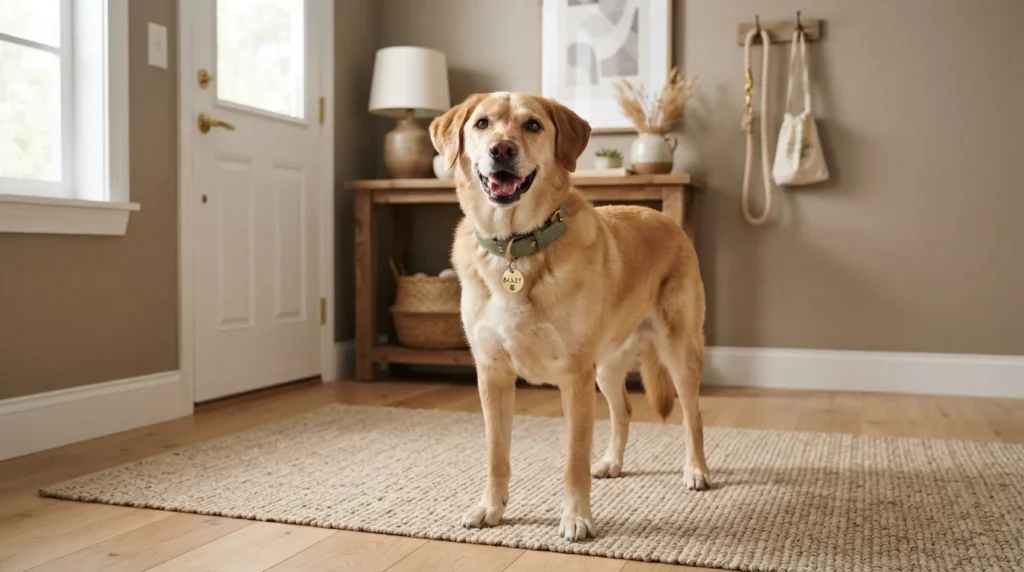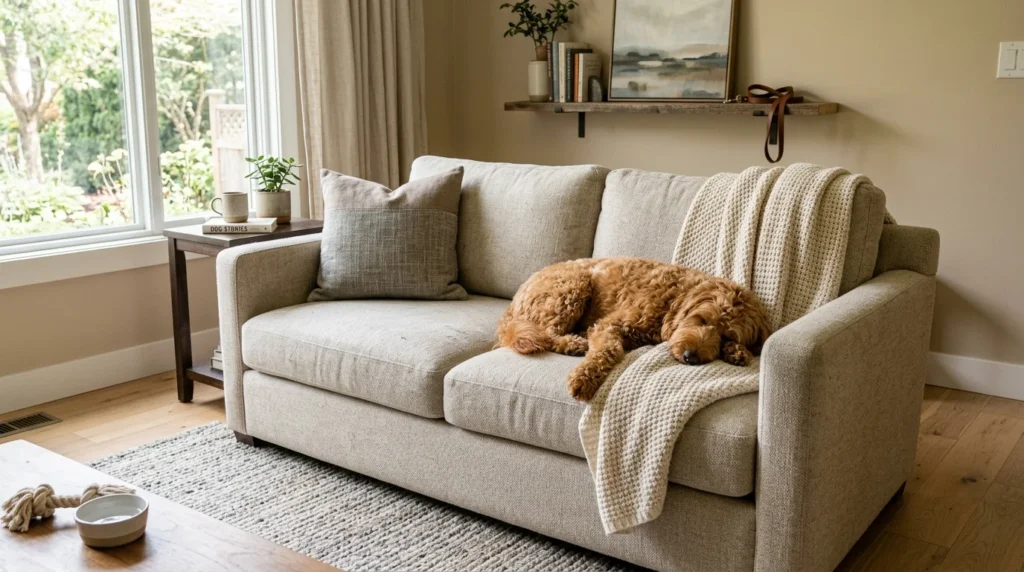
Hank’s back paws hung off the end of his bed like a toddler’s in a cot. My brother-in-law Tom’s Labrador had outgrown it months ago, but he kept squeezing in, circling twice, and folding himself into a sad little question mark. Tom assumed Hank was being dramatic. I assumed Tom needed a bigger bed. Then we measured, and Hank was a good eight inches longer than the mattress. That’s when I started looking into a bed extension for dog setups, and I’ve helped build three since. Here are seven ideas that work.
Measure First, Then Decide What to Extend
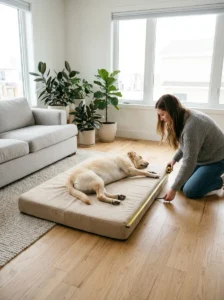
Skip this step and you’ll waste money. Measure your dog from nose to the base of his tail while he’s stretched out, then add four to six inches. Do it again curled up. Then compare both numbers with the bed.
Next, decide what you’re extending. Some people widen their own mattress so a big dog can share it. Others stretch the dog’s bed itself. The ideas below cover both, and most take an afternoon or less.
Watch how your dog actually sleeps, too. Does he sprawl, curl, or lean on one side? That tells you which direction needs the extra room. If he seems stiff, struggles to lie down, or avoids his bed, ask your vet. A longer bed won’t fix everything.
7 Bed Extension for Dog Ideas, From Quick Fixes to Weekend Builds
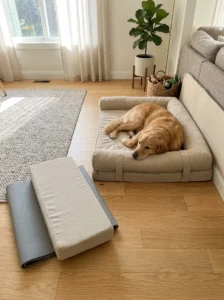
1. The Second Cushion. Push a matching cushion flush against the bed and strap the two together with hook-and-loop bands. Slide a non-slip mat underneath. It takes ten minutes and costs next to nothing.
2. The Foam Block Filler. Cut a firm foam block to fill the gap at the end and wrap it in a washable cover. Choose dense foam. Soft foam squashes flat, and your dog slides straight into the gap.
3. The Folding Mat Add-On. A folding exercise mat placed under the foot end adds length and a cushioned surface. Easy to store when guests visit. Tape the seams so a paw can’t slip between sections.
4. The Padded Bench at the Foot. A low bench with a cushioned top, set against the end of the mattress, gives him a place to rest his legs. Match the heights exactly, and check it can’t be nudged away.
5. The Zip-Together Modular Bed. Some beds come in sections that join with zips, so you add a piece as your dog grows. A decent choice for puppies who will be big.
6. The Wooden Platform Extender. Build a simple frame that matches your bed’s height and bolts to the side rail. Sand every edge, and cover the screws. It’s a weekend project, and it looks like part of the furniture.
7. The One Big Cover. Whatever you build, wrap the whole thing in one fitted sheet or throw. It hides the joins, keeps the surface level, and washes in one go.
The Tip That Surprised Me
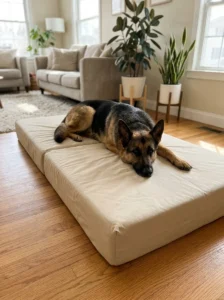
Get the heights exactly level. Hank’s first extension was an inch lower than his bed, and he treated that step like a cliff. He sat at the edge and refused to move. We raised it with a folded towel, and he flopped down that night.
Picture a smooth, flat surface with no ridges or dips. Then bring him in slowly. Put a treat at the far end, praise when he steps across, and let him sniff first. Keep treats small, since they should stay a small part of his daily food. A worn T-shirt in the new section also helps, because it smells like you.
My neighbor Sam learned this with his German shepherd, Ruby. He joined two beds with straps, then watched Ruby sleep on one half and ignore the other. He swapped the lumpy join for a single big cover, and she took the whole thing. “She wanted one bed, not two stuck together,” he told me.
Warnings Worth Knowing
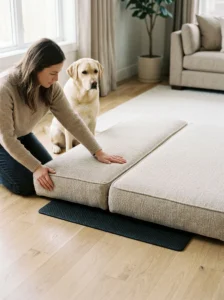
Gaps are the big risk. Check every join, and make sure no paw, collar, or tag can slip into a crack. Fill gaps with foam or push the pieces flush.
Keep everything stable. A sliding extension is annoying at best and dangerous at worst, so use non-slip backing and test it by leaning your own weight on the edge.
Watch for chewing. If your dog chews the foam, cover, or straps and swallows any, call your vet straight away. Chewers need tougher covers and simpler designs.
Mind the heat. Thick foam can trap warmth, so avoid putting it near radiators, and skip heavy covers in summer. Check for hard edges, protruding screws, and loose threads. Keep cords and cleaning products out of reach.
And if you’re extending your own bed, think about weight and height. A big dog jumping on and off a tall mattress can be hard on his joints, so add steps or a ramp if he needs them. If he seems reluctant or sore, ask your vet.
Ready to Try a Bed Extension for Dog Comfort?
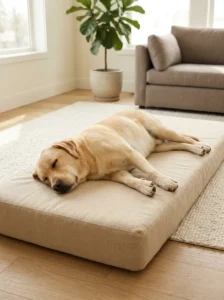
You don’t need all seven. Measure first, pick the simplest idea, and test it for a week before you build anything big. The best bed extension for dog setups are level, stable, and easy to wash. Start with a second cushion and a cover, and see whether he stretches out.
Want the right cushion to go with it? Have a look at my post on cozy dog beds that don’t wreck your living room. And tell me: does your dog sprawl across the whole mattress, or hug the edge like he’s afraid to take up space?