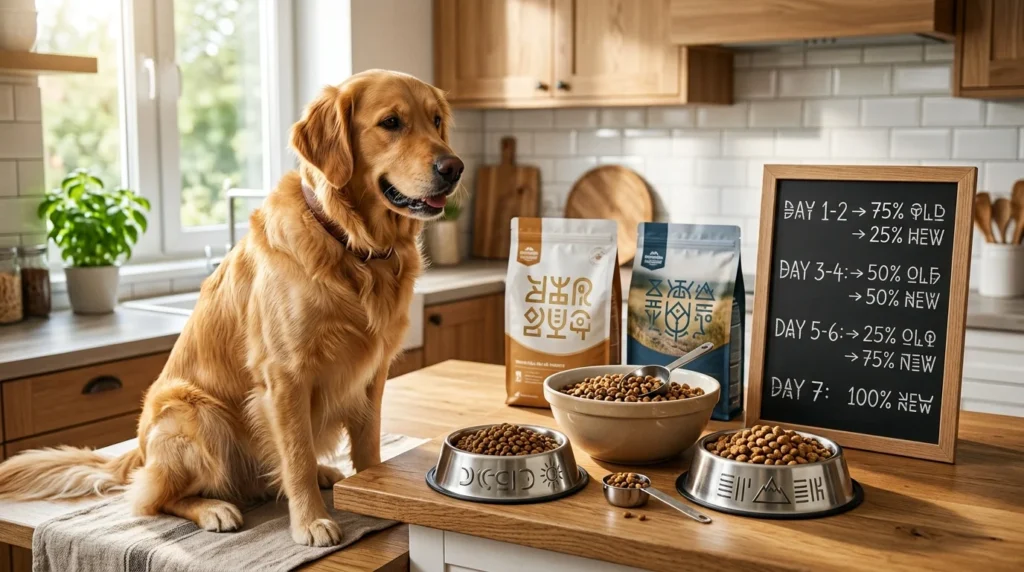
Dogs vomit a lot more easily than humans do — their bodies are simply built that way, with a lower trigger threshold and a digestive system that’s quicker to reject something it doesn’t like. Most of the time, it’s not a sign of anything serious. But the first time it actually happens to your own dog, that biological fact doesn’t feel especially reassuring.
I’ll never forget the first time Bruno threw up as a puppy. It was 11pm, he’d just eaten dinner about an hour earlier, and suddenly there it was on the living room floor. My stomach dropped. I spent the next twenty minutes googling every worst-case scenario I could find, convinced something was seriously wrong.
It turned out he’d just eaten too fast and then immediately gone outside to run around — a completely harmless, common puppy mistake. That night taught me something I still rely on: not all vomiting means an emergency, and not all vomiting is “nothing to worry about” either. The actual skill is knowing how to tell the difference, which is what the rest of this guide is built around. (For context, I’m an experienced owner, not a vet — this reflects what’s helped me sort harmless from urgent, not a diagnosis.)
The Common, Usually-Harmless Reasons
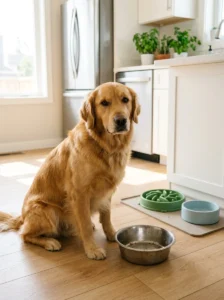
Eating too fast. This was Bruno’s issue that first night. Dogs that gulp their food, especially after a period of excitement or exercise, often bring it back up within an hour. Slow-feeder bowls can help with this if it becomes a recurring pattern.
Dietary indiscretion. A polite way of saying “your dog ate something they shouldn’t have.” Grass, trash, something they found on a walk — dogs are not picky about what goes in their mouths, and their stomachs often respond by sending it right back out.
Sudden food changes. Switching dog food too quickly, without a gradual transition, is one of the most common causes of both vomiting and diarrhea. We cover this in more detail in our guide on switching your dog’s food without stomach upset.
Motion sickness. Some dogs, especially puppies, get carsick the same way people do. If vomiting consistently happens during or right after car rides, this is likely your answer.
Hairballs or grass-eating. Yes, dogs eat grass too — and sometimes vomit it back up. Occasional grass-eating followed by a single vomit is rarely cause for concern.
Stress or excitement. I’ve seen this with both Bruno and Mishi — a particularly stimulating event (a long car trip, a new environment, a vet visit) can sometimes trigger a single vomiting episode that resolves on its own once they calm down.
Vomiting vs. Regurgitation: A Distinction That Actually Matters

Before getting into warning signs, it’s worth knowing that vomiting and regurgitation aren’t the same thing, even though they can look similar at first glance. I didn’t understand this distinction for a long time, and it actually matters for figuring out the likely cause.
Vomiting is an active process — you’ll usually see abdominal heaving, retching sounds, and effort involved before anything comes up. It typically involves partially digested food and often some yellowish bile, especially if your dog’s stomach was relatively empty.
Regurgitation is more passive — food (often still fairly intact and undigested, sometimes tube-shaped from the esophagus) comes back up with little to no effort or warning, sometimes shortly after eating, without the heaving motion associated with vomiting.
Regurgitation can point toward issues with the esophagus rather than the stomach, and if it happens repeatedly, it’s worth mentioning specifically to your vet using that distinction, since it can help narrow down the underlying cause faster than just describing it generally as “throwing up.”
When It Signals Something More Serious

This is the part that matters most, because it’s genuinely hard to tell sometimes whether you’re dealing with “ate too fast” or something that needs immediate attention.
A single vomiting episode in an otherwise normal, energetic dog is very different from repeated vomiting over several hours, or vomiting combined with other symptoms — frequency and pattern matter more than the vomiting itself.
Watch for these warning signs alongside vomiting:
⦁ Vomiting more than two or three times within a few hours
⦁ Blood in the vomit (looks red, or sometimes like coffee grounds)
⦁ Vomiting paired with diarrhea, especially if it’s also bloody
⦁ Lethargy or weakness that doesn’t improve
⦁ Refusing water as well as food
⦁ A bloated or visibly painful abdomen
⦁ Known or suspected ingestion of something toxic, a foreign object, or a household chemical
⦁ Vomiting in a puppy that hasn’t completed their vaccination series (parvovirus is a serious concern at this age)
If you see any combination of these, this isn’t a “wait and see” situation — it’s time to call your vet or an emergency animal hospital right away.
Puppies Specifically Deserve Extra Caution

Vomiting in puppies deserves a lower threshold for concern than in adult dogs, mainly because puppies dehydrate much faster and because parvovirus — a serious, sometimes fatal disease — typically presents with vomiting and diarrhea in young, incompletely vaccinated dogs. If your puppy hasn’t finished their vaccination series and is vomiting, especially alongside lethargy or diarrhea, treat it as urgent and call your vet rather than waiting it out. Our puppy vaccination schedule guide covers the timeline in more detail.
My Own Checklist When Bruno or Mishi Throws Up

Over the years, I’ve developed a simple mental routine I run through whenever this happens. It’s not medical advice, just the practical process that’s worked for our household:
1. Check what came up, if I can. Was it food, foam, bile, or something unidentifiable? This helps me figure out if it’s diet-related or potentially something they got into.
2. Think about the last 24 hours. Did we change food recently? Was there a walk where they might have eaten something off the ground? Any new treats?
3. Watch their energy level closely for the next few hours. A dog who vomits once and then acts completely normal — playing, drinking water, interested in their surroundings — is usually fine. A dog who becomes withdrawn or lethargic afterward needs more attention.
4. Withhold food briefly, but not water. Most vets recommend a short period without food (not water) after a single episode, followed by a bland diet if things settle down. I always confirm this with our vet rather than assuming, since it can vary by situation.
5. Call the vet if anything feels off, even if I can’t fully explain why. I’d rather make an unnecessary call than miss something serious.
The instinct to “wait and see” is natural, especially once a scare or two teaches you that most vomiting really is harmless. But I’ve also learned not to let that instinct override genuine red flags. With Bruno’s first real scare — vomiting combined with him refusing his favorite treats — that combination was what told me something was actually wrong, not just an upset stomach from a fast meal.
If Your Vet Clears a Bland Diet

If your vet confirms it’s safe to feed after a vomiting episode, a temporary bland diet is commonly recommended — usually plain boiled chicken (no skin, no seasoning) and plain white rice, in small portions, gradually returning to regular food over a few days. This isn’t something to start on your own without checking with your vet first, especially if your dog has any existing health conditions or is on a special diet.
Hydration Matters Just as Much as the Vomiting Itself
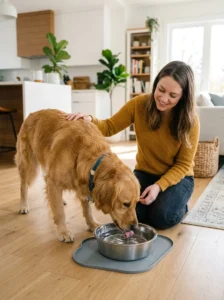
One detail that’s easy to overlook in the moment: monitoring hydration matters just as much as monitoring the vomiting itself, especially if episodes repeat. Signs of dehydration in dogs include gums that feel tacky or dry rather than moist, reduced skin elasticity (gently lifting the skin between the shoulder blades should snap back quickly; slow return can indicate dehydration), sunken-looking eyes, and noticeable lethargy.
With small breeds and puppies especially, dehydration can develop faster than owners expect, since their smaller body size means even moderate fluid loss represents a larger proportional impact. If a vomiting dog is also refusing water, or vomiting any water they do drink, this moves the situation toward urgent rather than wait-and-see, since rehydration may need to happen through veterinary means like subcutaneous or IV fluids rather than something manageable at home.
When It Becomes a Recurring Pattern, Not a One-Off

If vomiting becomes recurring rather than isolated, diet is often worth examining closely, beyond just the immediate “did they eat something bad” question.
Food intolerances, even without a full allergy, can cause recurring mild vomiting in some dogs, particularly with specific proteins or ingredients that don’t agree with them.
Eating habits, like the gulping behavior Bruno showed as a puppy, can become a chronic pattern rather than a one-time event for some dogs, in which case slow-feeder bowls or smaller, more frequent meals can make a real, lasting difference.
Treat overload, especially a sudden increase in rich or unusual treats, can trigger vomiting even when the regular diet itself is fine.
Inconsistent feeding schedules, where a dog goes too long between meals, can sometimes cause bile-related vomiting (often a yellowish, foamy vomit, sometimes occurring early in the morning before the first meal), since an empty stomach can itself become irritating for some dogs.
For Bruno, once we moved past his puppy gulping phase, any recurring vomiting prompted me to start a brief log — date, time, what he’d eaten in the prior 24 hours, what the vomit looked like. This turned out genuinely useful during a stretch when he had several episodes over a couple of weeks that seemed unrelated to anything obvious. When I brought the log to our vet, she spotted a pattern I’d completely missed — it consistently happened a few hours after a specific treat we’d recently started giving him. Removing that treat resolved it entirely. Without the log, I doubt I’d have connected those dots on my own.
What Changes as Dogs Get Older

With Mishi, as she’s gotten older, I’ve noticed I pay closer attention to any vomiting than I did when she was younger. Older dogs are more likely to have underlying conditions — kidney issues, dental problems, or other age-related changes — that can show up as vomiting. It doesn’t mean every episode is serious, but it does mean I’m quicker to mention it to her vet at routine visits, even if it resolved on its own.
A few quick answers to questions that come up often:
*Is it normal for a dog to vomit occasionally?* Occasional, isolated vomiting in an otherwise healthy, active dog is common and usually not a concern. Frequent or recurring vomiting is not normal.
*Should I withhold food after my dog vomits?* Many vets recommend a brief period without food (while still offering water) after a single episode, but confirm with your vet, especially for puppies, senior dogs, or dogs with health conditions.
*What does it mean if there’s blood in the vomit?* Never ignore this — it can indicate anything from minor irritation to a more serious internal issue, and warrants a prompt call to your vet.
*Can stress cause vomiting?* Yes — anxiety, excitement, or a stressful event can occasionally trigger it, similar to how stress affects digestion in people.
That first scare with Bruno taught me to stop panicking at every single episode — but it also taught me to actually pay attention rather than dismissing it automatically. Most of the time, it really is something simple. But learning the genuine warning signs has made me a much calmer, more capable owner during the times it actually mattered.
If your dog is dealing with digestive issues more broadly, our guides on dog diarrhea causes and home care and recognizing pain in dogs round out the picture.