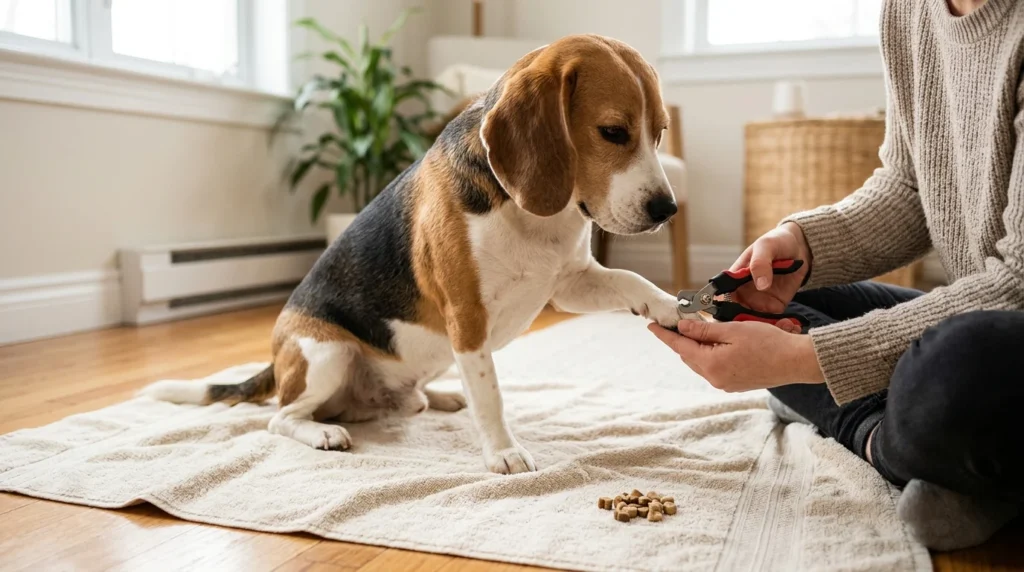
I learned this lesson the hard way the first time I switched Bruno’s food — eager to get him onto what I thought was a better formula, I made the change over about two days instead of properly transitioning, and the resulting week of digestive upset was entirely my own doing. Every food switch since then has followed a much slower, more careful process, and we haven’t had a repeat of that particular mess.
This guide covers exactly how to transition your dog’s food properly, why rushing it causes problems, and what to do if upset happens anyway.
(Worth noting upfront: I’m an experienced dog owner, not a veterinarian. This reflects general, widely supported transition guidance — if your dog has a specific health condition or you’re transitioning for a medical reason, follow your vet’s specific guidance for that situation.)
Why Sudden Food Changes Cause Digestive Upset

A dog’s digestive system, including the balance of gut bacteria, adjusts to whatever food they’re regularly eating. A sudden, abrupt switch — even to an objectively higher-quality food — doesn’t give that system time to adjust, often resulting in diarrhea, vomiting, gas, or general digestive discomfort, regardless of how good the new food actually is.
This was exactly my mistake with Bruno — the food itself wasn’t the problem; the speed of the transition was.
The Standard Gradual Transition Method
The widely recommended approach is a gradual swap over 7-10 days, slowly increasing the proportion of new food while decreasing the old:
Days 1-2: 75% old food, 25% new food
Days 3-4: 50% old food, 50% new food
Days 5-6: 25% old food, 75% new food
Days 7+: 100% new food
This gives your dog’s digestive system time to gradually adjust to the new formula, ingredients, and fiber content, rather than facing an abrupt change all at once.
From my experience: Every transition since that first rushed mistake with Bruno has followed something close to this exact schedule, and the difference has been dramatic — no digestive upset, no stress about cleaning up accidents, just a smooth, uneventful switch each time.
Adjusting the Timeline for Sensitive Dogs
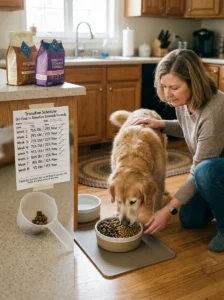
Some dogs have more sensitive digestive systems than others and may benefit from an even slower transition, sometimes extending to two weeks or longer, with smaller incremental increases at each stage. If your dog has a history of digestive sensitivity, or if you notice any signs of upset even during a standard gradual transition, slowing down further is a reasonable adjustment rather than pushing through the original timeline.
Signs the Transition Is Going Well
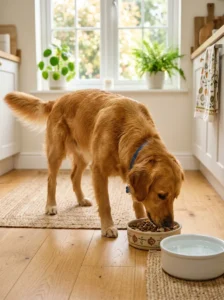
⦁ Stool remains consistent and well-formed throughout the transition period
⦁ Normal appetite and enthusiasm for meals
⦁ No vomiting or excessive gas
⦁ Stable energy levels
Signs You Should Slow Down the Transition
⦁ Loose stool or diarrhea developing during the transition
⦁ Vomiting
⦁ Noticeably reduced appetite or reluctance to eat
⦁ Excessive gas or visible digestive discomfort
If you notice these signs, going back to the previous successful ratio for a few extra days before continuing the transition, rather than pushing forward on the original schedule, tends to resolve things without needing to restart the entire process from scratch.
Why Some Food Switches Are Harder Than Others
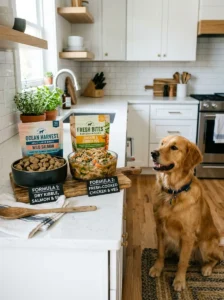
Not all transitions carry equal risk of digestive upset. A few factors that make a switch more likely to cause issues:
Switching between very different formulas — for example, moving from a chicken-based formula to a completely different protein source, or between significantly different fiber or fat content levels, tends to require more careful transitioning than switching between similar formulas from different brands.
Switching between food formats — moving from dry to wet food, or vice versa, involves more significant changes in moisture content and texture, which can be more noticeable for some dogs’ digestive systems.
Switching for a dog with an existing sensitive stomach — dogs with a history of digestive issues generally benefit from extra caution and a slower timeline regardless of how similar the old and new foods might seem.
Transitioning When Switching for Medical Reasons
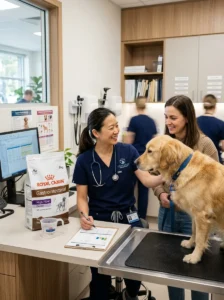
If your vet has recommended a specific food switch for a health reason — like an allergy investigation, a prescription diet, or a condition requiring dietary management — follow their specific transition guidance for your situation, since some medical transitions need to happen faster (or with different considerations) than the standard gradual approach used for a routine, non-medical switch.
What to Do If Digestive Upset Happens Despite a Gradual Transition
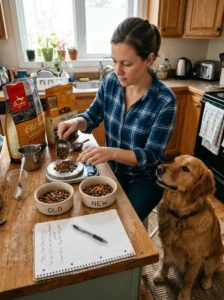
Even with a careful approach, some dogs occasionally experience mild upset during a transition. If this happens:
1. Pause the transition at the current ratio, rather than continuing to increase the new food proportion
2. Give it a few extra days at that ratio before attempting to continue
3. If upset is significant or doesn’t improve, contact your vet, since this could indicate either an unusually sensitive transition or a genuine food intolerance worth investigating further
4. Consider whether the new food itself might not agree with your dog, separate from the transition speed issue, particularly if symptoms don’t improve even after slowing down significantly
Transitioning Puppies vs. Adult Dogs

The same gradual principle applies to puppies, though transitions related to normal life-stage food changes (like moving from puppy to adult formula) are often planned around your vet’s recommended timing rather than an arbitrary switch date, and should still follow the same gradual mixing approach to minimize digestive upset during the transition itself.
Keeping Records During a Transition
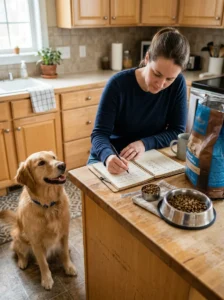
I’ve found it useful to jot down a quick daily note during any food transition — what ratio we’re at, and how stool and appetite look that day. This makes it much easier to identify exactly when an issue started if something does go wrong partway through, rather than trying to remember details after the fact.
Why I Now Plan Food Transitions Around My Own Schedule
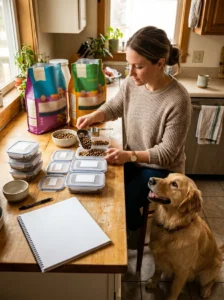
One practical lesson from that rushed first transition: I now deliberately plan food switches for periods when I’m not traveling or unusually busy, since the process requires some attention — measuring out the correct daily ratios, watching for any signs of upset — that’s easy to forget or rush through during a hectic week. Starting a transition on a weekend, when I have more time to monitor how Bruno or Mishi is responding, has made the whole process feel far less stressful than trying to fit careful monitoring into an already packed schedule.
Transitioning Multiple Dogs Simultaneously vs. Separately
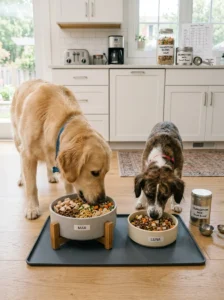
If you have more than one dog and are switching foods for both, it’s worth considering whether to transition them simultaneously or stagger the process. We generally transition Bruno and Mishi at the same time when switching to the same new food, since this simplifies meal prep, but we watch each dog’s individual response separately rather than assuming they’ll react identically. Mishi has occasionally needed a slightly slower transition than Bruno for the same food switch, reinforcing that even dogs in the same household with similar diets can have individually different sensitivity levels worth respecting rather than assuming a one-size-fits-all timeline works equally well for every dog.
What a Smooth Transition Actually Looks Like Day-to-Day
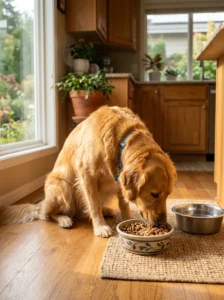
To give a concrete sense of what successful transitions have looked like for us since learning this lesson: stool remains consistently well-formed throughout the week, appetite stays enthusiastic and consistent meal to meal, and there’s no noticeable gas, lethargy, or other signs of digestive distress at any point during the gradual ratio increases. When a transition goes this smoothly, it’s honestly almost uneventful — which, after that first chaotic rushed switch with Bruno, I’ve come to genuinely appreciate as the actual goal, rather than expecting some dramatic, exciting “before and after” with a new food.
Building a Reusable Transition Checklist
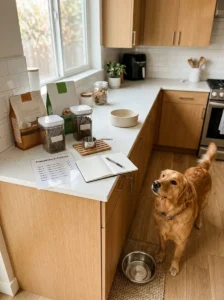
After going through this process several times now, I’ve essentially internalized a simple checklist that makes each new transition easier than the last: confirm both old and new food are available in sufficient quantity for the full transition period before starting, choose a relatively calm week without major disruptions to begin, prepare a simple written schedule of the daily ratios so I’m not trying to calculate percentages from memory each day, and keep the previous food’s packaging accessible in case I need to reference feeding amounts or ingredients during the transition. Having this routine established has removed most of the uncertainty that made that first transition feel more complicated than it needed to be.
When a Transition Reveals an Underlying Food Sensitivity
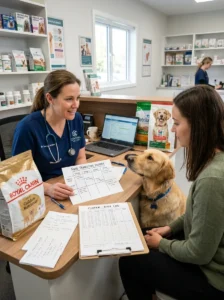
Occasionally, a food transition that follows all the right gradual steps still results in persistent digestive upset once you reach a higher percentage of the new food, even after slowing down further. This pattern — upset that specifically correlates with increasing proportion of the new food, rather than simply the speed of transition — can actually be useful diagnostic information, suggesting the new food itself, rather than transition speed, may not agree with your dog. If you notice this pattern, it’s worth discussing with your vet rather than continuing to push through a transition that seems to be revealing a genuine intolerance rather than just requiring more patience.
Quick Reference
On the question of Is a 7-10 day transition really necessary, or can I do it faster?: For most dogs, yes, this timeline genuinely helps avoid digestive upset. Rushing the process, as I learned firsthand, often results in exactly the kind of mess a gradual transition is designed to prevent. On the question of Can I transition food while also introducing other dietary changes, like adding a new treat?: It’s generally better to introduce one change at a time, including treats, so that if any digestive issue does arise, you can more easily identify what actually caused it rather than facing multiple simultaneous variables. On the question of My dog seems to actually prefer the new food immediately — can I skip the gradual transition?: Even if your dog seems eager for the new food, the gradual approach is still recommended, since the digestive upset risk relates to the speed of the actual dietary change, not your dog’s enthusiasm or preference for the new food’s taste. On the question of How do I know if my dog just doesn’t like the new food, versus having a genuine digestive reaction?: Reduced enthusiasm without other symptoms (normal stool, normal energy) may simply be a preference issue, while loose stool, vomiting, or excessive gas point toward an actual digestive reaction worth addressing through a slower transition or reconsidering the food choice itself.
That first rushed transition with Bruno taught me a lesson I haven’t needed to relearn since — patience during a food switch genuinely pays off, saving both your dog discomfort and you a lot of cleanup. If you’re planning a food switch, building in the full 7-10 days (or longer for a sensitive dog) from the start will save you the trouble I went through learning this the hard way.
For more on feeding fundamentals, our guides on how much to feed your dog and reading a dog food label are excellent next reads.