I didn’t know much about hip dysplasia until a friend’s larger-breed dog was diagnosed with it, and watching her navigate that diagnosis taught me to pay much closer attention to how both Bruno and Mishi move, especially as they’ve gotten older. It’s one of those conditions that sounds intimidating from the name alone, but understanding what’s actually happening makes it a lot less overwhelming.
In simple terms, hip dysplasia is a developmental condition where the hip joint doesn’t form properly — instead of the ball and socket fitting snugly together, there’s looseness or malformation that causes the bones to grind or rub instead of sliding smoothly. Over time, this leads to wear, inflammation, and eventually arthritis in the joint. It’s most commonly associated with larger and giant breeds — German Shepherds, Labradors, Golden Retrievers, and similar breeds come up frequently — though it can occur in dogs of any size, typically influenced by a combination of genetics, growth rate, weight, and exercise patterns during puppyhood.
What’s Actually Behind It
Genetics play the largest role — it’s a heritable condition, which is why responsible breeders screen for hip health in breeding dogs. That said, genetics alone don’t always determine the outcome.
Rapid growth, particularly in large-breed puppies, can contribute to developmental joint issues. This is part of why large-breed puppy foods are formulated differently — to support more controlled, steady growth rather than rapid weight gain.
Excess weight, both during growth and adulthood, puts additional stress on developing or already-compromised joints.
Exercise patterns during growth, particularly high-impact activities in young, still-developing puppies of large breeds, may contribute to joint stress, which is why many vets recommend moderating certain high-impact exercises until growth plates have closed.
(Quick note before going further: I’m not a vet — this article is meant to help you recognize when something’s worth bringing up, not to substitute for proper diagnosis through exam and imaging.)
Signs Worth Watching For

Symptoms can appear as early as a few months of age in severe cases, or develop gradually over years in milder cases — sometimes not becoming obvious until a dog reaches middle age or beyond. Watch for:
⦁ Reluctance to jump, run, or climb stairs
⦁ A noticeable “bunny hop” gait when running, where both back legs move together rather than alternating normally
⦁ Stiffness, particularly after rest, that improves once your dog is up and moving
⦁ Decreased activity or reluctance to exercise as much as usual
⦁ Difficulty rising from a lying position
⦁ Visible looseness or instability in the hip area
⦁ Muscle loss in the hind legs over time, as a dog compensates by relying less on the affected joints
⦁ Audible grinding or clicking sounds from the hip area during movement
Watching my friend’s dog, the bunny-hop gait was the most obvious tell — it’s a distinctive enough pattern that once you’ve seen it, you recognize it immediately. It’s a good example of why learning to actually watch how your dog moves, not just whether they’re moving, matters.
A Related Condition Worth Knowing: Elbow Dysplasia
While hip dysplasia gets the most attention, a similar condition — elbow dysplasia — affects the front legs and shares many of the same underlying causes and risk factors. Some breeds are predisposed to one, the other, or both. Symptoms can overlap somewhat (stiffness, reluctance to exercise, an altered gait), though elbow dysplasia more specifically affects front-leg movement and weight-bearing. If your vet mentions one condition during a screening or diagnostic workup, it’s reasonable to ask whether the other is also a consideration for your breed, since predisposition often runs together genetically.
How It’s Actually Diagnosed
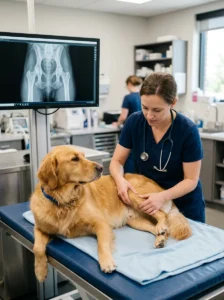
If your vet suspects hip dysplasia based on a physical exam — checking for joint looseness, range of motion, and pain response — the next step is typically X-rays, which allow a clear look at the joint structure and the extent of any degeneration. Diagnosis often happens earlier than owners expect, sometimes during a routine puppy exam if a vet notices early warning signs in a predisposed breed.
How It’s Managed Long-Term

The good news is that hip dysplasia, while not curable, is very manageable in most cases, and many dogs live full, active lives with appropriate management. Treatment depends on severity and ranges from conservative management to surgical options.
Weight management is one of the most impactful things an owner can control directly. Extra weight significantly increases stress on already-compromised joints, so maintaining a lean, healthy weight is consistently emphasized by vets managing this condition.
Controlled, low-impact exercise, like swimming and steady leash walks, puts less stress on joints than running, jumping, or high-impact play, while still providing the exercise and muscle maintenance that’s actually beneficial.
Joint supplements, like glucosamine and chondroitin, are commonly recommended, though it’s worth discussing specific products and dosing with your vet rather than choosing based on packaging claims alone.
Pain management and anti-inflammatory medication, prescribed and monitored by your vet, for dogs experiencing discomfort.
Physical therapy, increasingly available for dogs, which can help maintain mobility and muscle strength around the affected joint.
Surgical options, ranging from less invasive procedures to full hip replacement in severe cases, are typically reserved for dogs whose quality of life is significantly affected by conservative management alone. Your vet, often in consultation with a veterinary orthopedic specialist, can help determine if surgery makes sense for your dog’s specific situation, weighing factors like age, severity, and overall health alongside the practical recovery commitment involved.
Beyond the medical management side, a few practical adjustments make a real difference in comfort: modified exercise routines, often shorter, more frequent walks rather than infrequent long ones; ongoing weight monitoring, since weight tends to creep up gradually if not actively managed, and even small increases can meaningfully affect joint comfort; and attention to how cold or damp conditions might worsen discomfort, similar to how some humans with joint issues report similar patterns.
What struck me most, watching my friend manage her dog’s diagnosis, was how much quality of life remained possible with the right adjustments. Ramps instead of stairs, orthopedic bedding, controlled exercise routines, and consistent weight management made a visible difference in her dog’s comfort over time. It’s a condition that requires ongoing attention rather than a one-time fix — and since it can be progressive, an approach that works well at one stage may need adjusting as a dog ages, which is part of why staying in regular contact with your vet matters rather than assuming an initial plan works indefinitely.
Can It Be Prevented?

Since genetics play a significant role, prevention isn’t always fully possible, but meaningful steps reduce risk or severity, especially in predisposed breeds: choosing a breeder who screens breeding dogs for hip health, feeding an appropriate large-breed puppy formula if applicable, maintaining a healthy weight throughout your dog’s life (not just adulthood), moderating high-impact exercise during the growth period, and regular vet checkups that include attention to joint health.
Since genetics play such a significant role, the breeding decisions made well before a puppy is even born matter enormously. Reputable breeders of high-risk breeds typically screen their breeding dogs through hip evaluation programs, which assess hip conformation and assign ratings used to guide breeding decisions. If you’re considering a puppy from a predisposed breed, asking a breeder directly about hip and elbow screening for the parents is a reasonable, important question — and a breeder unable or unwilling to provide this information is a meaningful red flag, not just an inconvenience.
For large-breed puppies specifically, many vets recommend favoring controlled, moderate activity over high-impact exercises like repeated jumping, forced long-distance running, or rough play on hard surfaces, at least until growth plates have closed (timing varies by breed, something your vet can advise on). This isn’t about restricting normal puppy play entirely, but being thoughtful about activity type and intensity during a developmentally sensitive window.
When to Actually Call the Vet

If you notice any of the early signs mentioned above — especially in a predisposed breed — bring it up at your next visit rather than waiting. Earlier intervention generally allows for more conservative management and can help slow joint damage progression. Seek prompt attention if your dog shows sudden severe lameness, appears to be in significant pain, or seems unable to bear weight on a leg at all, since this could indicate a more acute injury requiring immediate evaluation.
Planning for the Cost

Management can range widely in cost, from relatively inexpensive ongoing weight management and supplements to significant expense if surgery becomes necessary. Asking your vet early about the likely range of approaches for your dog’s specific severity, and what each tends to cost, has helped friends I know managing this condition plan financially rather than facing major decisions under time pressure. Pet insurance, obtained before a diagnosis, can also meaningfully offset costs for predisposed breeds — worth researching while your dog is still young and healthy.
A few quick answers: hip dysplasia is most common and most discussed in large and giant breeds, but smaller breeds can develop it too, just less frequently. Yes, dogs with it can still live active lives with appropriate management — weight control, controlled exercise, sometimes medication or supplements. Age of onset varies significantly, from a few months in severe cases to middle age or later in milder ones. And diet, particularly during the growth phase for large-breed puppies, can influence growth rate and weight, both connected to joint health — our dog nutrition guide covers feeding fundamentals that support this.
Hip dysplasia isn’t something I’ve dealt with directly with Bruno or Mishi, but learning about it through a friend’s experience changed how closely I pay attention to how my own dogs move, especially as they get older. If you’re noticing any early warning signs, bringing it up with your vet sooner rather than later genuinely makes a meaningful difference in how manageable it stays.
For more on supporting your dog’s joints and mobility long-term, our guides on joint health and preventing arthritis early and senior dog care are worth reading next.