Here’s a myth that nearly cost my friend Jo a vet bill: “If a plant is sold in a supermarket, it must be safe for cats.” Nope. Jo bought a lovely trailing pothos on a whim, and her cat, Salem, chewed a leaf within the hour. The vet calmed her down, but the scare stuck. I’m a dog person, yet I’ve helped plenty of cat owners shop for greenery. So here are 17 cat friendly house plants that are generally considered safe, plus the rules I follow.
Why “Safe” Still Deserves a Second Look
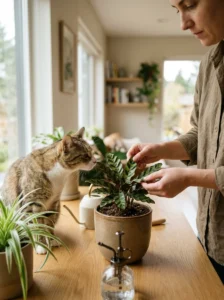
Non-toxic doesn’t mean edible. Even a safe plant can cause a mild tummy upset if your cat chews a lot of it. And the plant isn’t the only risk. Fertilizer, pesticide sprays, and some potting mixes can bother pets too, so choose pet-safe products and ask your garden centre what’s been used.
Before you buy anything, check the plant’s botanical name against the ASPCA’s toxic and non-toxic plant lists. Common names are slippery. Two completely different plants can share one. If you can’t find it, leave it on the shelf and ask your vet.
17 Cat Friendly House Plants, Sorted by Effort
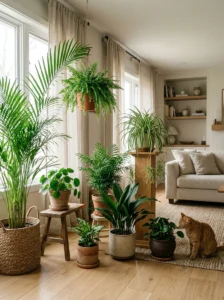
Easy and forgiving
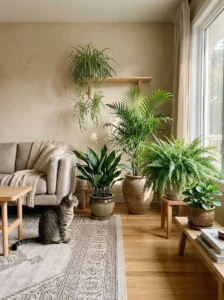
1. Spider plant. Tough, fast-growing, and cats love batting the dangling babies. Expect some nibbled tips. Hang it up if yours gets carried away.
2. Boston fern. Lush and feathery. It likes humidity, so a bright bathroom suits it.
3. Parlor palm. Slow, graceful, and happy in low light. A good first plant.
4. Areca palm. Taller and fuller. Great for filling an empty corner.
5. Cast iron plant. Almost impossible to kill. Perfect if your light is dim and your memory is patchy.
6. Peperomia. Chunky little leaves in lots of patterns. Compact enough for a shelf.
Pretty, but a bit fussier
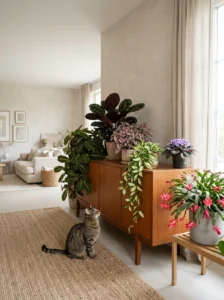
7. Calathea. Gorgeous patterned leaves. But it sulks in dry air, so mist it or use filtered water.
8. Prayer plant. Leaves fold up at night. Cats find that weirdly fascinating.
9. Polka dot plant. Pink or white speckles. Pinch it back to keep it bushy.
10. African violet. Small, flowering, and happy on a bright windowsill. Water the soil, not the leaves.
11. Hoya. Waxy leaves and sweet, star-shaped flowers. It trails nicely from a high shelf.
12. Christmas cactus. Blooms in winter and has soft, jointed stems rather than spines.
Low-water and compact
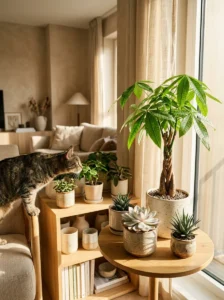
13. Haworthia. A tiny succulent that’s softer than it looks. Great for desks.
14. Echeveria. Rosette-shaped and sculptural. Needs lots of light.
15. Money tree. Braided trunk, glossy leaves. A showpiece for a bright room.
Snackable on purpose
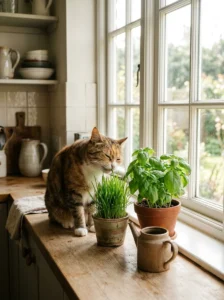
16. Cat grass. Wheat, oat, or barley grown for chewing. Cheap and cheerful.
17. Basil. Smells lovely and sits happily in the kitchen. Offer it as an occasional nibble, not a salad.
The Tip That Surprised Me
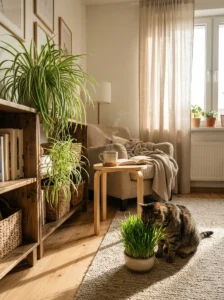
Plant a decoy. Grow a pot of cat grass and put it where your cat likes to hang out. Many cats go for the grass and leave the rest alone. Some don’t, so it’s no guarantee. But picture a Sunday morning: tea in hand, cat munching grass, spider plant untouched. Worth a few dollars.
Also, think about the pot. Heavy ceramic, wide bases, and high shelves keep plants upright. Wobbly pots and curious paws are a bad mix. And check your plants weekly for chewed leaves, trimming anything damaged.
A Real Example From Jo’s Living Room
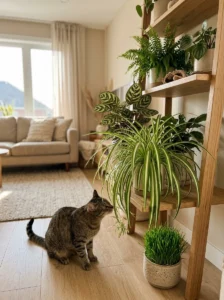
After the pothos scare, Jo gave it away and rebuilt her shelf. Spider plant at the front, calathea in the middle, a pot of cat grass on the floor. Salem investigated everything for two days, took a few bites of grass, and then lost interest. “I thought I’d have to give up plants,” Jo told me. “Turns out I just had to shop smarter.”
Plants to Keep Out of the House
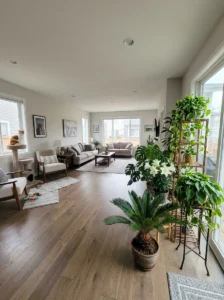
Some are seriously dangerous. Lilies, including true lilies and daylilies, can be extremely harmful to cats, and even pollen on fur can cause trouble. Sago palm is another one to skip. Other popular plants best avoided include pothos, philodendron, monstera, aloe vera, jade plant, snake plant, and dieffenbachia.
If your cat chews a plant you’re unsure about, or shows drooling, vomiting, or lethargy, call your vet or an animal poison helpline straight away. Take the plant’s name or a photo. Don’t wait.
Quick Questions
Is a plant safe if it’s labeled “pet-friendly”?
Not always. Labels vary. Check the botanical name against a trusted list.
What if my cat digs in the soil?
Cover the top with smooth pebbles or a mesh guard. Some cats find loose soil irresistible.
Can kittens be around these plants?
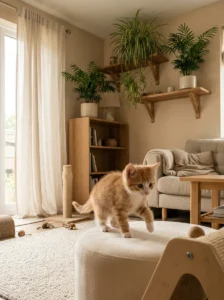
Kittens chew everything. Keep plants high, and ask your vet if you’re unsure.
Ready to Add Some Cat Friendly House Plants?
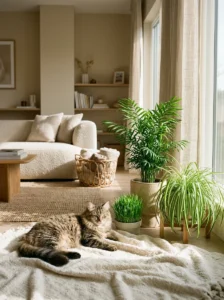
You don’t need all 17. Start with two or three, maybe a spider plant, a parlor palm, and a pot of cat grass. Cat friendly house plants make a home feel alive without the stress, as long as you check each name, watch your cat, and keep the risky ones out.
Want something for the dog in the house, too? Have a look at my post on cozy dog beds that don’t wreck your living room. And tell me: which plant did your cat try to eat first?