
The raw feeding community is genuinely passionate, and I spent a fair amount of time researching this option seriously for Bruno and Mishi a few years ago, going back and forth on whether it made sense for our household. We ultimately decided against it, but the research process taught me a lot about both the legitimate appeal and the real, practical risks involved — information I think is worth sharing for anyone else weighing this decision.
(Worth noting upfront: I’m an experienced dog owner, not a veterinarian or veterinary nutritionist. Raw feeding is a genuinely debated topic even among veterinary professionals, with legitimate perspectives on multiple sides — this guide aims to present a balanced view, but a direct conversation with your vet is especially valuable before making this particular dietary decision.)
What a Raw Diet Actually Involves
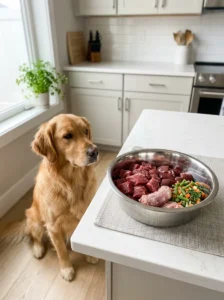
Raw dog food diets typically consist of uncooked meat, bones, organs, and sometimes vegetables or fruits, fed either through a carefully formulated commercial raw product or a homemade approach (often referred to as BARF — Biologically Appropriate Raw Food — or similar frameworks). The underlying philosophy generally centers on feeding dogs a diet closer to what their wild ancestors would have eaten, before domestication and commercial pet food existed.
Reported Benefits of Raw Feeding

Proponents of raw feeding, including some owners and a portion of the veterinary community, point to several potential benefits:
Shinier coat and improved skin condition, reported anecdotally by many raw-feeding owners, though this isn’t uniformly documented through controlled research.
Smaller, less odorous stool, often attributed to the different digestibility profile of raw versus processed commercial food.
Cleaner teeth, particularly when raw bones are included, due to the mechanical chewing action, similar to (though more pronounced than) the modest dental benefit sometimes attributed to dry kibble.
A sense of feeding a more “natural” diet, which resonates strongly with many owners’ values and philosophy around pet care, even where the actual health outcomes compared to quality commercial food remain genuinely debated.
Genuine Risks and Concerns
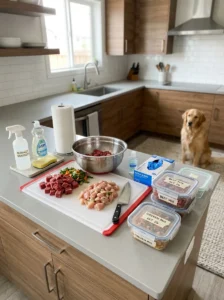
This is where my own research gave me real pause, and ultimately factored into our decision.
Bacterial contamination. Raw meat carries a real risk of bacterial contamination — salmonella, listeria, and E. coli among others — posing a risk both to the dog and to humans handling the food, particularly concerning in households with young children, elderly individuals, or anyone with a compromised immune system.
Nutritional imbalance risk. Similar to the homemade cooked diet concerns covered in our homemade dog food guide, raw diets not carefully formulated to meet complete nutritional standards can result in genuine deficiencies or imbalances over time, even with good-quality ingredients.
Bone-related risks, even with raw bones (which carry different risks than cooked bones, but aren’t entirely risk-free) — including choking, dental fractures, and gastrointestinal blockage or perforation in some cases.
Limited large-scale, controlled research. Much of the support for raw feeding’s benefits comes from anecdotal reports and smaller studies rather than the kind of large-scale, controlled research available for commercial diet formulations meeting established nutritional standards.
Major veterinary organizations generally recommend caution, with many citing the bacterial contamination and nutritional balance concerns as reasons for hesitation, even while acknowledging some individual dogs do seem to do well on properly formulated raw diets.
Commercial Raw vs. Homemade Raw
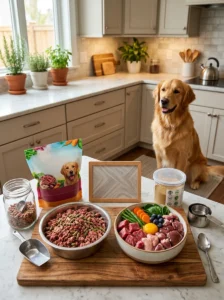
If you’re considering raw feeding, it’s worth understanding this distinction:
Commercial raw diets, from reputable companies, are often formulated to meet established nutritional standards and may undergo processes like high-pressure pasteurization to reduce (though not eliminate) bacterial risk, offering more consistency and nutritional reliability than an entirely DIY approach.
Homemade raw diets require significant research and ideally guidance from a veterinary nutritionist to ensure proper nutritional balance, similar to the cooked homemade diet considerations covered elsewhere on our site, but with the added bacterial contamination considerations specific to raw, uncooked ingredients.
Why We Ultimately Decided Against Raw Feeding

After weighing the research, a few factors tipped our decision:
The bacterial contamination risk felt like a genuine, ongoing household consideration, not just a theoretical one, particularly given how food prep and storage would need to change throughout our kitchen to handle raw meat safely and consistently.
Neither Bruno nor Mishi had a specific health issue that raw feeding advocates often point to as a reason to consider the switch, meaning we weren’t solving an existing problem, just considering a philosophical change.
Our vet’s perspective, while not dismissive of raw feeding outright, leaned toward recommending we stick with a high-quality commercial diet given our specific situation, which factored meaningfully into our final decision.
This isn’t meant to be a blanket recommendation against raw feeding for every owner — it’s simply an honest account of our own decision-making process and the factors that mattered most for our household specifically.
If You’re Considering Raw Feeding

A few things worth doing if you’re seriously considering this path:
Talk to your vet directly, including asking about their specific concerns or support for raw feeding given your dog’s individual health history.
Research reputable commercial raw brands if going the commercial route, looking specifically for nutritional adequacy statements and food safety practices like pasteurization.
Consider working with a veterinary nutritionist if pursuing a homemade raw approach, to ensure proper nutritional balance rather than relying solely on general online recipes or guidelines.
Implement strict food safety practices in your kitchen — separate preparation surfaces, thorough cleaning, and careful handling — similar to how you’d handle raw meat for human consumption, but with the added consideration of where your dog eats and any household members who might be more vulnerable to bacterial exposure.
Start gradually if transitioning, similar to any other food transition, to minimize digestive upset during the change.
Special Considerations for Certain Households

Raw feeding may carry additional considerations worth weighing specifically if your household includes:
⦁ Young children, who may have more contact with food bowls, dog kisses, or areas where raw food has been prepared
⦁ Elderly individuals or anyone with a compromised immune system, who face higher risk from potential bacterial exposure
⦁ Multiple pets, where cross-contamination between food preparation areas needs careful management
How Veterinary Opinion on Raw Feeding Varies

It’s worth understanding that veterinary professionals themselves don’t hold a single unified opinion on raw feeding, which can be confusing for owners trying to find a clear, authoritative answer. Major veterinary and public health organizations have generally published cautionary guidance, citing the bacterial contamination and nutritional balance concerns covered earlier. At the same time, some individual veterinarians, including some who specialize in nutrition, support properly formulated raw diets for appropriate candidates, often citing their own clinical observations alongside the more limited research base. This genuine professional divide is part of why I’d encourage treating raw feeding as a legitimately debated topic rather than either a clearly endorsed or clearly condemned practice, and why your own vet’s specific perspective, informed by your dog’s individual situation, carries real weight in this particular decision.
The Role of Food Safety Training in Raw Feeding Decisions
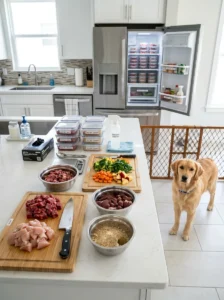
One factor that doesn’t always get enough attention in raw feeding discussions is the food safety literacy required to handle raw meat properly and consistently. Just as human food safety education covers proper handling, storage temperatures, and cross-contamination prevention for raw meat, successfully and safely raw-feeding a dog requires genuinely internalizing and consistently applying similar practices, not just once but as an ongoing daily habit. For some households, this level of consistent food safety practice fits naturally into existing routines; for others, it represents a genuinely significant behavior change that’s worth honestly assessing before committing to raw feeding, regardless of how compelling the potential benefits might otherwise seem.
What I’d Want a Friend Considering Raw Feeding to Know

If a friend asked me directly for advice on this topic today, I’d tell them what I eventually concluded through my own research: raw feeding isn’t inherently reckless or inherently superior — it’s a genuine tradeoff between potential benefits some dogs and owners experience, and genuine, documented risks that require real commitment to mitigate properly. I’d encourage them to have a direct, honest conversation with their own vet, consider their household’s specific circumstances (especially around food safety practice and any vulnerable household members), and make a decision based on their actual situation rather than either raw-feeding community enthusiasm or blanket conventional caution alone.
Reassessing This Decision Periodically

Even having decided against raw feeding for now, I don’t consider this a permanently closed question. As research continues to develop, as our household circumstances potentially change, or as new, well-formulated commercial raw options become available with stronger safety track records, it’s reasonable to revisit this decision periodically rather than treating an initial choice as permanently fixed. This mirrors how I think about several other dietary decisions covered throughout our food guides — staying genuinely open to updated information rather than becoming rigidly attached to either side of a debate once an initial decision has been made.
Quick Reference

On the question of Is raw feeding definitely better than commercial dog food?: This isn’t conclusively established — some dogs may do well on a properly formulated raw diet, but quality commercial food meeting established nutritional standards is also a perfectly healthy, often more practical and lower-risk option for most dogs. On the question of Can I do a partial raw diet, mixing it with commercial food?: Some owners do this, though it adds complexity to ensuring overall nutritional balance and requires the same food safety considerations as a fully raw approach. This is worth discussing with your vet to ensure the combined approach still meets your dog’s complete nutritional needs. On the question of Is raw feeding safe for puppies?: This requires particular caution given puppies’ developing immune systems and specific nutritional needs during growth — discuss this specifically and thoroughly with your vet before considering raw feeding for a puppy. On the question of What’s the safest way to try raw feeding if I want to give it a chance?: Starting with a reputable commercial raw product, formulated to meet nutritional standards and ideally pasteurized for reduced bacterial risk, while implementing careful food safety practices at home, is generally considered a more cautious starting point than an entirely DIY homemade raw approach.
Researching raw feeding seriously, rather than dismissing or embracing it based on general impression, gave me a much more nuanced understanding of both the genuine appeal and the real risks involved. Whatever you decide for your own dog, I’d encourage the same approach — genuine research, an honest conversation with your vet, and a decision based on your specific dog’s needs and your household’s actual circumstances, rather than following a trend in either direction.
For more on dietary approaches, our guides on homemade dog food recipes and reading a dog food label are worth reading next.