When Bruno was a puppy, I genuinely worried he was sleeping too much. He’d play hard for twenty minutes and then crash for hours, and as a first-time owner, that pattern felt almost concerning compared to the high-energy image I had in my head of what a puppy “should” look like. A quick conversation with our vet set me straight — and years later, watching Mishi’s sleep patterns shift as she’s entered her senior years, I’ve learned just how much normal sleep actually varies across a dog’s life.
This surprises a lot of new owners: adult dogs typically sleep somewhere between 12 and 14 hours a day, and puppies and senior dogs often sleep even more — sometimes 18 to 20 hours for very young puppies. Compared to the roughly 7-9 hours most humans sleep, it can look excessive, but it’s completely normal dog biology.
Dog sleep is also structured differently than human sleep, which helps explain habits that might otherwise seem unusual. Dogs cycle through periods of light sleep and deeper, REM-like sleep, similar in concept to humans, though dog sleep cycles tend to be shorter overall. This is part of why dogs often seem to wake easily from naps — they spend more of their total sleep time in lighter stages compared to humans, who spend proportionally more time in deeper sleep during a typical night. It also explains the twitching, small vocalizations, and leg movements you might notice during sleep — much like human dreaming, this typically happens during lighter or REM-like phases and is a completely normal part of healthy sleep. (Quick disclaimer: I’m an experienced owner, not a vet — general patterns are useful context, but significant changes are always worth a vet conversation.)
Puppy Sleep: Short Bursts, Sudden Crashes
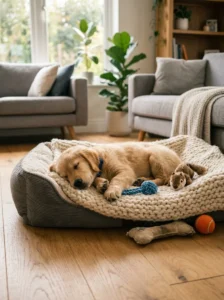
Puppies need an enormous amount of sleep to support their rapid growth and development. It’s common for them to sleep 18-20 hours a day in short stretches, alternating between bursts of intense play and what can feel like sudden, complete shutdown.
This pattern caught me off guard with Bruno initially — he’d go from zooming around the living room to passed out on the floor within minutes, almost like a switch flipped. Our vet explained this is completely typical; puppies essentially run on a cycle of short, intense activity followed by deep recovery sleep, since their bodies are doing an enormous amount of growing during this stage.
What’s normal for puppies: frequent short naps throughout the day rather than one long stretch, sudden “crashes” after periods of intense play, and sleeping through most nighttime hours by around 4-6 months, though very young puppies may still need nighttime bathroom breaks.
Adult Dogs: A More Predictable Pattern
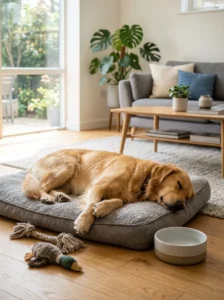
Once dogs reach adulthood, sleep typically settles into something more predictable — generally 12-14 hours total, often broken into a longer nighttime sleep plus several daytime naps, particularly if there isn’t much going on to keep them stimulated.
Factors that influence how much an individual adult dog sleeps include breed (working or high-energy breeds may sleep somewhat less when properly exercised, while naturally lower-energy breeds may sleep more), activity level (a dog that gets plenty of physical and mental exercise often sleeps more soundly, even if total time is similar), size (larger breeds often sleep somewhat more, though it’s not a hard rule), and daily routine (dogs left alone for long stretches during a workday often nap significantly, which is completely normal).
Senior Dogs: Sleeping More, for Different Reasons
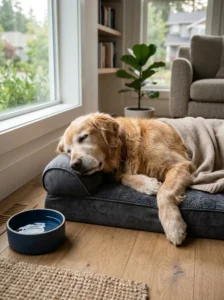
This is where I’ve learned the most recently, watching Mishi’s patterns shift over the past couple of years. Senior dogs often sleep even more than they did as younger adults — sometimes approaching the higher end of the range, similar to puppies, though for very different reasons.
What’s typically normal: increased total sleep time compared to younger adult years, more frequent daytime napping, sometimes lighter, more easily disrupted sleep alongside the increased total amount, and slower transitions between sleep and wakefulness.
I noticed Mishi started napping more frequently throughout the day, not just sleeping more at night, somewhere around the time she also started slowing down on walks. Our vet confirmed this tracked with normal aging rather than being concerning on its own, especially since her appetite, mobility, and overall demeanor remained consistent.
This shift wasn’t dramatic or sudden either — it happened gradually enough over several months that I genuinely might not have noticed it as a meaningful pattern if I hadn’t already been in the habit of paying loose attention to both dogs’ routines. That gradual quality is actually fairly typical for normal age-related sleep changes, in contrast to the more abrupt shifts that tend to signal something worth a vet visit.
When Increased Sleep Is Actually a Signal Worth Paying Attention To
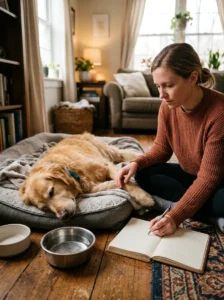
This is the part worth real attention, since “more sleep” can be either completely normal or a sign something needs attention, depending on context.
Generally normal: gradual increases that track with expected age-related changes, increased napping in an otherwise active, engaged dog, and more sleep following a particularly active day.
Worth discussing with your vet: sudden, significant changes happening quickly rather than gradually, increased sleep combined with reduced appetite or lethargy when awake, a dog who seems difficult to rouse or unusually slow to respond, and sleep changes combined with other symptoms like limping or changes in bathroom habits.
The distinction I’ve learned to watch for is whether increased sleep comes paired with other changes, or whether my dog is still genuinely themselves when awake — playful, interested in food, engaged with their surroundings — just sleeping more in between. The first pattern is reassuring; the second is worth a vet conversation.
Quality Matters as Much as Quantity
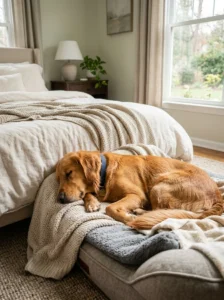
It’s not only about how many hours your dog sleeps, but how restful that sleep actually is. Restlessness, frequent waking, difficulty getting comfortable, or visible twitching beyond normal dreaming can sometimes indicate discomfort, particularly joint pain in older dogs.
I noticed Mishi started having a harder time settling into a comfortable position before falling asleep, which combined with her general slowing down, was actually one of the signs that pointed toward mild joint stiffness — something we’ve since started managing more proactively. Our guide to joint health covers this connection in more detail.
I’ve also noticed a clear pattern with both dogs: the days they get adequate physical and mental exercise are also the days they settle into deeper, more restful-looking sleep, compared to days they’ve been relatively inactive but somehow still sleep just as many total hours, just more restlessly. This tracks with what our vet explained — total sleep time isn’t the only meaningful metric. A dog understimulated during the day may sleep plenty of hours but experience more fragmented, lower-quality rest, sometimes showing up as restlessness or seeking attention at unusual hours. Ensuring adequate daytime engagement, not just adding more sleep opportunities, is often the more effective fix for a dog who seems perpetually tired but also restless.
When It’s a Lack of Sleep, Not Excess
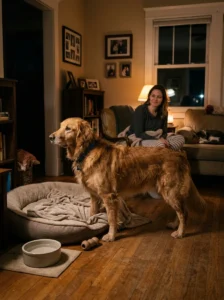
While this guide has focused mostly on excessive or changing sleep, it’s worth briefly noting the opposite: a dog who seems unable to settle, sleeps notably less than expected, or shows restlessness throughout day and night. This can relate to anxiety, discomfort, or other underlying issues, and is just as worth mentioning to your vet. Sleep and emotional wellbeing seem genuinely connected in dogs, similar to humans — a dog experiencing ongoing anxiety may show disrupted sleep, while poor-quality rest may show up as irritability during waking hours. If you notice both unusual sleep and behavioral changes together, it’s worth considering whether an underlying stress factor connects them rather than treating them as separate issues. Our guide to dog anxiety explores this further.
Building a Sleep Environment That Actually Supports Rest

A few environmental factors have made a genuine difference for both dogs: a comfortable, appropriately sized bed with some cushioning, especially important for older dogs or larger breeds prone to joint issues; a consistent, quiet sleep area away from high-traffic parts of the house; temperature — both dogs sleep more soundly in a cooler room, particularly relevant during Lahore’s hot months; keeping sleep areas reasonably dark for nighttime rest; and a consistent location they return to, which seems to support a sense of security that deepens rest. Minimizing disruptions during rest periods matters too — repeatedly waking a resting dog for attention, even affectionately, can fragment what would otherwise be restorative rest.
If your dog’s sleep pattern ever seems genuinely unusual, having even a rough baseline to compare against makes that judgment far easier than relying on memory alone. I don’t track sleep with the same rigor as weight or appetite, but I do mentally note roughly when each dog settles for the night, how often they’re up during the day, and whether that’s shifted from what feels normal for them. This loose, ongoing awareness has made it much easier to trust my instinct when something genuinely seems off.
A few quick answers: yes, it’s normal for most dogs to sleep most of the day, especially puppies, seniors, and well-exercised but otherwise understimulated adults. Puppies genuinely do need 18-20 hours, often in short bursts, to support rapid growth. Generally don’t wake a sleeping dog unless it’s interfering with nighttime sleep or you need to maintain a feeding or medication schedule — dogs typically self-regulate well. And gradual increases in senior dogs are a normal part of aging, while sudden or dramatic changes paired with other symptoms are worth a vet visit.
Watching Bruno’s puppy sleep patterns and now Mishi’s senior patterns has taught me that “normal” really does look different at every life stage — and that paying attention to the bigger picture, not just hours slept, is what actually matters.
For more on supporting your dog through different life stages, our guides on senior dog care and puppy health in the first 8 weeks are worth a read.