Bruno has always been sensitive to loud noises — thunderstorms especially, but also things like fireworks during certain times of year. The first time I really saw full-blown anxiety in him, he was trembling, panting heavily, and trying to wedge himself into the smallest possible space behind the couch. It was unsettling to watch, mostly because I didn’t know what to actually do to help in the moment. Since then, I’ve learned a lot about recognizing anxiety in dogs, understanding what triggers it, and building a toolkit of things that genuinely help.
Signs of Anxiety and Stress in Dogs

Anxiety doesn’t always look dramatic. It can range from subtle, easy-to-miss signals to more obvious distress:
Physical signs:
⦁ Panting when not hot or exercising
⦁ Trembling or shaking
⦁ Excessive drooling
⦁ Pacing or restlessness
⦁ Dilated pupils
⦁ A tucked tail or lowered body posture
Behavioral signs:
⦁ Hiding or trying to escape to a smaller, enclosed space
⦁ Excessive barking or whining
⦁ Destructive behavior, particularly when alone
⦁ Loss of appetite
⦁ Excessive licking, sometimes leading to a hot spot over time
⦁ Pacing in circles or repetitive movements
⦁ Avoidance of normal activities or interactions
Less obvious signs that are easy to miss:
⦁ Yawning when not tired
⦁ Lip licking outside of mealtimes
⦁ Avoiding eye contact
⦁ Subtle changes in posture, like a lowered head or stiff body language
Once I started actually paying attention, I realized Bruno showed smaller signs of stress well before the full storm-related panic — a slightly faster pant, more frequent yawning, a tendency to stay closer to me than usual. Learning to recognize those earlier signals has made it possible to intervene before things escalate to full panic. (Worth noting upfront: I’m an experienced dog owner, not a veterinary behaviorist. Anxiety can range from mild and manageable to significant enough to need professional intervention — this guide is meant to help you recognize the signs and try reasonable first steps, not replace professional support when it’s needed.)
Common Causes of Anxiety in Dogs

Noise sensitivity. Thunderstorms, fireworks, construction noise, and similar loud or unpredictable sounds are extremely common triggers, and some dogs (like Bruno) are simply more sensitive to this than others.
Separation anxiety. A specific and common form of anxiety triggered by being left alone, ranging from mild restlessness to significant distress and destructive behavior.
Changes in routine or environment. Moving to a new home, a change in family structure, new pets, or even rearranged furniture can trigger anxiety in some dogs.
Past trauma or lack of socialization. Dogs with a history of neglect, abuse, or insufficient early socialization may be more prone to anxiety in a variety of situations.
Aging-related anxiety. Some senior dogs develop increased anxiety related to cognitive changes, sensory decline (like hearing or vision loss), or general changes in how they process their environment.
Travel or unfamiliar situations. Car rides, vet visits, or new environments can trigger situational anxiety, even in dogs who are otherwise generally confident.
The Role of Genetics and Early Experience
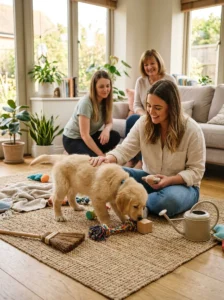
Anxiety predisposition often comes from a combination of genetic temperament and early life experience, particularly during the critical socialization window in puppyhood (roughly 3-14 weeks of age) when puppies are especially impressionable to forming associations with new experiences, sounds, and situations.
This doesn’t mean anxiety is unchangeable — dogs can absolutely build new, more positive associations later in life, as we’ve seen with Bruno’s gradual improvement — but it does explain why some dogs seem naturally more prone to anxiety regardless of how carefully an owner manages their environment, while other dogs from chaotic or difficult early circumstances turn out remarkably resilient and confident. Individual temperament genuinely varies, and it’s not always a reflection of anything an owner did or didn’t do.
Understanding Your Dog’s Stress Threshold
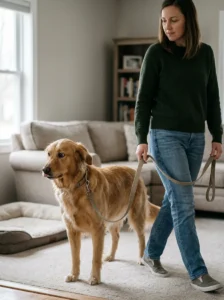
One concept that’s genuinely changed how I approach Bruno’s anxiety is the idea of a stress threshold — the point at which a dog moves from coping to being overwhelmed. Dogs below their threshold can often still learn, respond to cues, and engage in calming techniques. Once a dog crosses that threshold into full panic, they’re typically no longer in a state where learning or responding to training cues is realistic, which is exactly why trying to “train through” an already-panicking dog tends to be far less effective than working below the threshold, gradually building tolerance over time.
This reframed how I think about Bruno during a building storm — rather than waiting until he’s already in a full panic to intervene, I’ve learned to recognize his earlier, below-threshold signals and start calming strategies at that point, when they’re actually likely to help rather than trying to manage a dog who’s already fully overwhelmed.
What I’ve Learned Helps With Noise-Related Anxiety
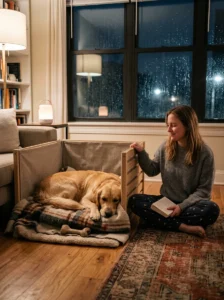
Since Bruno’s main trigger is loud noise, here’s what’s actually made a difference for us over time, through a fair amount of trial and error:
A safe, designated space. Bruno gravitates toward the area behind the couch during storms, so instead of trying to coax him out, I’ve made that space more comfortable — a blanket, easy access, and no pressure to come out before he’s ready.
Staying calm myself. This took me a while to learn, but dogs pick up on our energy. When I stayed visibly anxious or fussed over him excessively during a storm, it seemed to reinforce his own anxiety rather than help. Staying calm and matter-of-fact, while still being present, has worked better.
Background noise. Playing calm music or having a fan running sometimes helps mask the sharper, more startling sounds of thunder or fireworks.
Gradual desensitization, which we did with the help of resources our vet recommended — playing recordings of storm or firework sounds at a very low volume, gradually increasing over time while pairing it with positive experiences like treats or play. This isn’t a quick fix, but it’s made a measurable difference over months of consistent, patient practice.
Physical comfort, if your dog wants it. Some dogs find a weighted, snug-fitting wrap (sometimes called an anxiety wrap or similar product) comforting, similar to swaddling. This isn’t universal — some dogs don’t respond to it — but it’s worth trying if appropriate for your dog’s situation, ideally with your vet’s input.
Building Confidence Through Controlled Exposure
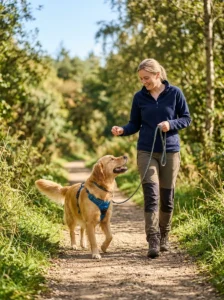
Beyond managing specific triggers like noise, building general confidence has had a noticeable spillover effect on Bruno’s overall anxiety levels. Activities that have helped:
Mastering new skills. Learning new tricks or commands, even simple ones, seems to build a sense of competence and confidence that carries over into other situations.
Controlled exposure to mild novelty. Gradually introducing new, low-stakes experiences — a new walking route, a new type of toy, meeting a calm, friendly new dog — in a positive, unpressured way has seemed to build general resilience over time.
Consistent routine as a foundation. While controlled novelty helps build confidence, having a predictable overall daily routine provides the security that makes a dog more willing to handle occasional novelty or stress without becoming overwhelmed.
Helping With Separation Anxiety
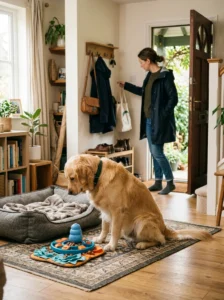
While this isn’t Bruno’s primary issue, it’s an extremely common form of anxiety worth addressing separately, since the approach differs somewhat:
⦁ Practice gradual departures, starting with very short absences and slowly building duration, rather than jumping straight to a full workday alone
⦁ Avoid dramatic greetings or goodbyes, which can heighten the emotional significance of you leaving or returning
⦁ Provide mental stimulation before leaving, like a puzzle toy or long-lasting chew, to help redirect anxious energy into something productive
⦁ Consider a consistent routine around departures, so your dog has predictable cues rather than uncertainty
Severe separation anxiety often benefits from professional guidance, since it can be genuinely difficult to resolve through general tips alone.
Multi-Dog Households: Anxiety Can Be Contagious
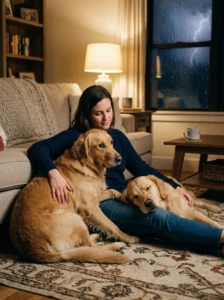
With two dogs in the house, I’ve noticed that Bruno’s storm anxiety can sometimes create a ripple effect, with Mishi picking up on his stress even though loud noises don’t bother her independently the same way. This kind of secondhand stress response isn’t unusual — dogs are highly attuned to each other’s emotional states. If you have multiple pets, it’s worth considering whether one anxious individual might be inadvertently affecting another, and managing the situation with that dynamic in mind, rather than assuming each pet’s anxiety exists in complete isolation from the others.
Anxiety Around Specific Life Events

Beyond ongoing triggers like noise sensitivity, it’s worth recognizing that certain life events commonly bring on temporary, situational anxiety even in otherwise well-adjusted dogs — moving to a new home, the arrival of a new family member or pet, a significant change in household routine, or the loss of a companion animal or person they were bonded to. These situational triggers often resolve with time, patience, and consistency, but recognizing them as a legitimate, temporary adjustment period (rather than a permanent behavioral shift) has helped me respond with more patience during these transitions, both with Bruno and Mishi over the years.
Things That Can Make Anxiety Worse
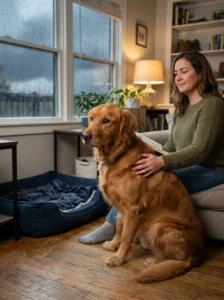
A few things I’ve learned not to do, sometimes from trial and error:
⦁ Punishing anxious behavior, like destructive chewing during a storm — this addresses the symptom without the cause, and can actually increase anxiety by adding fear of punishment on top of the original trigger
⦁ Forcing confrontation with the trigger without a gradual approach, which can overwhelm rather than help
⦁ Excessive coddling or panic from you, which can reinforce the idea that the situation really is something to be afraid of
⦁ Inconsistency, switching strategies frequently without giving any single approach enough time to actually work
When Anxiety Needs Professional Help

Mild, occasional anxiety is something many owners can manage with patience and the strategies above. However, it’s worth involving your vet, and possibly a veterinary behaviorist, if you notice:
⦁ Anxiety that’s significantly impacting your dog’s quality of life or daily functioning
⦁ Destructive behavior that’s severe or poses a safety risk
⦁ Self-injury from excessive licking, chewing, or attempts to escape
⦁ Anxiety that seems to be worsening over time despite consistent management efforts
⦁ Physical symptoms like loss of appetite, weight loss, or digestive issues tied to anxiety
In some cases, vets may recommend anti-anxiety medication, either short-term for specific situational triggers (like a known stressful event) or longer-term for more persistent anxiety, used alongside behavioral strategies rather than as a standalone solution. This is a conversation worth having directly with your vet rather than attempting to manage significant anxiety with over-the-counter products alone.
A few quick answers: yes, noise sensitivity and storm-related anxiety are extremely common, with some individual dogs being significantly more sensitive than others. Untreated anxiety can get worse over time, particularly if the underlying trigger continues without intervention, sometimes generalizing to related situations — addressing it proactively tends to produce better outcomes than waiting. Whether to comfort or ignore an anxious episode is genuinely debated, but many trainers and vets now suggest calm, matter-of-fact comfort (rather than either ignoring distress entirely or excessive, anxious fussing) is a reasonable middle ground — what matters most is your own calm energy. And while some breeds and individual temperaments are more predisposed to anxiety, it really varies dog to dog regardless of breed.
Watching Bruno work through his storm anxiety over the years — from full panic to a much calmer, more manageable response — has taught me that patience and consistency genuinely make a difference. It’s not about eliminating anxiety entirely; it’s about helping your dog feel safer and more supported when it happens.
For more on supporting your dog’s overall wellbeing, our guides on recognizing pain in dogs and separation anxiety training cover related ground worth exploring.