I genuinely didn’t realize how much brush choice mattered until I tried using the same brush on both Bruno and Mishi, despite their meaningfully different coat types — what worked beautifully on one did almost nothing useful on the other. This guide covers what I’ve learned about matching the right tool to the actual coat you’re working with, rather than assuming one brush fits every dog.
(I’m an experienced dog owner, not a professional groomer. This reflects general guidance and personal experience — a groomer can offer more specific recommendations for unusual or particularly demanding coat types.)
Why Coat Type Determines Brush Choice
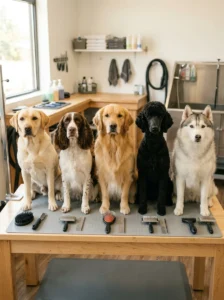
Different coat types have genuinely different needs — removing loose undercoat, preventing matting in longer fur, or simply distributing natural oils in a short coat all call for different brush designs. Using the wrong type isn’t just less effective; it can occasionally cause discomfort or skin irritation if a tool isn’t suited to your dog’s specific coat.
Slicker Brushes
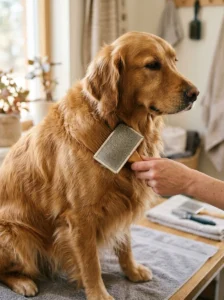
These fine, closely spaced wire bristles are versatile, working well for medium-to-long coats and helping remove loose fur, tangles, and minor mats. This was our first brush for Bruno and remains a staple in our grooming kit, useful across a range of situations.
Best for: Medium and long-haired breeds, curly or wavy coats, general detangling.
Bristle Brushes
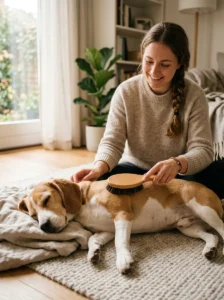
Featuring natural or synthetic bristles set close together, these work well for short-haired breeds, helping distribute natural skin oils through the coat while removing loose surface hair.
Best for: Short-coated breeds, finishing touches on any coat type after using a more intensive tool.
Undercoat Rakes
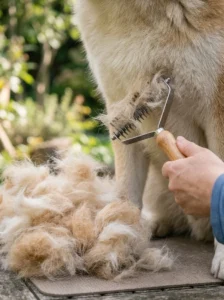
Designed specifically to reach through a topcoat and remove loose undercoat, these are essential for double-coated breeds, particularly valuable during seasonal shedding periods when undercoat sheds more heavily.
Best for: Double-coated breeds like Golden Retrievers, German Shepherds, and Huskies, particularly during seasonal coat blow.
Deshedding Tools
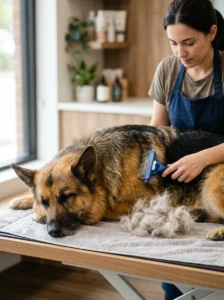
A specific category designed to reach deep into the undercoat and remove loose fur more thoroughly than a standard brush, often featuring a specific blade-style edge. These have become genuinely essential for us during Bruno’s heavier seasonal shedding periods, making a visible difference in how much loose fur ends up around the house versus staying contained during grooming sessions.
Best for: Heavy shedders, particularly during seasonal shedding, covered in more detail in our deshedding tools comparison.
Pin Brushes
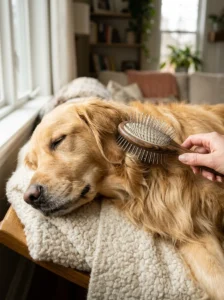
Featuring longer, often slightly flexible pins, these work well for longer coats, helping with detangling without being as intensive as a slicker brush.
Best for: Long-haired breeds without a particularly dense undercoat.
Combs (Wide and Fine-Tooth)
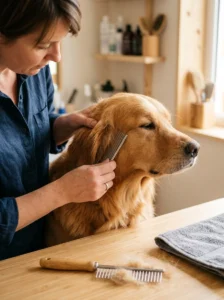
Useful as a finishing tool after brushing, combs help check for remaining tangles and work through finer details, particularly around sensitive areas like the face, ears, and paws where a larger brush might be less precise.
Best for: All coat types, as a complementary finishing tool rather than a primary brush.
Grooming Gloves
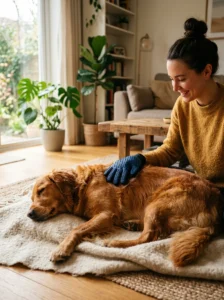
These wear like a glove with small rubber or silicone nubs, allowing brushing to feel more like petting, which can be genuinely useful for dogs who are anxious or resistant to traditional brush tools.
Best for: Dogs new to grooming, anxious dogs, or as a gentle option for sensitive areas.
Our Specific Setup for Bruno and Mishi
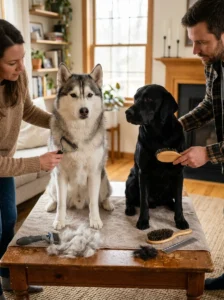
Given their different coat types, we keep a small rotation rather than relying on one universal tool. Bruno, with his denser double coat, gets regular use of an undercoat rake and deshedding tool, particularly during shedding season, supplemented with a slicker brush for general maintenance. Mishi’s different coat type responds better to a bristle brush for regular maintenance, with occasional comb use for any tangles. Having this small, coat-appropriate toolkit rather than a single brush has made grooming both dogs genuinely more effective.
How to Know If You’re Using the Wrong Brush
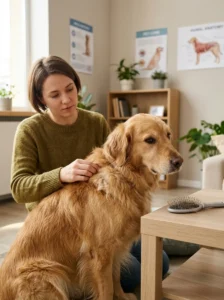
A few signs suggest your current brush isn’t well-matched to your dog’s coat: brushing seems to do little to actually remove loose fur or reduce shedding around the house, your dog seems uncomfortable or reactive to a specific tool in a way that seems related to the tool itself rather than general grooming resistance, or you’re noticing mats developing despite regular brushing, suggesting the tool isn’t reaching or working through the coat effectively.
Brush Maintenance and Hygiene
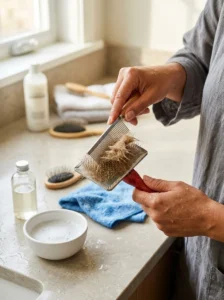
Beyond selecting the right brush, keeping tools clean matters for both effectiveness and hygiene. Regularly removing trapped fur from brushes (a comb can help clear a slicker brush, for example), and occasionally washing brushes with mild soap and water, particularly if your dog has any skin condition where hygiene matters more significantly, keeps tools working well and reduces any risk of reintroducing debris or bacteria during future grooming sessions.
Investing in Quality Tools
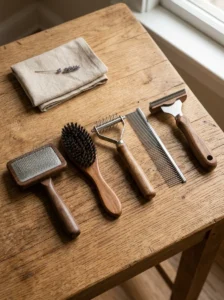
While it’s not necessary to buy the most expensive option available, investing in reasonably good-quality grooming tools tends to pay off through better effectiveness and durability compared to very cheap options that may bend, dull, or break with regular use. This is particularly true for tools used frequently, like a primary brush for a heavy-shedding breed, where the tool will see significant regular wear.
How to Properly Hold a Brush for Best Results
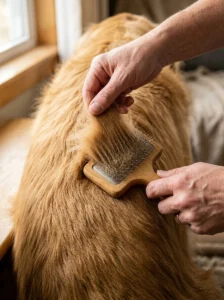
Beyond simply choosing the right tool, grip and angle technique genuinely affects how effective any brush actually is. Holding the brush at a slight angle, rather than perfectly flat against the coat, generally helps the bristles or teeth actually penetrate through to the undercoat rather than just skating across the surface of the topcoat. Using your free hand to hold the coat steady or slightly separate sections, particularly in dense or longer coats, also improves how thoroughly each brush stroke actually reaches the areas that need attention.
Brushing Sensitive Areas: Face, Belly, and Legs
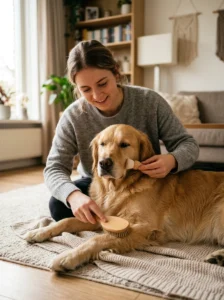
These areas deserve a gentler approach regardless of which primary brush you’re using for the rest of the body. A softer brush, like a grooming glove or a finer-toothed comb, often works better for the face and other sensitive areas than the more intensive tool you might use on the back and sides, where skin is generally less sensitive and fur often denser.
Building a Brush Rotation for a Multi-Dog Household
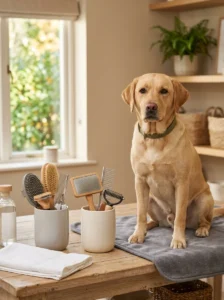
With Bruno and Mishi having different coat needs, we’ve found it genuinely helpful to keep each dog’s primary tools somewhat separate and clearly designated, rather than constantly searching for the “right” brush between sessions. This small organizational habit has made our actual grooming sessions more efficient, removing a small but real friction point that might otherwise lead to skipped or rushed sessions when the appropriate tool isn’t immediately at hand.
Recognizing When Your Dog’s Coat Needs Have Changed
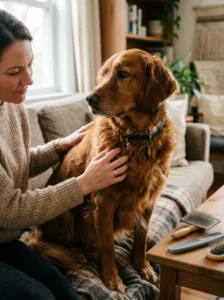
Coat needs aren’t always static throughout a dog’s life — illness, hormonal changes, aging, or seasonal shifts can all affect what tools and techniques work best. If a brush that’s worked well for months suddenly seems less effective, or your dog’s coat texture seems to have genuinely changed, it’s worth reassessing your toolkit rather than assuming the same approach will always remain optimal, and mentioning any unexplained coat texture changes to your vet, since this can sometimes be an early signal of an underlying health change worth investigating.
Brush Comfort and Skin Sensitivity
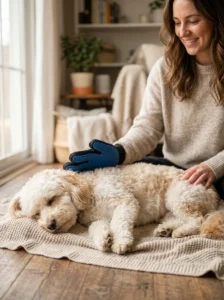
Some dogs have genuinely more sensitive skin than others, similar to the variation covered in our skin problems guide, which can affect which brush type they tolerate comfortably regardless of coat type alone. If your dog seems to flinch or show discomfort with a tool that should theoretically suit their coat type, it’s worth trying a gentler alternative or reducing pressure before assuming the issue is purely behavioral resistance rather than genuine physical discomfort with that specific tool.
How Brushing Frequency Interacts With Tool Choice
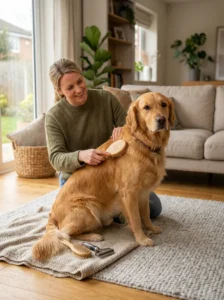
It’s worth understanding that brush choice and frequency work together, not independently. A less intensive tool used more frequently can sometimes achieve similar results to a more intensive tool used less often, which is worth considering if your dog tolerates gentler, more frequent sessions better than fewer, more thorough ones. Finding this balance for your specific dog’s tolerance and your own realistic schedule matters more than rigidly following a single prescribed combination of tool and frequency.
Travel-Friendly Brushing Options
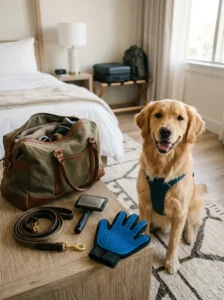
If you travel with your dog regularly, it’s worth keeping a compact, travel-appropriate brush separate from your primary home tools, particularly useful for maintaining at least basic coat care during trips without needing to pack your full grooming kit every time. A simple, versatile slicker brush or grooming glove tends to work well for this purpose, covering basic maintenance needs without requiring the full range of tools you might use at home for more thorough sessions.
A few quick answers: Do I need multiple brushes, or can one tool handle everything — For most dogs, a small combination of tools — perhaps a primary brush suited to their coat type plus a comb for finishing — covers most needs well, though dogs with particularly complex or demanding coats may benefit from a more varied toolkit.. How do I know what coat type my mixed-breed dog actually has — Observing your dog’s actual coat directly — texture, length, whether they have a visible undercoat — matters more than guessing based on apparent breed mix, and trying a slicker brush or undercoat rake first (versatile options for many coat types) can help you assess what works before investing in more specialized tools.. Can the wrong brush actually hurt my dog — Using a tool too aggressively, or one genuinely unsuited to a sensitive coat or skin condition, can cause discomfort or minor irritation, which is part of why matching tool to coat type matters beyond simple effectiveness.. How often should I replace grooming brushes — This varies by tool quality and usage frequency, but watching for bent or damaged bristles, reduced effectiveness despite proper cleaning, or visible wear are good signals it’s time for replacement..
Realizing that Bruno and Mishi genuinely needed different grooming tools, rather than sharing one brush between them, made a real, visible difference in how effective our grooming sessions actually were. If you’re building or reassessing your own grooming toolkit, taking the time to match tools to your specific dog’s actual coat type will save you the frustration of using a tool that simply isn’t doing its job effectively.
For more on grooming fundamentals, our guides on the complete grooming guide and stopping excessive shedding are excellent next reads.