For the first year or so I had Bruno, my approach to vet visits was basically reactive — go when something seems wrong, skip it when everything seems fine. It wasn’t until our vet gently pointed out that this approach misses a lot of preventable issues that I started thinking about vet visits as routine maintenance rather than just emergency response.
This mindset shift mattered more than I expected. Many health issues in dogs develop gradually and aren’t obvious to an owner until they’re fairly advanced — dental disease, early kidney changes, joint issues, and some cancers, for example, often have minimal outward symptoms in early stages. Routine vet visits include physical exams and sometimes bloodwork that can catch these issues while they’re still easier and less expensive to manage. There’s also the preventive care side — vaccines, parasite prevention, and general health monitoring — that simply needs to happen on a schedule, regardless of whether your dog seems sick. (Quick disclaimer: I’m an experienced dog owner, not a vet. General recommendations are useful for planning, but your vet is the right resource for a schedule tailored to your specific dog’s breed, age, and health history.)
Puppy Vet Visit Schedule
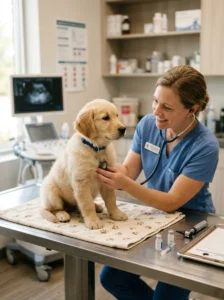
Puppies need the most frequent visits of any life stage, primarily to complete their vaccination series and monitor early development.
⦁ Every 3-4 weeks from around 6-8 weeks old through about 16 weeks, to complete the puppy vaccination series
⦁ Spay/neuter discussion and scheduling, typically sometime in the following months, timing varies based on breed and size
⦁ Deworming follow-ups, since puppies commonly need multiple rounds rather than a single treatment
Our full vaccination schedule guide and puppy health checklist cover this period in more detail.
Adult Dog Vet Visit Schedule
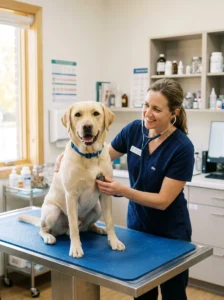
Once a dog completes their puppy series and settles into adulthood (generally considered to start around 1-2 years old, depending on breed and size), most healthy adult dogs benefit from:
⦁ An annual checkup, including a physical exam, vaccine boosters as needed, and a discussion of any changes in behavior, diet, or activity
⦁ Annual or as-needed parasite prevention renewal, including flea, tick, and heartworm prevention depending on your region and your dog’s lifestyle
⦁ Dental checks, often as part of the annual visit, to catch developing dental issues before they become more serious
This was roughly the stage where I made my mistake with Bruno — treating his first “all clear” annual visit as confirmation we could relax, rather than understanding that the annual visit itself was the ongoing maintenance, not a one-time check to graduate from.
Senior Dog Vet Visit Schedule
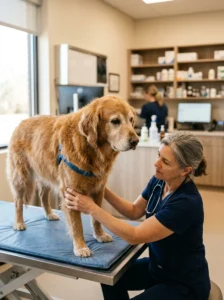
This is where the recommended frequency typically increases again. Many vets recommend senior dogs — generally considered to be dogs in roughly the last third of their expected lifespan, which varies significantly by breed and size — move to twice-yearly checkups rather than once a year.
With Mishi, our vet explained the reasoning clearly: aging-related changes can develop and progress more quickly than in younger adult dogs, and twice-yearly visits make it more likely we catch something early rather than after it’s had six months to develop unnoticed. These visits often include:
⦁ A more thorough physical exam, with closer attention to joint health, weight, dental condition, and any new lumps or changes
⦁ Discussion of any behavioral or mobility changes noticed at home
⦁ Bloodwork, which many vets recommend more regularly for seniors to monitor organ function and catch early changes
⦁ Adjustments to medication, diet, or supplements as needed based on findings
What a Typical Checkup Actually Includes
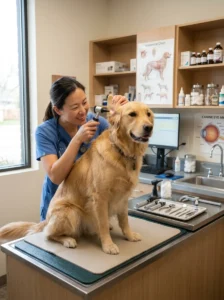
For owners who haven’t been to many routine visits, it can help to know what’s actually involved:
⦁ A physical exam — checking weight, listening to heart and lungs, examining eyes, ears, teeth, and skin, and feeling the abdomen and joints for anything unusual
⦁ A discussion of diet, exercise, and any behavioral changes you’ve noticed
⦁ Vaccine boosters as needed based on the schedule
⦁ Parasite prevention discussion and renewal
⦁ Bloodwork or other diagnostics, particularly for senior dogs or if something specific warrants further investigation
Signs That Warrant an Unscheduled Vet Visit

Beyond the routine schedule, certain signs should prompt a visit regardless of when the next scheduled appointment is:
⦁ Vomiting or diarrhea lasting more than a day, or accompanied by other symptoms
⦁ Noticeable changes in appetite, water intake, or weight
⦁ Limping, stiffness, or reluctance to engage in normal activities
⦁ New lumps or bumps, or changes to an existing one
⦁ Changes in bathroom habits, including straining or changes in frequency
⦁ Behavioral changes that seem out of character
⦁ Any of the pain signals covered in our ⦁ guide to recognizing pain in dogs
A general rule I’ve adopted: if something feels different enough that I’m genuinely wondering whether to call, it’s usually worth calling, even if it turns out to be nothing.
Finding a Vet You Actually Trust

Part of building a sustainable routine around regular vet visits is having a vet relationship you genuinely trust and feel comfortable communicating with. A few things I’ve learned matter when evaluating this:
Willingness to explain things clearly. Our current vet takes time to actually explain her reasoning, like the maternal antibody explanation for vaccine timing, rather than just issuing instructions without context. This has made me a much more engaged, informed participant in both dogs’ care.
Consistency, when possible. Seeing the same vet regularly (rather than a different one every visit, where feasible) means they build genuine familiarity with your specific dog’s normal baseline, making it easier to spot subtle changes over time.
Comfort asking questions, including “basic” ones. A good vet relationship means feeling comfortable asking things that might feel obvious, without worrying about feeling judged. Some of my most useful learning has come from asking questions I worried might seem silly.
Transparency about costs. Being upfront about cost estimates before performing services, and explaining which recommendations are essential versus optional, has made financial planning around vet care much less stressful.
If you’ve recently moved, or haven’t yet established a relationship with a vet, a few things have helped friends and family in this situation: asking other local pet owners for recommendations, since personal experience often reveals things online reviews don’t capture; scheduling an introductory visit even without an urgent issue, simply to establish a relationship and records before you actually need one in an emergency; bringing complete records from a previous vet, if available; and asking directly about the practice’s approach to routine care frequency, so expectations are aligned from the start.
Budgeting for Vet Visits

This is worth mentioning honestly, since cost is a real factor for most owners. Routine annual or twice-yearly visits are generally far less expensive than emergency or advanced treatment for a condition that’s progressed without being caught early. Some owners find pet insurance or a dedicated savings approach helpful for managing both routine and unexpected veterinary costs over their dog’s lifetime.
Telehealth and Phone Consultations: A Useful Middle Ground

Some clinics now offer telehealth or phone consultation options for situations that don’t clearly require an in-person visit but still warrant professional input — a behavior question, a mild symptom you want a second opinion on before deciding whether to come in, or a follow-up question after a recent visit. This has been a genuinely useful middle ground for us a few times, allowing for quick professional guidance without the cost or scheduling commitment of a full appointment, while still escalating to an in-person visit when the conversation suggests that’s actually necessary.
What I Do Differently Now

Since that early mistake with Bruno, I’ve shifted to thinking of vet visits as scheduled maintenance, not just emergency response. I keep both dogs’ next appointment dates in my phone calendar, along with reminders for any in-between needs like parasite prevention renewals. It’s a small system, but it’s made it much harder to accidentally let something slip for months without noticing.
I’ll be honest: even with the best intentions, fitting in routine vet visits around a busy schedule is a genuine challenge sometimes. What’s helped me stay consistent: scheduling the next appointment before leaving the current one, rather than relying on remembering to call back later; setting calendar reminders well in advance, giving enough lead time to actually find an appointment slot that works; and treating vet visits with the same priority as other recurring commitments, rather than something that gets bumped whenever something else comes up.
Multi-Dog Households: Staggering Appointments

With two dogs whose vet visit schedules don’t always align, I’ve found it genuinely helpful to keep a single shared calendar covering both Bruno and Mishi’s appointments, rather than tracking each separately. This has made it much easier to notice when one is overdue, plan ahead for any costs involved, and occasionally combine trips when timing allows, which has been a small but meaningful convenience over the years of managing two dogs’ care simultaneously.
I’ve also started treating the annual (or twice-yearly, for Mishi now) checkup as a natural checkpoint to reassess more than just immediate health — diet appropriateness as they age, whether exercise routines still match their current fitness level, and whether anything about our home setup could better support their comfort. Bundling this broader reflection into an existing appointment, rather than trying to remember to think about it separately throughout the year, has made it a much more natural, sustainable habit.
A few quick answers: pet insurance coverage of routine visits depends entirely on the specific policy — some plans cover only accidents and illness, while others (often called wellness plans) include routine checkups, vaccines, and preventive care, so it’s worth reading the details carefully. Yes, an annual visit is genuinely necessary even if your dog seems completely healthy, since many issues develop without obvious symptoms in early stages — “seems fine” isn’t the same as “is fine” from a medical standpoint. What counts as “senior” varies by breed and size — larger breeds are generally considered senior earlier (sometimes around 6-7 years) than smaller breeds (often closer to 9-10 years). And if cost is a concern, talk to your vet’s office directly — many can help prioritize what’s most important for your dog’s specific situation, and some areas have lower-cost clinics or assistance programs worth researching.
If I could go back and give my younger, first-time-dog-owner self one piece of advice on this topic, it would be this: don’t wait for symptoms to take vet visits seriously, and don’t view a clean bill of health as permission to relax your guard going forward. Routine care is genuinely a continuous practice, not a series of one-time checkpoints to clear. That mindset shift, more than any specific schedule, is what’s made the biggest difference in how confidently I manage both Bruno and Mishi’s health today.
For more on building a complete health routine for your dog, our guides on the full vaccination schedule and recognizing pain in dogs are good next reads.