Here’s a fact that changed how I see my sister’s tabby, Pudding. Cats don’t scratch to wreck your sofa. They scratch to stretch, to sharpen their claws, and to leave a scent from glands in their paws. It’s pure instinct. I’m a dog person, but I’ve helped enough cat-owning friends rescue their furniture to know the fix. Give her something better to scratch, and make it easy. Here are twelve DIY cat scratcher ideas that actually work.
Why a Scratcher Needs to Match Your Cat
Most cats have a type. Some love vertical scratching, stretching tall against a post. Others prefer flat surfaces, like carpet or cardboard on the floor. Watch what yours attacks now. Sofa arm? She’s a vertical scratcher. Rug edge? She’s a horizontal one.
Location matters too. Cats scratch where they sleep, where they enter a room, and where you spend time. A scratcher hidden in a back bedroom won’t compete with the living room sofa. And if your cat suddenly scratches far more than usual, or her claws look odd, ask your vet.
12 DIY Cat Scratcher Ideas
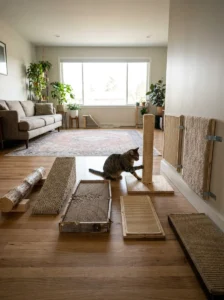
Cardboard classics
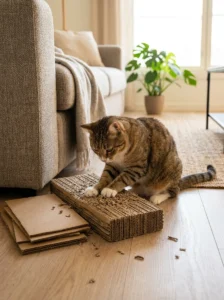
1. The Flat Cardboard Pad. Stack corrugated cardboard sheets, glue them together with non-toxic glue, and press under a heavy book overnight. Simple and cheap. Cats love the texture.
2. The Cardboard Roll Bundle. Pack rolled cardboard tubes tightly into a shallow box. Great for cats who like to dig their claws in.
3. The Angled Ramp. Cut cardboard into a ramp shape and prop it at an angle. Some cats prefer a slope to flat or upright.
4. The Zigzag Lounger. Fold long cardboard strips into a zigzag and slot them into a box. Doubles as a lounge.
Rope and fabric
5. The Sisal Rope Post. Wrap thick, natural sisal rope around a sturdy wooden post or cardboard tube. Glue the end and staple it down. Make sure it’s tall enough for a full stretch.
6. The Door Hanger. Wrap sisal rope around a flat board, then hang it from a door handle. Perfect for door scratchers.
7. The Carpet Offcut Mat. Use the rough back of a spare carpet sample, laid flat. Cheap, and often a hit with horizontal scratchers.
8. The Rolled Rug Scratcher. Tightly roll a spare scrap of rough rug and secure it with strong twine. Simple and surprisingly popular.
Wood and wall-mounted
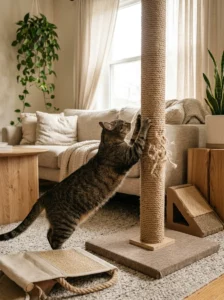
9. The Log Scratcher. Use a clean, untreated, bark-free log section, sanded smooth at the cut ends. Anchor it so it won’t roll. Rustic and sturdy.
10. The Wall-Mounted Panel. Fix a sisal-wrapped board to the wall at stretching height. Fix it into studs. Great for small flats.
11. The Corner Guard. Wrap sisal or rough fabric around a sofa corner or a wooden board that sits against it. Aim it at the exact spot she already attacks.
12. The Scratch-and-Perch Combo. Wrap a sturdy shelf support in rope so she can scratch and climb. Anchor it well, since cats leap in with force.
The Tip That Surprised Me
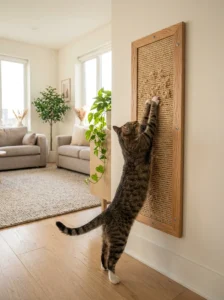
Put the scratcher right beside the furniture she’s wrecking. Not across the room. Right beside it.
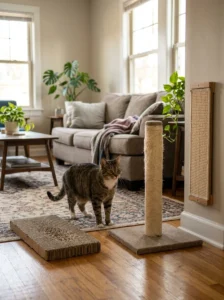
Pudding ignored my first scratcher for a week. It sat in the hallway, neatly built and totally unloved. Then I moved it next to the sofa arm. Within an hour she was stretching and scratching away. Picture a cat reaching up with a happy, wobbly stretch, and a sofa left untouched.
You can encourage her, too. Drag a toy across it, or rub a little dried catnip on it. Some cats find that exciting, and others don’t care. Reward her with a small treat when she uses it.
A Real Example From My Friend Jo
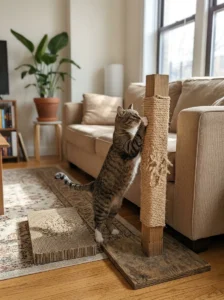
Jo’s cat, Salem, was destroying the arm of her sofa. Jo built a cardboard pad, put it in the corner of the room, and got nowhere. Then she wrapped a post in sisal rope and fixed it right beside the sofa arm. Salem switched over in a day.
Total cost was about ten dollars and one afternoon. “I just needed to listen to her,” Jo told me.
Mistakes and Warnings Worth Knowing
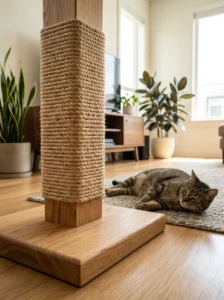
Wobbly scratchers fail. If it tips over once, many cats never trust it again. Use a heavy base or fix it to the wall.
Choose the right height. A vertical scratcher should let her stretch fully. Too short, and it’s no use.
Avoid loose threads, staples, and sharp edges. Cats chew, and swallowed bits can cause serious trouble. Use non-toxic glue and let it dry completely.
Don’t punish scratching. It confuses cats and rarely works. Redirect with a better option instead.
Skip scented sprays and strong chemicals on or near scratchers. And check the scratcher often, replacing anything frayed or worn. If your cat swallows something or seems unwell, call your vet straight away.
Quick Questions
Should I trim her claws?
Many owners do, gently and carefully. Ask your vet or groomer to show you how.
Why does she ignore the scratcher?
Check the position, stability, and texture. Try a different material or move it.
Will it save my sofa?
It may help, especially placed beside the target. But some cats need patience.
Ready to Make Your DIY Cat Scratcher Ideas?
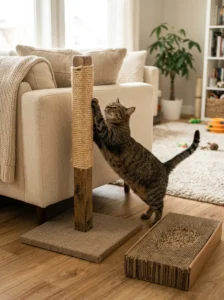
You don’t need all twelve. Pick the easiest one, maybe the cardboard pad or the sisal post, and put it right next to the thing she’s wrecking. The best DIY cat scratcher ideas are sturdy, well-placed, and matched to your cat’s style. Watch what she likes and adjust.
Got a dog in the house, too? Have a look at my post on cozy dog beds that don’t wreck your living room. And tell me: is your cat a vertical or horizontal scratcher?