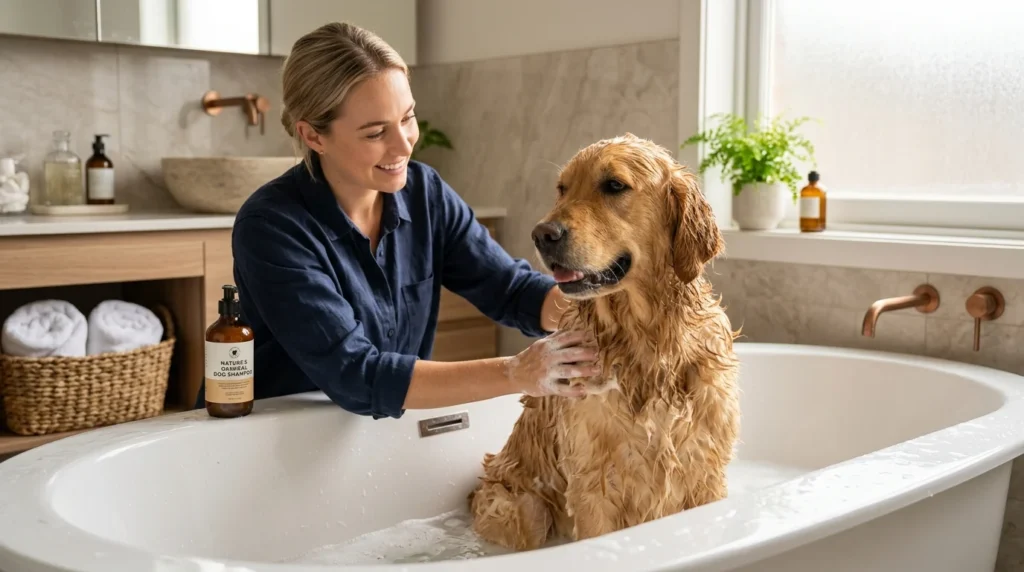
After Mishi’s skin proved sensitive to a couple of commercial shampoos we tried, our vet suggested exploring a gentler, simpler homemade option as part of figuring out what actually worked for her. This experience taught me both some genuinely useful recipes and, just as importantly, real respect for the safety boundaries around what’s actually appropriate to put on a dog’s skin.
(I’m an experienced dog owner, not a veterinary dermatologist. These recipes reflect generally gentle, widely used ingredients, but if your dog has a diagnosed skin condition, always check with your vet before introducing a new product, homemade or commercial, since some conditions need specifically formulated treatment that a general recipe won’t address.)
Consider Homemade Shampoo
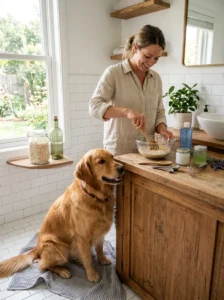
A few genuine reasons owners explore this option: avoiding specific ingredients in commercial products that have caused irritation, having full control and transparency over exactly what’s touching your dog’s skin, and sometimes simply cost savings using ingredients already on hand rather than purchasing specialized commercial products.
Important Safety Principles Before You Start
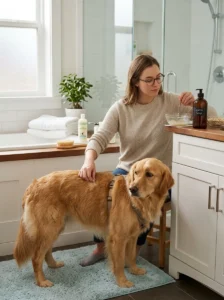
Always use a diluted, gentle base — never use products at full concentration that aren’t specifically formulated for use on skin, like undiluted dish soap, which can be too harsh and strip natural oils excessively.
Patch test any new recipe on a small area of skin before a full bath, watching for any signs of irritation over 24 hours before proceeding with full use.
Avoid essential oils unless you’ve specifically confirmed safety for canine use and appropriate dilution — many essential oils that are fine for human use are actually toxic or irritating for dogs, even in small amounts.
Never use human shampoo as a base, including baby shampoo, which despite being marketed as gentle, still has a different pH balance than what’s appropriate for canine skin.
Basic Gentle Oatmeal Shampoo
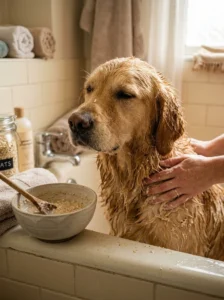
Oatmeal has genuine, well-documented soothing properties for irritated or itchy skin, making this a popular base for sensitive-skin formulations.
Ingredients:
⦁ 1 cup plain, finely ground oats (a coffee grinder or food processor works well for this)
⦁ 2 cups warm water
⦁ 1 tablespoon baking soda (optional, helps with odor)
Method: Combine ground oats and warm water, stirring until you achieve a consistent, slightly thick liquid. Add baking soda if using. Apply to your dog’s damp coat, gently massaging through, focusing on any particularly itchy or irritated areas. Let sit for 5 minutes before rinsing thoroughly.
Gentle Castile Soap-Based Shampoo
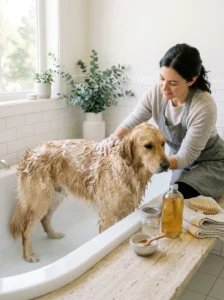
Liquid castile soap, a plant-based soap made from vegetable oils, can serve as a milder base than many commercial dog shampoos for dogs who tolerate it well.
Ingredients:
⦁ 1/4 cup unscented liquid castile soap
⦁ 1 cup warm water
⦁ 1 tablespoon vegetable glycerin (optional, helps with moisturizing)
Method: Combine all ingredients in a bottle, shaking gently to mix without creating excessive bubbles. Apply to damp coat, lather gently, and rinse thoroughly — castile soap can leave residue if not rinsed completely, so this step deserves particular attention.
Soothing Chamomile Rinse for Sensitive Skin
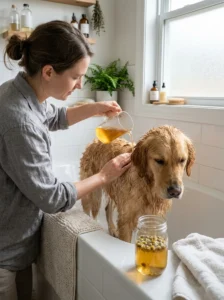
This isn’t a full shampoo, but rather a calming rinse that can follow a gentle wash, particularly useful for dogs with notably sensitive or easily irritated skin.
Ingredients:
⦁ 2 chamomile tea bags
⦁ 2 cups boiling water
Method: Steep tea bags in boiling water for 10-15 minutes, then allow to cool completely to a safe, lukewarm temperature. After your dog’s regular bath, pour the cooled chamomile tea over their coat as a final rinse, gently massaging in, and either rinse with plain water or allow it to air dry depending on your dog’s tolerance.
What I’d Tell You Honestly About Homemade Shampoo’s Limitations
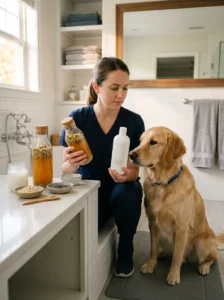
I want to be direct about something: while these recipes have worked well as gentle, occasional options for Mishi, I don’t use them as our primary, regular shampoo. Commercial dog shampoos, particularly those specifically formulated for sensitive skin, undergo more rigorous formulation and testing than a home recipe can match, and for ongoing, regular use, we’ve ultimately relied on a vet-recommended commercial option that our vet confirmed was appropriate for Mishi’s specific sensitivity. These homemade options have been most useful as an occasional, gentle alternative or for specific situations, not a full replacement for appropriate ongoing skin care guided by professional recommendation.
When Homemade Shampoo Isn’t Appropriate
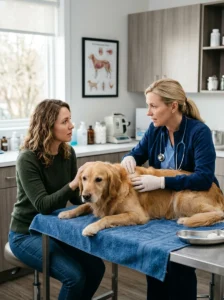
If your dog has a diagnosed skin condition requiring specific medicated treatment, a homemade recipe won’t provide the same targeted treatment a vet-prescribed product offers.
If you notice any signs of irritation after using a homemade recipe, discontinue use and consult your vet rather than experimenting further with home-based adjustments.
If your dog has fleas or another parasite issue, homemade shampoo recipes won’t address this — appropriate vet-recommended flea treatment, covered in our fleas and ticks guide, is necessary for this specific situation.
Proper Storage of Homemade Shampoo
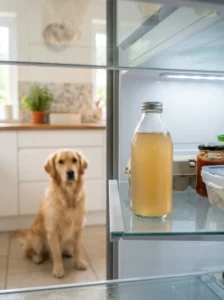
Since homemade recipes lack the preservatives in commercial products, they have a notably shorter shelf life. Generally, use within one to two weeks, storing in the refrigerator if not using immediately, and discarding if you notice any change in smell, color, or consistency that might suggest spoilage.
Tea Tree Oil: A Common Misconception Worth Addressing
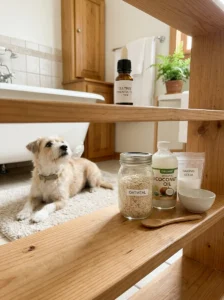
Tea tree oil sometimes appears in homemade pet shampoo recipes circulating online, marketed for its natural antimicrobial properties. It’s worth being direct about this: tea tree oil is genuinely toxic to dogs in concentrations and applications common in homemade recipes, capable of causing serious reactions even through topical application, not just ingestion. Despite appearing in some popular online recipes, this is one ingredient I’d specifically recommend avoiding entirely in any homemade dog shampoo, regardless of how diluted the recipe claims to be.
Apple Cider Vinegar Rinse: A Popular But Nuanced Option
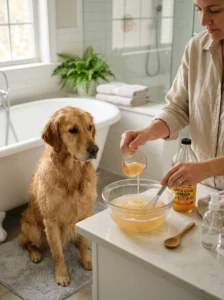
Diluted apple cider vinegar is sometimes recommended as a final rinse, particularly for dogs with mild yeast-related skin concerns, given vinegar’s mild antimicrobial properties. If trying this, proper dilution matters significantly — using it too concentrated can cause irritation, particularly on already sensitive skin. We’ve used a very diluted version occasionally for Mishi during periods of mild yeast-related odor, always with our vet’s awareness and approval given her skin sensitivity history, rather than introducing it independently without that context.
Building Trust With Homemade Products Gradually
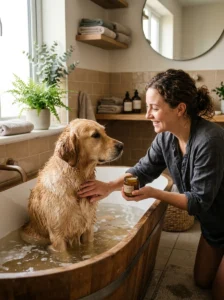
Just as building trust with any new grooming product matters, introducing a homemade shampoo recipe gradually — perhaps using it for just part of a bath initially, or alternating with a trusted commercial product — allows you to observe your dog’s response over multiple uses rather than committing fully to an untested recipe immediately. This gradual introduction approach has helped us feel more confident about which homemade options genuinely work well for Mishi’s specific needs versus which ones, while theoretically gentle, didn’t actually provide meaningful benefit for her specific skin sensitivity.
Why I Still Recommend Patch Testing Even Familiar-Seeming Ingredients
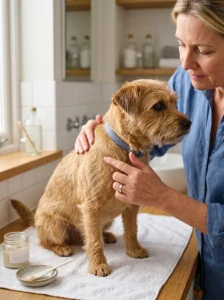
Even with ingredients that seem inherently mild — oatmeal, for instance — individual dogs can occasionally show unexpected sensitivity, which is exactly why the patch-testing principle covered earlier deserves genuine consistency, not just for unfamiliar or exotic ingredients. We patch test any new recipe variation, even minor tweaks to ones we’ve used successfully before, simply because individual reactions aren’t always perfectly predictable, and the brief extra step of testing costs far less than dealing with a full-body reaction from skipping this precaution.
Homemade Shampoo for Specific Coat Types
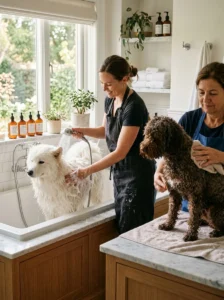
While the recipes covered in this guide work reasonably well across various coat types, some adjustments can help for specific situations. For double-coated breeds needing more thorough rinsing given their dense undercoat, slightly diluting any homemade recipe further can help ensure complete rinsing without residue trapped in the denser coat. For curly or wire-coated breeds, adding a small amount of natural oil (like a few drops of coconut oil, generally considered safe in small topical amounts) to a homemade recipe can help with detangling alongside cleaning, similar to how some commercial formulas for these coat types include conditioning ingredients beyond basic cleansing.
When a Vet Dermatology Referral Makes More Sense Than Continued Experimentation
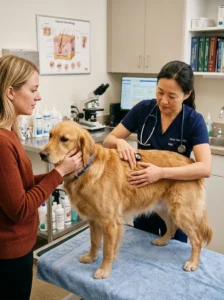
If you find yourself trying recipe after recipe, homemade or commercial, without genuine improvement in your dog’s skin sensitivity, this pattern itself is useful diagnostic information suggesting the issue may need more specialized attention than shampoo selection alone can address. A referral to a veterinary dermatologist, who can conduct more targeted testing and offer genuinely specialized treatment options, often provides more effective resolution than continued trial-and-error with different shampoo formulations, homemade or otherwise.
A few quick answers: Is homemade shampoo actually safer than commercial dog shampoo — Not automatically — reputable commercial dog shampoos are formulated and tested specifically for canine skin, while homemade recipes, while using generally gentle ingredients, lack this same rigorous formulation process, making them better suited to occasional or supplementary use rather than necessarily being inherently superior.. Can I add essential oils to homemade dog shampoo for a nice scent — This requires real caution — many essential oils are toxic or irritating to dogs even in small amounts, so it’s safer to avoid essential oils entirely unless you’ve specifically confirmed both safety and appropriate dilution for canine use with your vet.. How do I know if my dog will react badly to a homemade recipe — Always patch test on a small area first, waiting 24 hours and watching for any redness, itching, or irritation before proceeding with a full bath using a new recipe.. Is dish soap ever appropriate for bathing a dog — Generally not for regular use, though diluted, gentle dish soap is sometimes used in specific situations like removing something particularly greasy or oily from a dog’s coat — this should be a rare exception rather than a regular bathing product, given its potential to strip natural skin oils excessively with regular use..
Exploring homemade shampoo options for Mishi taught me real respect for both the genuine benefits gentle, simple ingredients can offer and the real limitations compared to properly formulated commercial products for ongoing regular use. If your dog has sensitive skin, I’d encourage involving your vet in this exploration alongside trying some of these recipes, rather than navigating sensitive skin concerns purely through home experimentation.
For related guidance, our guides on how often to bathe your dog and dog skin problems are excellent next reads.