I’ll admit our first attempts at brushing Bruno’s teeth were genuinely chaotic — a squirming dog, a toothbrush I was clearly wielding with more anxiety than confidence, and a session that ended with both of us feeling more stressed than accomplished. Years later, both dogs tolerate, and Bruno specifically seems to genuinely enjoy, our regular brushing routine, which tells me the gradual approach covered in our dental care guide genuinely works, even starting from a rocky beginning.
(I’m an experienced dog owner, not a veterinarian. This reflects what’s worked for building cooperation with this specific task — if your dog has signs of active dental pain or disease, a vet visit should come before attempting home brushing, since brushing an already painful mouth will understandably meet more resistance.)
Why the Gradual Approach Genuinely Matters
Rushing straight to a full brushing session with a toothbrush, especially with a dog unfamiliar with having their mouth handled, almost guarantees resistance and a negative association forming quickly. Building tolerance gradually, even though it takes longer to reach a “real” brushing routine, produces far better long-term cooperation than pushing through resistance in early sessions.
Step 1: Building Comfort With Mouth Handling Generally
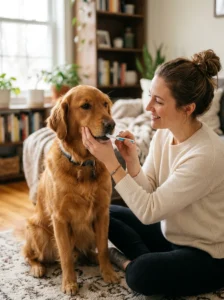
Before any toothbrush enters the picture, your dog needs to be comfortable with you simply touching and gently examining their mouth.
⦁ Gently lift the lips and touch the gums and teeth briefly, pairing this with praise and a treat immediately afterward
⦁ Keep these initial sessions very short — just a few seconds at first
⦁ Practice this regularly, gradually increasing duration as your dog shows comfort, before moving to the next step
Step 2: Introducing the Taste of Toothpaste

Before ever using an actual brush, let your dog get used to the flavor and texture of dog-specific toothpaste (never human toothpaste, which often contains xylitol and other ingredients unsafe for dogs).
⦁ Put a small amount on your finger and let your dog lick it off, building a positive flavor association
⦁ Repeat this over several sessions until your dog seems genuinely eager for “toothpaste time” rather than uncertain about it
Step 3: Finger Brushing
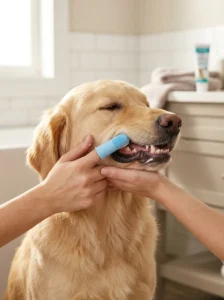
A finger brush (a soft rubber brush that fits over your fingertip) often serves as a gentler intermediate step before a traditional toothbrush.
⦁ Apply a small amount of toothpaste to the finger brush
⦁ Gently rub it along the gums and teeth, focusing on the outer surfaces first, which are easier to access and where most tartar buildup occurs
⦁ Keep sessions brief initially, gradually extending as tolerance builds
Step 4: Transitioning to a Toothbrush
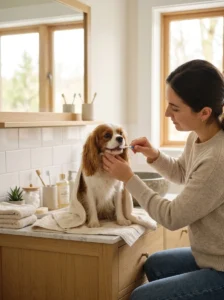
Once your dog is comfortable with finger brushing, introducing an actual dog toothbrush (or a soft-bristled human toothbrush specifically dedicated to this purpose) tends to go more smoothly than starting with this step directly.
⦁ Use a small amount of dog-specific toothpaste
⦁ Brush gently in small circular motions, focusing on the gumline where plaque and tartar accumulate most
⦁ Work on a few teeth or one side of the mouth at a time initially, rather than attempting full-mouth coverage immediately
Building Consistency Once the Technique Is Established
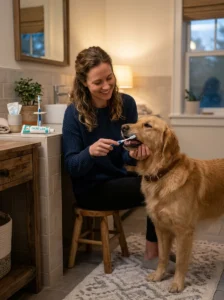
Once your dog tolerates the actual brushing motion, consistency matters more than perfection. Daily brushing is the gold standard, but even several times a week provides meaningful benefit over no brushing at all, covered in more detail in our dental care guide.
Making Brushing Feel Like a Positive Routine, Not a Chore

A few things that have genuinely helped maintain Bruno and Mishi’s cooperation long-term:
Same time, same place. Brushing happens during a consistent part of our evening routine, which seems to help both dogs anticipate and accept it as a normal, expected part of the day rather than an unpredictable, occasional ordeal.
Keeping the tone upbeat throughout, not just at the end — genuine enthusiasm and praise during the process, not just relief and reward once it’s over.
Not forcing a full session if resistance is high on a particular day. Some days, a shorter session or even just finger-brushing instead of the full toothbrush routine is a reasonable adjustment, rather than forcing through genuine distress to complete a “perfect” session.
Troubleshooting Common Resistance Issues

If your dog consistently pulls away from a specific area, this is worth noting and mentioning to your vet, since localized resistance sometimes points to dental discomfort in that specific area rather than purely general brushing resistance.
If your dog seems to tolerate one side but resist the other, working a bit more gradually on the resistant side, without forcing it, while maintaining the easier side’s progress, tends to even things out over time.
If progress seems to stall entirely, sometimes going back a step — to finger brushing, or even just the toothpaste-tasting stage — for a period before trying to advance again helps rebuild confidence rather than continuing to push against consistent resistance.
What to Do If Your Dog Genuinely Can’t Tolerate Brushing

For some dogs, despite genuine, patient effort, full toothbrush cooperation remains elusive. In these cases, alternative dental support — dental chews, water additives, or more frequent professional cleanings — covered in our dental care guide, can help supplement dental health even without full brushing cooperation, though these alternatives are generally considered less effective than actual brushing when it’s achievable.
Dental Wipes: An Alternative Worth Knowing About
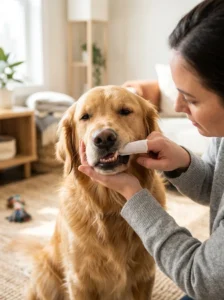
For dogs who resist even finger brushing significantly, dental wipes — designed specifically for canine dental hygiene — offer an alternative intermediate option, applied by gently rubbing along the teeth and gums similar to finger brushing technique, but without requiring tolerance for a brush-like sensation. While generally considered less effective than actual brushing, they can serve as a reasonable interim step while building toward full brushing tolerance, or as an occasional supplement for dogs who genuinely never achieve full brush tolerance despite patient effort.
The Role of Diet and Treats in Supporting Brushing Efforts

While brushing remains the gold standard for dental care, covered throughout our dental care guide, appropriate dental chews and an overall diet that doesn’t excessively promote plaque buildup can provide meaningful supplementary support, particularly valuable during the gradual training process when full brushing cooperation isn’t yet established. This combination approach — working toward brushing while supporting dental health through other means in the meantime — tends to produce better interim outcomes than waiting until brushing is fully established before addressing dental health at all.
Recognizing Progress Even When It Feels Slow

During our own gradual process with both dogs, it helped enormously to recognize and celebrate small, incremental progress rather than only feeling satisfied once we reached full, easy cooperation. Tolerating the toothpaste taste without resistance was genuine progress. Allowing brief finger contact was genuine progress. Each small step, acknowledged and celebrated rather than dismissed as insufficient compared to the eventual goal, helped maintain our own motivation and patience throughout what was, admittedly, a longer process than I initially expected.
Brushing Multiple Dogs: Managing Different Comfort Levels Simultaneously
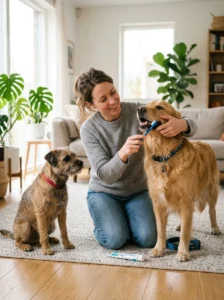
With Bruno and Mishi having genuinely different comfort levels with brushing, we’ve learned to manage their sessions somewhat differently rather than expecting identical timelines or techniques to work equally well for both. Bruno, generally more naturally tolerant, gets a fairly standard, efficient brushing session. Mishi’s session takes more time, more patience, and more frequent breaks, even now that she’s well past her earliest resistance. Accepting that each dog might need a genuinely different approach, rather than feeling like inconsistency between their routines reflects some kind of failure, has made managing both dogs’ dental care feel more sustainable.
What to Do During Travel or Disrupted Routines

Maintaining brushing consistency during travel or other routine disruptions can be genuinely challenging. We try to maintain at least some brushing during travel when possible, even if less frequent than our normal routine, rather than abandoning it entirely, since completely stopping for an extended period sometimes means rebuilding some tolerance afterward rather than simply picking back up seamlessly. A travel-sized dental kit, kept packed and ready, removes one barrier to maintaining at least minimal consistency even away from home.
Connecting Brushing Routine to Regular Dental Checkups
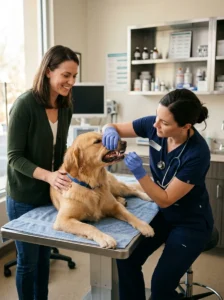
Even with a solid home brushing routine established, regular professional dental checkups, covered in our dental care guide, remain important for catching anything home care alone can’t fully address — issues below the gumline, developing problems with specific teeth, or general professional assessment of how well your home routine is actually supporting your dog’s dental health over time. Treating brushing as a complement to, rather than a replacement for, professional dental care provides the most complete picture of your dog’s actual oral health status.
A few quick answers: How long does it typically take to build full brushing tolerance — This varies significantly by individual dog, but expect the gradual process to take anywhere from a few weeks to a couple of months for genuine, comfortable cooperation, rather than expecting immediate full tolerance.. Is it ever too late to start tooth brushing with an adult or senior dog — No — while starting in puppyhood is easier in some respects, adult and senior dogs can absolutely learn to tolerate and even enjoy brushing with the same gradual, patient approach covered throughout this guide.. What if my dog bites or snaps during attempted brushing — This is a sign you’ve moved too fast for your dog’s current comfort level — stepping back to an earlier stage and progressing more slowly and gently is the right response, rather than pushing forward despite this clear distress signal.. Can I use a washcloth instead of a toothbrush — A clean, damp washcloth wrapped around your finger can serve as an alternative to a finger brush, particularly useful as an early intermediate step, though it’s generally less effective than an actual brush or finger brush for reaching the gumline thoroughly..
The shift from our chaotic early attempts with Bruno to the calm, routine brushing sessions we have now happened gradually, through patient, consistent practice rather than any single breakthrough moment. If you’re struggling with this task currently, I’d genuinely encourage stepping back to an earlier, more basic stage rather than continuing to push through resistance — the patient approach takes longer but produces far better long-term results.
For related guidance, our guides on complete dental care and the complete grooming guide are excellent next reads.