Living somewhere with such a dramatic seasonal temperature range has taught me that grooming really isn’t a single, static routine — what works well for Bruno and Mishi during our mild winter months looks quite different from what they actually need during our brutal summer heat.
Why Seasonal Adjustment Matters Beyond Just Comfort
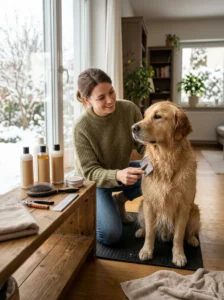
Beyond simple comfort, seasonal grooming adjustments genuinely affect health — proper coat management supports temperature regulation, appropriate bathing frequency changes with activity and sweat patterns, and paw care needs shift with surface temperature and seasonal terrain conditions.
Summer Grooming Adjustments
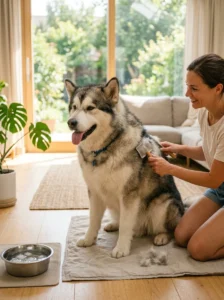
Increased brushing frequency, particularly for double-coated breeds shedding their winter undercoat, covered in detail in our shedding management guide. This seasonal shed, if not actively managed, can interfere with a coat’s natural cooling function.
Never shaving down double-coated breeds, despite the intuitive appeal of this as a cooling strategy — a properly maintained double coat actually provides insulation against heat, and shaving can interfere with natural temperature regulation while also increasing sunburn risk.
More frequent bathing may be appropriate during hot months, given increased sweating, dirt accumulation during outdoor activity, and general seasonal grime, though still within the general bathing frequency guidance covered in our dedicated guide rather than excessive over-bathing.
Paw pad attention becomes critical, given how hot pavement and outdoor surfaces become during summer — checking paw pads regularly for any signs of burns or damage, and adjusting walk timing to cooler parts of the day, covered in more detail in our heatstroke guide.
Ear checks deserve extra attention if your dog swims frequently during summer, given the moisture-related infection risk covered in our ear infection guide.
Winter Grooming Adjustments
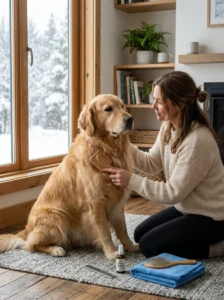
While our own winters are relatively mild compared to genuinely cold climates, general winter grooming principles are worth knowing, particularly relevant if you travel or relocate to a colder region.
Reduced bathing frequency is often appropriate in colder weather, since excessive bathing can be more drying to skin already potentially stressed by lower humidity and indoor heating.
Maintaining coat length for insulation purposes, generally avoiding short cuts during colder months for breeds that benefit from coat length for warmth.
Paw care for snow and ice exposure, relevant in genuinely cold, snowy climates — checking for ice buildup between toes after walks, and being mindful of de-icing chemicals on sidewalks, which can cause paw irritation if not cleaned off promptly.
Moisturizing attention for dry skin, since indoor heating during cold months can contribute to dry, flaky skin, similar to how it affects human skin during winter.
Transitional Season Considerations (Spring and Fall)
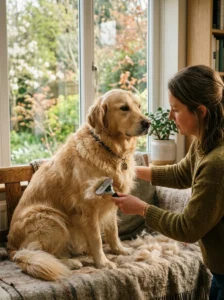
These shoulder seasons often bring their own specific grooming demands, particularly the heaviest shedding periods as dogs transition their coat for the upcoming season — covered extensively in our shedding guide. Building in extra brushing time specifically during these transition windows, rather than maintaining a static year-round schedule, helps manage this predictable seasonal pattern.
How Our Routine Shifts Specifically Through the Year
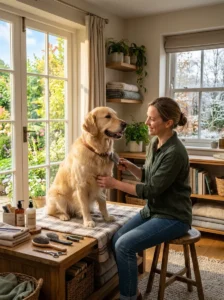
For context, here’s roughly how our own grooming routine adjusts seasonally: during peak summer heat, we increase brushing to near-daily for Bruno specifically, given his heavier coat, while shifting walk timing significantly earlier and later in the day. During cooler months, brushing frequency drops to a more standard several-times-weekly schedule, and bathing frequency decreases slightly given lower activity-related dirt accumulation.
Adjusting Grooming Tools Seasonally
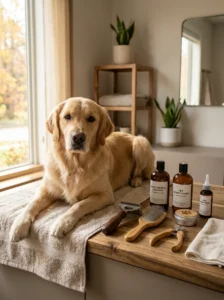
The tools that matter most can shift somewhat by season too — deshedding tools, covered in our comparison guide, become particularly important during the heaviest shedding transitional periods, while a focus on moisturizing shampoos might matter more during drier winter months if your climate includes genuinely cold, dry conditions.
Sun Protection Considerations
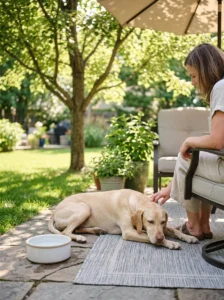
This is a less commonly discussed seasonal consideration, but worth mentioning given our intense summer sun specifically: dogs with thin coats, light-colored or pink skin (particularly around the nose and ears), or those who’ve been recently clipped short are more vulnerable to sunburn during peak summer months. Limiting extended direct sun exposure during the most intense parts of the day, and discussing pet-safe sunscreen options with your vet for particularly vulnerable dogs, is worth considering during summer specifically.
Building Flexibility Into Your Routine
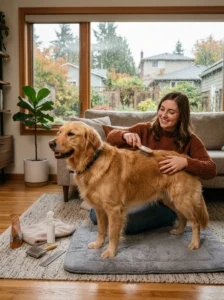
Rather than treating grooming as a fixed, unchanging schedule, building genuine flexibility — being willing to increase brushing during a heavy shedding week, or adjust bathing frequency based on actual observed need rather than a rigid calendar — tends to serve your dog’s actual changing needs better than a static approach maintained regardless of season.
Coat Condition as a Seasonal Health Indicator
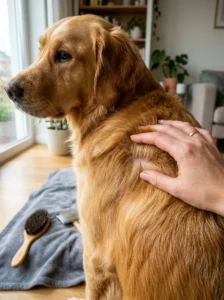
Beyond purely cosmetic considerations, paying attention to how your dog’s coat condition shifts seasonally can serve as a useful general wellness indicator. A coat that seems unusually dull, excessively dry, or shedding well beyond what’s typical for the season might warrant a closer look — either reassessing your seasonal grooming approach, or in some cases, mentioning the observation to your vet if it doesn’t seem to align with the expected seasonal pattern you’ve come to recognize for your specific dog.
Adjusting Grooming Schedules Around Seasonal Activities
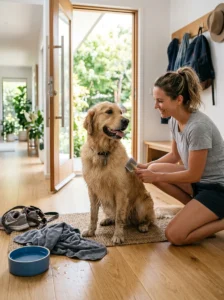
Beyond pure climate considerations, seasonal activity changes also affect appropriate grooming adjustments. If summer means significantly more outdoor time, swimming, or activity-related dirt accumulation for your dog, your bathing and brushing frequency should reflect that increased activity level, not just the temperature change alone. Similarly, if winter brings reduced outdoor activity for your specific household and dog, grooming frequency might naturally decrease somewhat beyond what temperature alone would suggest, simply reflecting genuinely lower activity-related dirt and oil accumulation during that period.
Planning Ahead for Predictable Seasonal Transitions
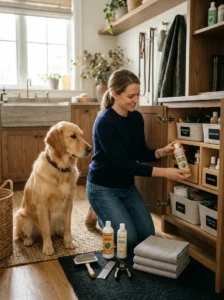
Rather than reactively adjusting once a season has already fully arrived, anticipating predictable transitions based on your own location’s typical patterns allows for more proactive preparation — stocking up on appropriate seasonal products before they’re urgently needed, scheduling a professional grooming appointment timed just before your heaviest shedding season typically begins, or simply mentally preparing for the increased grooming time commitment that a particular season will require based on your accumulated experience with your specific dog and climate.
How Multi-Dog Households Navigate Different Seasonal Needs Simultaneously
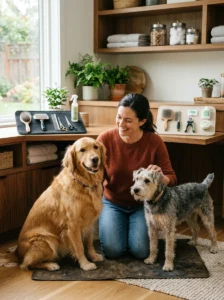
With Bruno and Mishi having somewhat different coat types and seasonal patterns, managing both dogs’ seasonal grooming needs simultaneously requires a bit of individual customization rather than a single unified household approach. We track each dog’s specific seasonal patterns somewhat separately, adjusting our routine for each based on their individual coat type and how they specifically respond to seasonal changes, rather than assuming both dogs need identical seasonal adjustments simply because they share a household and climate.
Building Your Own Climate-Specific Seasonal Calendar

Rather than relying purely on general seasonal guidance, which doesn’t always map precisely onto your specific local climate’s actual patterns, building your own informal seasonal grooming calendar based on a year or two of actual observation tends to produce more genuinely useful guidance than generic advice alone. Noting roughly when your dog’s heaviest shedding periods occur, when bathing frequency naturally needs to increase given your local heat patterns, and any other climate-specific patterns you’ve noticed creates a personalized reference that’s more accurate for your specific situation than general seasonal guidelines written for a broader, less specific audience.
How Indoor Climate Control Affects Natural Seasonal Patterns

It’s worth understanding that consistent indoor climate control — air conditioning during hot months, heating during cold months — can sometimes blur or delay the natural seasonal coat transition patterns that would occur more distinctly in a dog spending more time exposed to actual outdoor temperature and daylight variation. This is part of why some indoor-primarily dogs show somewhat less dramatically seasonal shedding patterns than dogs with more significant regular outdoor exposure, which is worth knowing if your dog’s shedding pattern doesn’t seem to align as cleanly with general seasonal expectations as you might anticipate.
Seasonal Grooming Budget Planning

Beyond the practical care adjustments covered throughout this guide, it’s worth recognizing that seasonal grooming needs sometimes carry budget implications worth planning for — increased shampoo and grooming supply consumption during heavy shedding seasons, potentially more frequent professional grooming appointments during particularly demanding periods, and any seasonal-specific products (like sun protection for vulnerable dogs) that might not be a year-round expense but matter during specific months. Building this seasonal variation into your overall pet care budget, similar to the broader cost considerations covered in our cost of ownership guide, provides a more complete, realistic picture than assuming consistent monthly costs throughout the year.
A few quick answers: Should I really never shave a double-coated dog in summer, even in extreme heat — This remains the generally recommended approach from most veterinary and grooming professionals — proper coat maintenance through brushing, rather than shaving, better supports a double-coated breed’s natural cooling function, even in genuinely hot climates.. How do I know if my dog’s paw pads have been damaged by hot pavement — Watch for limping, visible blistering or redness, excessive licking of the paws, or reluctance to walk on certain surfaces — any of these warrant a vet check, alongside immediately adjusting walk timing to cooler parts of the day going forward.. Does seasonal grooming advice apply the same way to all coat types — The general principles apply broadly, but specifics vary — a short-coated breed has different seasonal needs than a heavily double-coated breed, which is worth considering alongside the general seasonal guidance covered throughout this guide.. Is it worth adjusting my dog’s diet seasonally to support coat health through transitions — Some owners find that ensuring adequate omega-3 fatty acid intake, covered more broadly in our nutrition guides, supports coat health through seasonal transitions, though this is a supplementary consideration rather than a primary seasonal grooming strategy..
Learning to actually adjust our grooming routine seasonally, rather than maintaining one static approach year-round, has made a genuine difference in how comfortably Bruno and Mishi handle our particularly intense summer heat specifically. If you haven’t thought about your own routine through this seasonal lens before, it’s worth reviewing what adjustments might genuinely benefit your dog as your local climate shifts throughout the year.
For related guidance, our guides on managing excessive shedding and heatstroke prevention are excellent next reads.