Here’s a fact that stopped me in my tracks. Household germ surveys often rank pet bowls among the grubbiest things in the home, and I’d been rinsing mine for years without ever really scrubbing it. One swipe of a finger along the rim proved the point. Slimy. That’s when I started collecting dog bowl secrets, and these twelve changed how I handle every mealtime.
Why a Simple Bowl Deserves Your Attention
Your dog’s mouth touches that bowl several times a day. It shapes how fast he eats, how comfortable he feels, and how clean his food stays. The fixes below cost almost nothing, and most take seconds.
One note first. If your dog coughs, gags, or struggles at mealtimes, ask your vet before changing anything. A new bowl won’t solve a health problem.
The 12 Dog Bowl Secrets
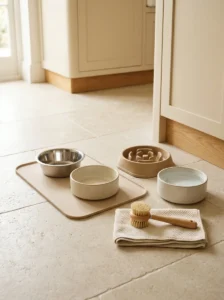
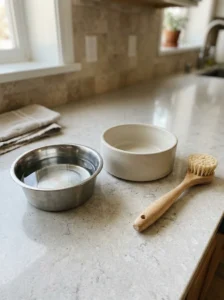
1. Scrub it daily. Rinsing isn’t enough. That slippery film is biofilm, and only hot, soapy water and a brush will shift it. Food bowl and water bowl, every single day.
2. Stainless steel is the easy winner. It’s tough, dishwasher safe, and doesn’t hold smells. Pick one with a rubber ring underneath so it stays put.
3. Plastic scratches. Tiny scratches can trap bacteria, and some dogs develop redness or crusting around the chin. If you notice that, ask your vet and try steel or ceramic.
4. Chipped ceramic goes in the bin. Cracked glaze is hard to clean properly. Pretty or not, retire it.
5. Shape matters. Deep, narrow bowls dunk long ears. Flat-faced breeds often manage better with wide, shallow dishes. Match the bowl to your dog’s face, not the price tag.
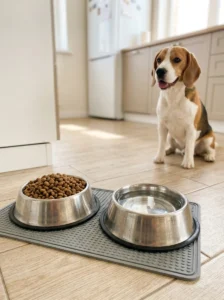
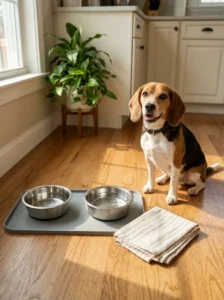
6. Keep food and water apart. Crumbs turn water cloudy fast. Two separate spots keep both fresher.
7. Change the water twice a day. Topping up isn’t the same as refreshing. Tip it out, rinse, refill.
8. Dry bowls after washing. Damp bowls invite germs. A quick wipe takes ten seconds.
9. Clear wet food after about twenty minutes. It spoils faster than you’d think, especially in warm kitchens. Bin leftovers rather than saving them.
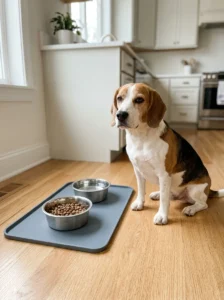
10. Use a non-slip mat. A skating bowl puts some dogs off eating. A silicone mat also catches splashes and wipes clean.
11. Try a slow feeder for gulpers. Some dogs find ridged bowls turn dinner into a puzzle and slow things down. But if yours seems frustrated, switch back to a plain bowl.
12. Replace bowls when they’ve had it. Scratched, chipped, or smelly even after a wash? Time for a new one.
The Tip That Surprised Me
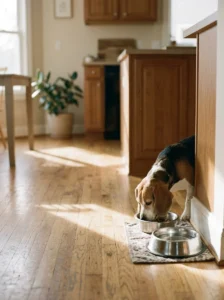
Move the bowl. Seriously. My beagle, Biscuit, spent weeks picking at dinner beside the washing machine, and I assumed he was fussy. The real problem was noise. I shifted his bowl to a quiet corner by the back door, and he cleared it in minutes.
Picture a calm kitchen, a dog eating happily, and no more mealtime standoffs. Many dogs prefer a peaceful spot away from doors, appliances, and foot traffic.
My Two-Minute Daily Routine
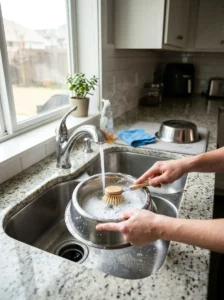
Here’s what works in my house. In the morning, I tip out the old water, scrub both bowls with a dedicated brush, rinse well, dry them, and refill. In the evening, I swap the water again and wipe the mat. Once a week, both bowls go in the dishwasher on a hot cycle.
Use a separate sponge for dog bowls, never your own dishes, and replace it often. That’s the whole system.
A Real Example From My Neighbour
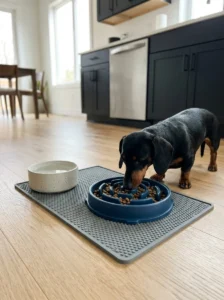
Dana’s dachshund, Mango, wolfed his dinner in forty seconds, then stared at her for more. She swapped to a slow feeder, split his food into two smaller meals, and added a rubber mat. Mango took a few days to accept the new setup. Now dinner lasts a couple of minutes, and the floor stays dry. “Nothing fancy,” she told me. “Just a better setup.”
Warnings Worth Knowing
Watch for gulping, a swollen belly, or retching after meals, especially in deep-chested breeds. If your dog seems uncomfortable after eating, call your vet straight away.
Skip painted bowls, since paint can chip. Choose bowls labeled food-safe. And if a new bowl makes your dog hesitate, give him a day or two and drop a treat inside to build trust.
Quick Questions
Are raised bowls better?
Not for every dog. Some do fine at floor level. Ask your vet whether a stand suits yours.
Can bowls go in the dishwasher?
Most steel and ceramic ones can. Check the label first.
Is tap water okay?
For most dogs, yes. If you’re unsure about your local water, ask your vet.
Ready to Try These Dog Bowl Secrets?
You don’t need to do all twelve today. Start with the easy wins: scrub the bowl, dry it, and move it somewhere quiet. Pick two of these dog bowl secrets, try them this week, and watch how your dog responds.