
Having already been through the dog vaccination learning curve with Bruno, helping Hira navigate Coco’s kitten vaccine schedule felt familiar in structure but genuinely different in specifics — cats have their own core vaccines and timeline considerations that are worth understanding clearly rather than assuming the dog framework transfers directly.
(I’m an experienced pet owner, not a veterinarian. This reflects general guidance — your vet’s specific recommendations for your individual cat, based on their lifestyle, location, and health history, should always take priority over general information.)
Why Cat Vaccination Timing Mirrors the Logic Behind Dog Schedules
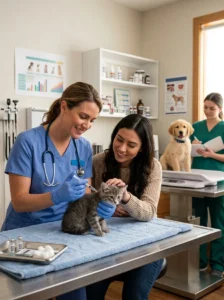
Similar to the reasoning covered in our dog vaccination guide, kittens are vaccinated in a series rather than a single shot because maternal antibodies, present at birth, gradually fade at a somewhat unpredictable time for each individual kitten. Vaccinating in rounds ensures there’s no gap where a kitten is left unprotected once that maternal immunity does fade.
Core Vaccines Every Cat Should Have
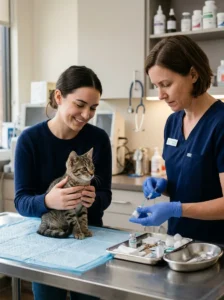
Feline viral rhinotracheitis, calicivirus, and panleukopenia (FVRCP) — often bundled into a single combination vaccine, protecting against a respiratory virus complex and a serious, highly contagious viral disease that can be fatal, particularly in kittens.
Rabies — required by law in most places, fatal and transmissible to humans, making this a non-negotiable core vaccine regardless of whether your cat is indoor-only or has outdoor access.
Non-Core Vaccines Based on Lifestyle

Feline leukemia virus (FeLV) — generally recommended for kittens initially, with continued vaccination typically based on ongoing outdoor access or exposure risk to other cats, since this virus spreads through close contact.
Your vet will help determine which non-core vaccines make sense based on your specific cat’s actual lifestyle — an indoor-only cat with no exposure to other cats has different risk factors than one with regular outdoor access or exposure to other cats through boarding or multi-cat households.
Kitten Vaccination Schedule
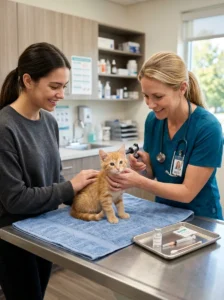
A typical schedule looks something like this, though your vet may adjust based on your kitten’s specific situation:
⦁ 6-8 weeks: First FVRCP vaccine
⦁ 10-12 weeks: Second FVRCP vaccine, FeLV discussion based on lifestyle
⦁ 14-16 weeks: Third FVRCP vaccine, rabies vaccine (timing varies by location)
Adult Cat Vaccination Schedule
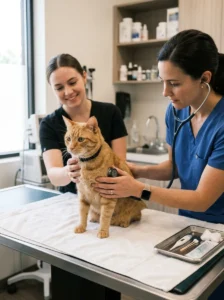
Once the kitten series is complete, most core vaccines are typically boosted around one year later, then continuing on a schedule your vet recommends, often every one to three years depending on the specific vaccine and your cat’s individual risk factors.
Indoor Cats: Do They Still Need Full Vaccination?
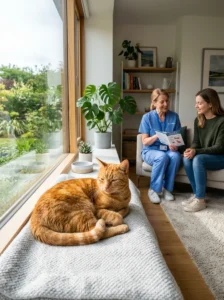
This is a genuinely common question, and the general answer is yes for core vaccines, similar to the reasoning covered for indoor dogs in our dog vaccination guide — certain diseases can be carried into the home on shoes or clothing, and rabies vaccination requirements are typically based on age and location regardless of lifestyle. Non-core vaccines may be less necessary for a genuinely indoor-only cat with minimal exposure to other cats, which is worth discussing specifically with your vet.
What to Expect After Vaccination

Similar to dogs, mild lethargy, slight tenderness at the injection site, or reduced appetite for a day is generally normal and not cause for concern. Watch for and contact your vet promptly if you notice facial swelling, difficulty breathing, persistent vomiting, or significant ongoing lethargy beyond a day or two.
Building Your Own Vaccination Tracking System

Similar to the habit covered in our dog guides, keeping your own simple record — date, vaccine given, any reaction — proved genuinely useful when Hira needed to provide proof of Coco’s vaccination status for a boarding stay, saving the hassle of tracking down records from the clinic under time pressure.
Why Maternal Antibodies Matter Just as Much for Kittens as Puppies
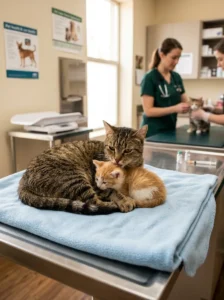
The underlying biological reasoning, covered briefly earlier, deserves a bit more explanation since it’s genuinely the same mechanism driving the dog vaccination timeline covered in our dog vaccination guide. A kitten’s mother passes antibodies through nursing, providing temporary immunity that gradually fades at a somewhat unpredictable time for each individual kitten. Vaccinating in a series, rather than a single shot, ensures protection kicks in regardless of exactly when that maternal immunity happens to fade for your specific kitten, since the timing genuinely varies between individuals even within the same litter.
Vaccination Reactions: What’s Normal and What Warrants a Call
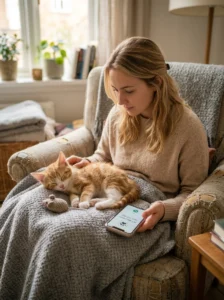
Beyond the brief mention earlier, it’s worth being more specific about typical post-vaccination response in cats. Mild lethargy or reduced appetite for about a day, slight tenderness at the injection site, or a small, soft lump that resolves within a few weeks are all generally considered normal. Watch for and contact your vet promptly if you notice: persistent vomiting or diarrhea, significant swelling or pain at the injection site that worsens rather than improves, difficulty breathing, or a lump that grows, becomes painful, or doesn’t resolve within the expected timeframe.
A Note on Vaccine-Associated Sarcoma: A Rare But Known Cat-Specific Concern
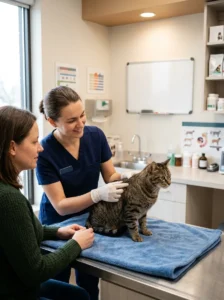
This is a topic worth knowing about, even though it’s genuinely rare — a small number of cats can develop a type of tumor at a vaccination injection site, leading some vets to specifically choose injection locations (like a leg, rather than between the shoulder blades) that allow for easier monitoring and, if ever necessary, more straightforward treatment. This rare risk shouldn’t discourage appropriate vaccination given how much more significant the protection benefit is, but it’s worth knowing that your vet may have a specific protocol around injection site selection for this reason, distinct from typical dog vaccination practice.
Vaccination Requirements for Boarding and Travel
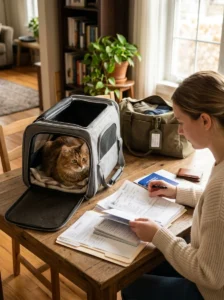
Similar to the boarding requirements covered in our dog vaccination guide, many cat boarding facilities and some travel situations require proof of current vaccination, particularly rabies and sometimes FVRCP. Keeping your own simple vaccination record, as mentioned earlier, has proven genuinely useful for us when Coco has needed boarding during Hira’s travel, saving the scramble of contacting the clinic for documentation under time pressure.
How Vaccination Schedules Differ for Rescue Cats With Unknown History
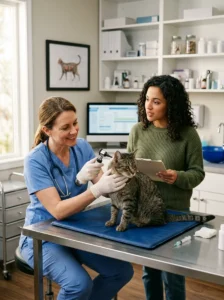
If you’ve adopted an adult cat with unclear or unknown vaccination history, your vet will typically recommend either starting a fresh series or doing titer testing (checking existing antibody levels) to assess current protection, similar to the approach available for dogs in a similar situation. This is worth discussing directly during your first vet visit with a new rescue cat, rather than assuming any prior vaccination status without actual documentation.
Why an Indoor-Only Lifestyle Doesn’t Mean Skipping the Vet Visit Itself
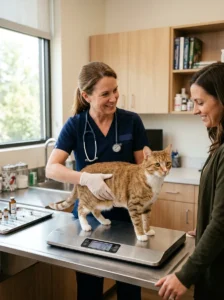
Beyond just the vaccination question, it’s worth emphasizing that the actual vet visits accompanying each vaccination round serve a broader purpose too — a physical exam, weight tracking, and the chance to catch any developing issue early, similar to the broader value of routine visits covered throughout our dog health guides. Even if you and your vet ultimately decide certain non-core vaccines aren’t necessary for your specific indoor cat’s lifestyle, maintaining the visit schedule itself remains valuable for this broader health monitoring purpose.
Adult Cat Booster Schedule in More Detail
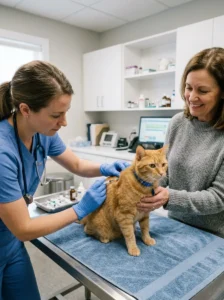
Building on the brief mention earlier, many vets now offer some core vaccines on a three-year booster schedule for adult cats, rather than annual boosting, reflecting research suggesting some vaccines provide longer-lasting protection than previously assumed. This varies by specific vaccine and your vet’s individual protocol, which is part of why discussing your cat’s specific booster schedule directly, rather than assuming a fixed annual timeline, gives you the most accurate picture for your individual cat.
What Happens If You Miss a Scheduled Booster
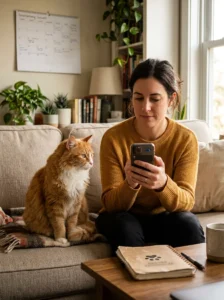
If a booster is missed or significantly delayed, your vet can advise on the appropriate next step, which sometimes means simply resuming the regular schedule and sometimes means restarting a portion of the series, depending on how much time has passed and which specific vaccine is involved. This is worth addressing proactively rather than assuming a missed appointment requires either complete restart or no action at all — your vet’s specific guidance for the actual time elapsed matters here.
Building Vaccination Reminders Into Your Routine

Similar to the calendar habit covered throughout our dog health guides, setting calendar reminders for upcoming booster appointments well in advance helps avoid accidentally letting a booster lapse simply due to a busy schedule. We keep both Bruno and Mishi’s appointments alongside Coco’s in the same shared household calendar during our cat-sitting periods, which has made it much easier to stay on top of multiple pets’ overlapping but distinct health schedules without anything slipping through the cracks.
A few quick answers: Do cats need the same vaccines as dogs — No — while the general concept of core versus non-core vaccines applies to both species, the specific diseases and vaccines differ, since cats and dogs are susceptible to different pathogens.. Is rabies vaccination really necessary for an indoor-only cat — In most areas, yes, it’s legally required regardless of lifestyle, and even indoor cats carry some risk of exposure (an escaped cat, a bat getting into the home), making this a non-negotiable core vaccine.. How much does a kitten’s full vaccination series typically cost — This varies significantly by location and clinic, so it’s worth asking your vet for a cost breakdown of the full series upfront, similar to the planning approach covered in our dog guides.. Can adult cats start a vaccination series if they missed it as kittens — Yes, your vet can establish an appropriate catch-up schedule for an adult cat with unknown or incomplete vaccination history, similar to how this is handled for adult dogs in a similar situation..
Going through Coco’s vaccination schedule alongside Hira reinforced for me that the underlying logic — protecting a vulnerable young animal during a specific window, then maintaining protection through adulthood — really does carry across species, even though the specific vaccines and diseases differ. If you’re navigating this with a new kitten, working closely with your vet and keeping your own simple tracking record will make the process feel much more manageable.
For more on cat care fundamentals, our guides on new cat owner essentials and signs your cat is sick are excellent next reads.