Here’s something that surprised me: a feral cat isn’t a lost pet waiting to be rehomed. Many have never been handled by people, and they’ll never curl up on your sofa. That changes how you help. Instead of coaxing them indoors, you give them a safe place they’ll choose on their own. I’m a dog person, but I’ve helped a local rescue set up shelters for a colony behind our street. These ten feral cat house ideas are the ones that worked.
Why a Shelter Matters More Than a Bowl
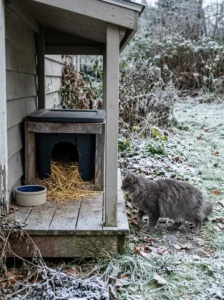
Food is kind. But food without a dry, windproof place to sleep only does half the job. Cold, wind, and damp are hard on any outdoor cat, and ferals tend to hide, so you may never see one using the shelter. That’s normal.
Before you build, call a local trap-neuter-return group or rescue. They can tell you whether your colony is already managed, and some offer advice or supplies. Check local rules too, since some areas regulate feeding or structures.
Keep it snug. A doorway around six inches wide and an interior of roughly 18 to 24 inches lets a cat warm the space with her own body heat. Bigger isn’t better here.
10 Feral Cat House Ideas and Outdoor Shelters
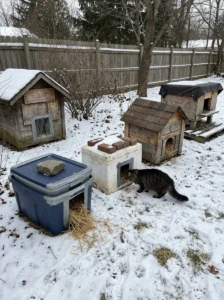
1. The Tub-in-a-Tub. Nest one plastic storage tub inside a slightly larger one, pack the gap with straw or foam, and cut matching doorways. Cheap, waterproof, and my starter pick.
2. The Foam Cooler. An old foam cooler already insulates. Cut a doorway, smooth the edges, and cover the inside so nobody nibbles the foam.
3. The Double-Wall Wooden Box. Two plywood boxes, one inside the other, with insulation between. A weekend project that lasts for years. Slope the roof and add a small overhang.
4. The Pallet Platform. Raise any shelter on pallet slats or bricks. Getting off the cold ground helps more than you’d expect.
5. The Flap-Door House. Hang a flexible plastic flap over the doorway to block wind. Test that it swings easily from the inside.
6. The Two-Door Shelter. Some colony caretakers add a second exit so a nervous cat never feels cornered. Cover both with flaps.
7. The Under-Deck Hideaway. Tuck a box shelter beneath a deck or porch, where wind and rain can’t reach. Keep the entry clear of snow.
8. The Shed-Side Lean-To. Set a shelter against a shed wall for built-in wind protection. Face the doorway away from the weather.
9. The Old Dog House Makeover. Dog owners, this one’s for us. Shrink the big doorway with a wooden panel, line the walls with foam board, and add straw. Free, sturdy, and already weatherproof.
10. The Straw Bale Hut. Stack bales around a small box, leave a tunnel entrance, and cap it with a tarp. A quick fix when winter arrives early.
The Tip That Surprised Me
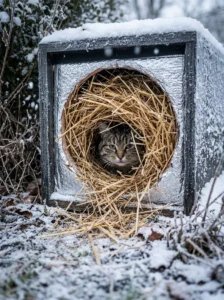
Use straw, not blankets. I assumed soft meant warm. But towels and blankets soak up damp and can freeze stiff, turning a bed into an ice pack. Straw sheds moisture and keeps its fluff. Just make sure it’s straw, not hay, which holds water and can go moldy.
Picture a freezing midnight, wind rattling the fence, and a cat tucked into a golden nest with only her nose showing. Fluff the straw every few days and swap it when it’s damp.
Mistakes, Warnings, and a Real Example
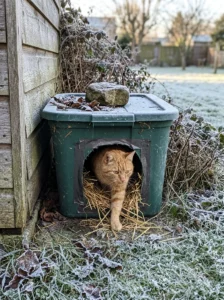
My neighbor Dana built a tub shelter after seeing mine. She set it beside her shed, flap facing away from the wind, and left it alone. For a week, nothing. Then one frosty morning she spotted a ginger cat slipping out of it, dry while the lawn was white. She never saw him go in. That’s how you know it’s working.
Now the warnings. Don’t try to handle a feral cat. Frightened cats can scratch and bite, so watch from a distance and let the rescue group do any trapping.
Skip electric heating unless the product is made for outdoor cat shelters, and keep every cord out of reach. Point doorways away from the wind, and add tiny vent holes near the top. Never seal a cat inside. Sand every edge, and use non-toxic paint, dried fully.
Check water daily, because bowls freeze fast. Keep antifreeze and other chemicals well away, since they’re dangerous to cats. If you spot a cat that’s injured or seems unwell, call a vet or local rescue straight away.
Where should I put the shelter? Somewhere quiet, sheltered, and away from foot traffic, ideally near where the cats already feed.
How many do I need? Cats often share in cold weather, but a few small shelters give everyone options.
What if nobody uses it? Give it time, and try moving it a little. Tucking in some straw from an old nest may help.
Ready to Build a Feral Cat House?
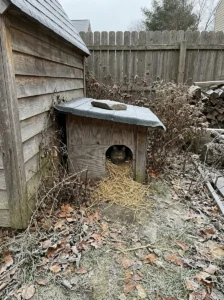
You don’t need all ten. Pick one design, keep it snug, and fill it with straw. These feral cat house ideas work best when they’re small, dry, and tucked out of the wind. Build it, check it now and then, and let the cats decide when to move in.
Got dogs at home, too? Have a look at my post on cozy dog beds that don’t wreck your living room. And tell me: have you ever helped an outdoor cat through a cold snap?