
Halloween is one of the most fun nights of the year — unless you’re a pet. Between the candy, the costumes, the candles, and a parade of strangers ringing your doorbell, October 31 hides more hazards for dogs and cats than almost any other night of the year.
The good news: every one of these dangers is preventable. Here are the 9 hidden Halloween dangers for pets, what makes each one risky, and exactly what to do about it — backed by guidance from the ASPCA’s Animal Poison Control Center.
1. Chocolate (Theobromine Poisoning)
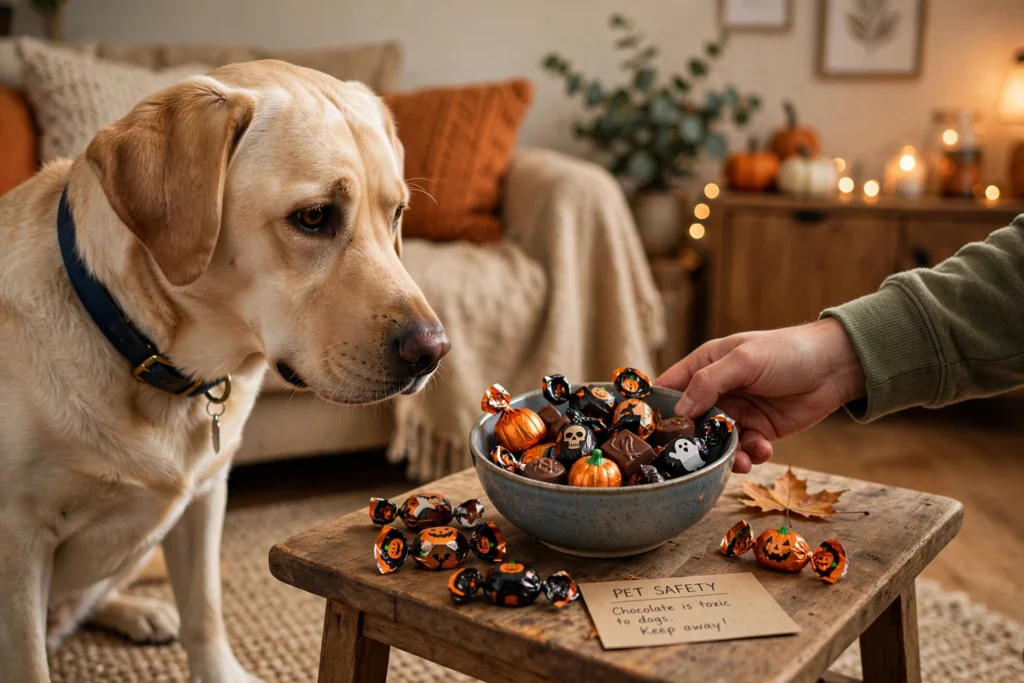
Chocolate is the classic Halloween danger, and for good reason. Chocolate contains theobromine and caffeine, stimulants that dogs and cats process far more slowly than humans. The darker the chocolate, the more dangerous it is — baker’s chocolate and dark chocolate are the worst offenders, while white chocolate carries the lowest risk.
Signs of chocolate poisoning include vomiting, diarrhea, restlessness, rapid breathing, increased thirst and urination, heart rhythm problems, tremors, and seizures. Symptoms can take hours to appear, so don’t wait to see how your pet feels — if you know they ate chocolate, act immediately.
What to do: Move all candy out of reach before trick-or-treaters arrive — countertops, not coffee tables. If your dog or cat eats chocolate, call your veterinarian or the ASPCA Animal Poison Control Center at (888) 426-4435 right away.
2. Xylitol — The Sweetener That Can Kill a Dog in Hours
Xylitol (also labeled as birch sugar) is an artificial sweetener found in sugar-free gum, sugar-free candy, and some peanut butters. For dogs, even a small amount triggers a sudden, massive release of insulin, crashing blood sugar — and larger amounts can cause liver failure. Poisoning can turn fatal within hours.
Unlike chocolate, xylitol poisoning can look like simple tiredness at first: weakness, stumbling, and collapse as blood sugar drops, sometimes followed by vomiting and seizures.
What to do: Check the ingredient lists on sugar-free treats before Halloween. If your dog eats anything containing xylitol, treat it as an emergency — get to a vet immediately, don’t “wait and see.”
3. Candy Wrappers and Foil
Even non-toxic candy can land your pet in trouble because of what it’s wrapped in. Cats in particular love batting foil and cellophane wrappers around — and then swallowing them. Ingested wrappers can cause intestinal blockages and violent vomiting, which may require surgery.
What to do: Keep a lidded trash can or a zip bag for wrappers right next to the candy bowl, and empty it before pets can investigate.
4. Raisins and Grapes
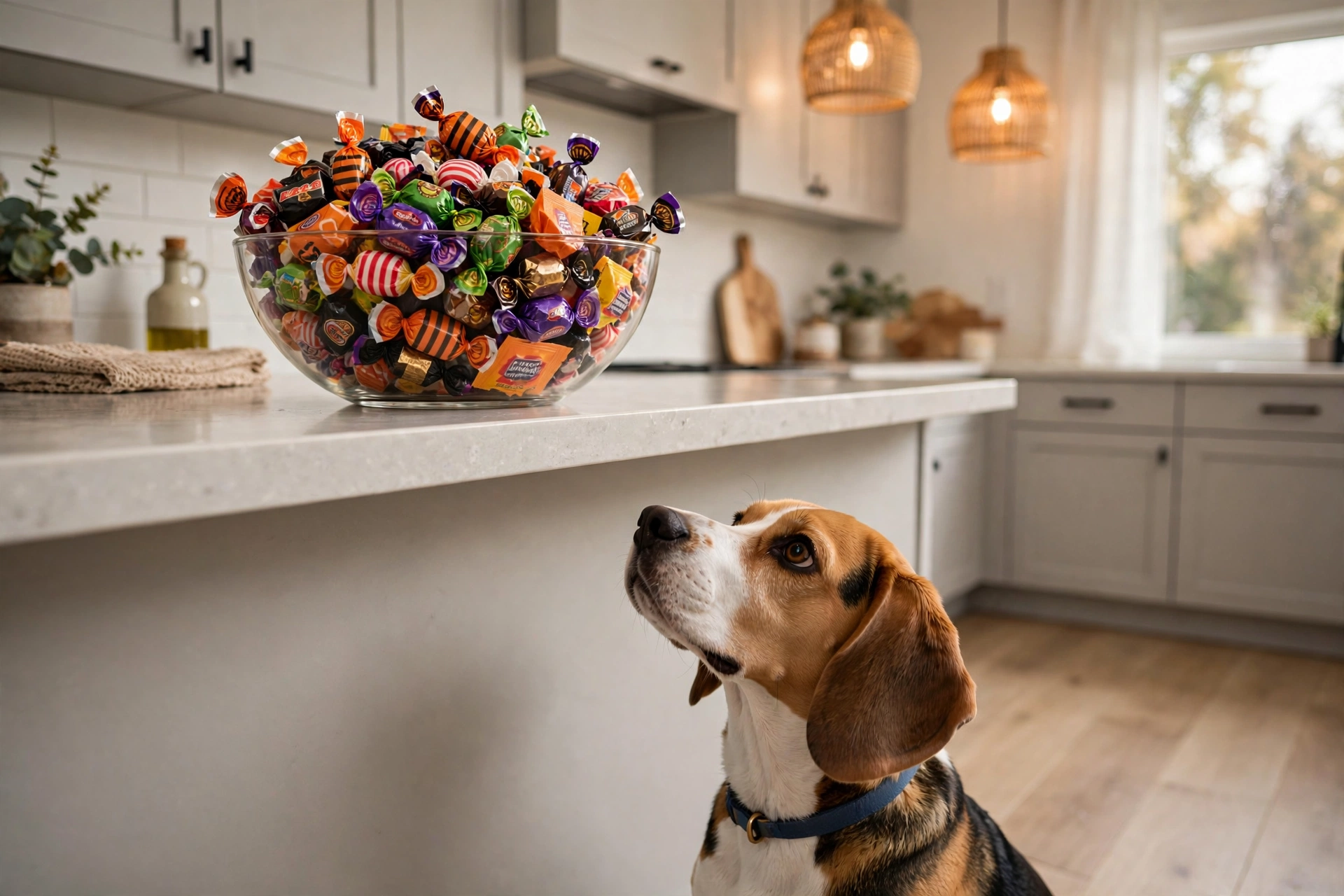
Raisin boxes and trail-mix candies show up in Halloween hauls every year. Grapes and raisins can cause sudden kidney failure in dogs — and there is no known safe amount. Even a handful of raisinets can be dangerous for a small dog.
What to do: Sort trick-or-treat hauls immediately and put anything with raisins or grapes in a sealed container on a high shelf.
5. Lit Candles, Jack-o’-Lanterns, and Decoration Wires
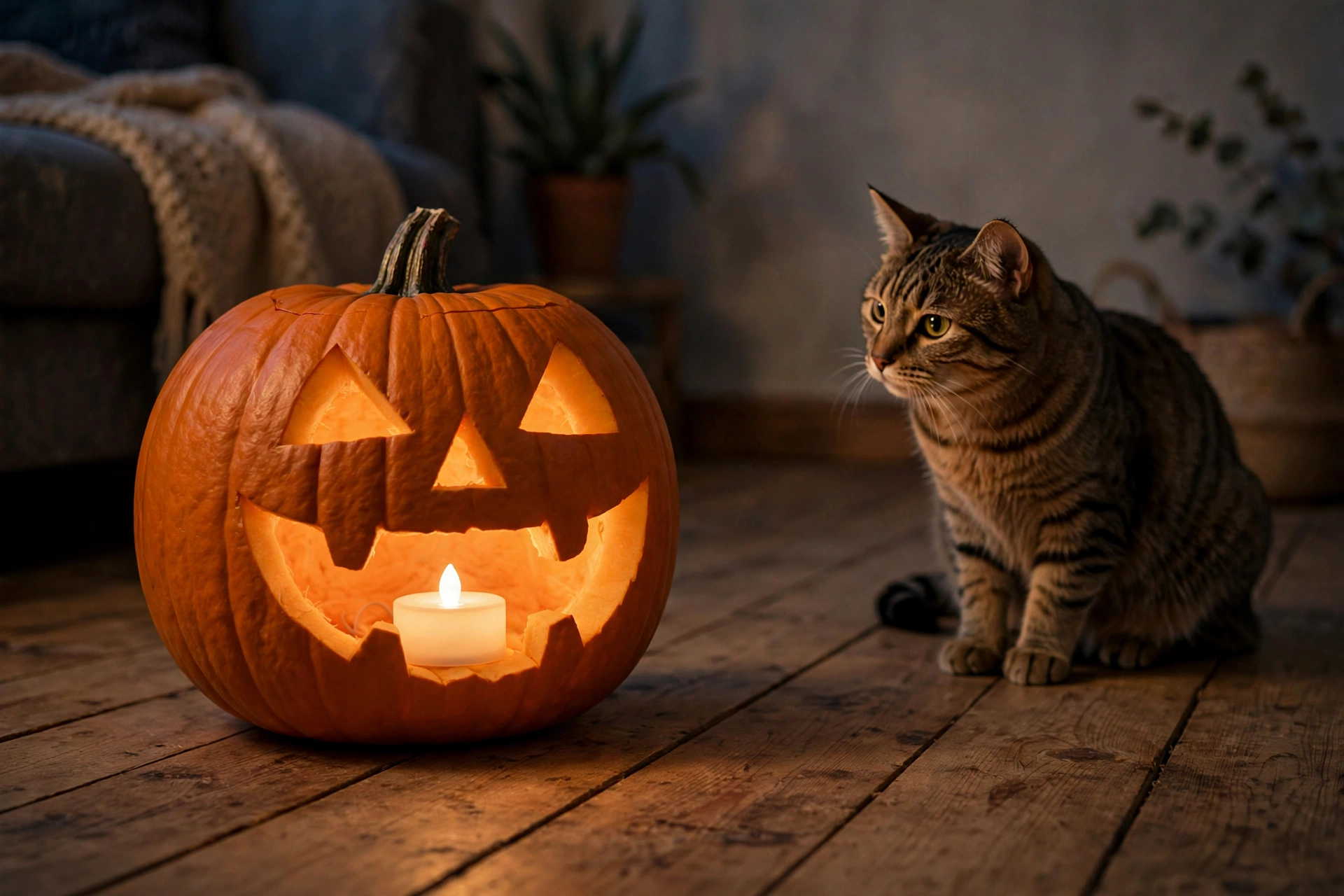
A carved pumpkin with a real candle inside is an open flame at tail height. Dogs wag into them; curious cats paw at them. Pets knock lit jack-o’-lanterns over every Halloween, and the ASPCA specifically warns that kittens are at high risk of burns from candle flames.
Then there are the wires: string lights, animated decorations, and fog machines all have cords. A chewed electrical cord can cut a pet’s mouth on broken glass or plastic — or deliver a dangerous shock.
What to do: Switch to battery-powered LED candles inside pumpkins, and run decoration cords behind furniture or through cord covers where teeth can’t reach them.
6. Costumes That Stress, Choke, or Trap
Dressing up pets is adorable — but only if the pet agrees. A costume that limits movement, sight, hearing, or the ability to breathe, bark, pant, eat, or drink is a hazard, not a fashion statement. Small dangling pieces, buttons, and bells are choking hazards for enthusiastic chewers, and a tangled costume can injure a panicking animal.
The ASPCA’s rule of thumb: don’t costume a pet that doesn’t clearly enjoy it. A festive Halloween bandana is a perfectly good alternative.
What to do: Do a trial run days before Halloween. If your pet freezes, pants heavily, tries to chew the costume off, or hides — skip the costume. And never leave a costumed pet unsupervised.
7. Open Doors and Escaping Pets
Trick-or-treat night means your front door opens dozens of times. Every opening is an escape opportunity — and a frightened animal bolting into a dark street full of noise, cars, and strangers is one of the most common Halloween pet emergencies.
What to do: Set pets up in a closed interior room (bedroom or den, two walls from the front door) before the first trick-or-treaters arrive. Add white noise like a fan, a long-lasting chew or puzzle feeder, and familiar bedding. Make sure collars with ID tags are on and microchip details are current — just in case.
8. Noise, Masks, and Visitor Anxiety
From your pet’s perspective, Halloween is a horror movie: the doorbell rings all evening, and each time it opens, a loud stranger in a frightening mask appears. Dogs can flip into anxious guard mode, and cats may hide for hours — or lash out. Prolonged stress isn’t just unpleasant; it can trigger digestive upset and behavioral fallout for days.
What to do: That quiet interior room from tip #7 does double duty here. For severely anxious pets, talk to your vet ahead of time about calming options — don’t wait until October 31.
9. Black Cats and Outdoor Risks on Halloween Night
Every Halloween, shelters and rescues warn about a real pattern: black cats (and small outdoor pets generally) face a higher risk of cruelty and pranks on Halloween night. Even setting superstition aside, a dark street on a chaotic night is simply dangerous for any roaming cat.
What to do: Keep all cats indoors from a few days before Halloween through November 1 — especially black cats. No exceptions for “they always come back.”
What to Do If Your Pet Eats Something Toxic
- Stay calm and remove the source — get the candy, wrapper, or decoration away from the pet.
- Note what and how much — grab the packaging; the ingredient list and your pet’s weight help the vet calculate risk.
- Call for help immediately — your veterinarian, the nearest emergency vet clinic, or the ASPCA Animal Poison Control Center at (888) 426-4435 (available 24/7; a consultation fee may apply).
- Don’t induce vomiting unless told to — some substances cause more damage coming back up.
The Bottom Line
Halloween doesn’t have to be scary for your pets. Stash the candy, swap real candles for LEDs, give anxious animals a quiet room, keep everyone indoors and identifiable — and you’ll all make it to November 1 without an emergency vet visit.
Sources
- ASPCA, “ASPCA Takes the Trick out of Halloween Treats”
- ASPCA, “ASPCA Offers Top 5 Tips to Avoid Frights on Howl-o-ween”
- ASPCA Pet Insurance, “Pet Safety Tips for Halloween”
Emergency: ASPCA Animal Poison Control Center, (888) 426-4435, 24/7.
Frequently Asked Questions
Is chocolate really dangerous for dogs?
Yes. Chocolate contains theobromine and caffeine, which dogs metabolize slowly. Dark and baker’s chocolate are the most dangerous; symptoms include vomiting, rapid heart rate, tremors, and seizures. Call your vet immediately if your dog eats chocolate.
What should I do if my dog eats Halloween candy?
Identify what was eaten (chocolate? xylitol? wrappers?) and how much, then call your veterinarian or the ASPCA Poison Control Center at (888) 426-4435 right away. Don’t wait for symptoms.
Should I dress up my dog for Halloween?
Only if your dog clearly enjoys it. The costume must not restrict movement, sight, hearing, breathing, or panting, and should have no small chewable parts. If your dog seems stressed, use a festive bandana instead.
How do I keep my cat safe on Halloween?
Keep cats indoors (especially black cats) from a few days before Halloween through November 1, set up a quiet room away from the front door, and keep candy and wrappers out of reach.





One Response