
A few years ago, a well-meaning guest offered Bruno a couple of grapes as a treat while we were chatting in the kitchen, completely unaware this was something to avoid. I caught it within a minute or two, but that brief window was enough to genuinely scare me once I looked up exactly what grapes can do to dogs. This article exists partly because I want other owners to have the information before a similar moment happens in their own kitchen.
(Worth noting upfront: I’m an experienced dog owner, not a veterinarian. If your dog has eaten grapes or raisins, contact your vet or an animal poison control hotline immediately rather than waiting to see if symptoms develop.)
Why Grapes and Raisins Are So Dangerous
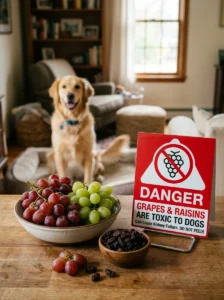
Grapes and raisins (which are simply dried grapes, carrying the same risk in a more concentrated form) can cause acute kidney failure in dogs. What makes this particularly unsettling is that researchers still don’t fully understand the exact toxic compound or mechanism responsible, despite years of study and case reports.
This uncertainty has real practical implications: there’s no established “safe” amount. Some dogs have experienced severe kidney failure after eating just a few grapes, while other dogs have eaten larger quantities with no apparent ill effect. This inconsistency isn’t well understood, and it means the only truly safe approach is avoiding grapes and raisins entirely, rather than assuming a small amount is fine based on your dog’s size or any other dog’s previous experience.
Where Raisins and Grapes Commonly Hide
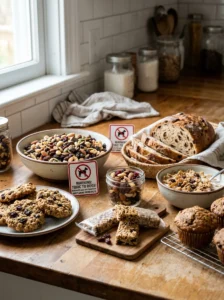
Beyond the obvious whole fruit, raisins in particular show up in foods owners might not immediately think to check:
⦁ Trail mix and granola bars
⦁ Baked goods, including cookies, muffins, and bread
⦁ Some cereals
⦁ Certain savory dishes, particularly in some international cuisines
⦁ Fruit and nut mixes intended as snacks
This was part of what worried me most after learning about this risk — it’s not just about keeping a bowl of grapes out of reach, but actually thinking through what else in the house might contain raisins in a less obvious form.
Symptoms of Grape or Raisin Toxicity

This is one of the trickier aspects of this particular risk: symptoms don’t always appear immediately, sometimes taking 24 hours or longer to show up, well after the window where an owner might still be thinking about what their dog ate earlier.
Symptoms to watch for include:
⦁ Vomiting, sometimes occurring within a few hours
⦁ Diarrhea
⦁ Lethargy or unusual quietness
⦁ Decreased appetite
⦁ Abdominal pain (a dog may seem uncomfortable when their belly is touched)
⦁ Increased or decreased urination, as kidney function is affected
⦁ Dehydration
In more severe, advanced cases, kidney failure can progress to symptoms like significant lethargy, seizures, or collapse, which is exactly why early intervention — even before symptoms appear — makes such a meaningful difference in outcomes.
What to Do If Your Dog Eats Grapes or Raisins

Contact your vet or animal poison control immediately, even if your dog seems completely fine. Given how this toxicity works, waiting for symptoms before seeking help can mean missing the window where treatment is most effective.
Try to determine roughly how much was eaten. This information helps your vet assess the situation, though given the unpredictable nature of this particular toxicity, even uncertain estimates are still worth sharing rather than withholding the call.
Don’t induce vomiting without specific guidance. Your vet or poison control will advise on whether this is appropriate based on the timing and circumstances.
Be prepared for your vet to recommend prompt treatment, which often includes inducing vomiting (under professional guidance, with appropriate timing), administering activated charcoal, and sometimes IV fluids to support kidney function proactively, even before symptoms appear, given the seriousness of the potential outcome.
From my experience: With Bruno’s grape incident, I called our vet immediately, even though he’d only eaten two grapes and seemed completely normal. She recommended bringing him in for evaluation given the seriousness of the risk, even at that relatively small quantity. He was fine, but I’ve never regretted treating it as seriously as I did in the moment.
Why “Wait and See” Isn’t the Right Approach Here

With many mild food-related concerns, a wait-and-see approach for a few hours is reasonable. Grape and raisin ingestion is different, specifically because of the delayed symptom onset and the severity of potential kidney damage if treatment is delayed. Acute kidney failure, once it progresses significantly, can be much harder to treat successfully than if caught and addressed proactively, before significant symptoms even develop.
Preventing Accidental Exposure

A few habits that have made a genuine difference since our scare:
Educating visitors and family members, briefly and without being alarmist, about this specific risk — most people genuinely don’t know, the same way I didn’t before learning about it myself.
Checking ingredient labels on baked goods, trail mix, and snack foods before leaving them accessible, particularly around holidays when these items are more commonly out on counters or tables.
Keeping fruit bowls and snack containers out of reach, not just assumed to be “obviously” off-limits to a curious or food-motivated dog.
Being extra cautious during gatherings, when food is more likely to be left unattended on low tables or within a dog’s reach, and more people unfamiliar with this risk are around offering treats.
The Research Gap That Makes This Risk So Hard to Communicate

One of the most frustrating aspects of this particular toxicity, from an owner education standpoint, is explaining a risk that researchers themselves can’t fully explain. Some theories have pointed toward mycotoxins (toxins produced by mold) that might contaminate grapes, while others have explored tartaric acid content or other compounds naturally present in grapes, but none of these theories has been conclusively proven as the definitive cause. This research gap means veterinary guidance has, appropriately, erred toward maximum caution rather than waiting for a complete scientific explanation before recommending dogs avoid grapes and raisins entirely.
How This Differs From Other “Some Dogs Tolerate It” Foods
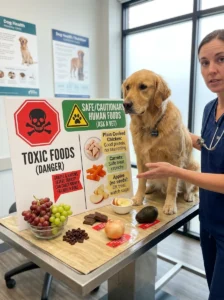
With many foods that cause mild sensitivity, individual variation makes sense within a predictable framework — some dogs have more or less tolerant digestive systems, similar to how humans vary in food tolerance. Grape and raisin toxicity doesn’t follow this same predictable pattern. The variation here isn’t about mild tolerance differences; it’s about whether a dog experiences catastrophic kidney failure or no apparent effect at all from a similar relative quantity, with no reliable way to predict in advance which outcome a specific dog might have. This unpredictability is precisely why the standard advice is avoidance rather than careful moderation, unlike many other foods on a “use caution” list.
What Happened After Bruno’s Grape Incident

Looking back, the vet visit itself was straightforward — a physical exam, a conversation about timing and quantity, and a decision (given the very small amount involved and his otherwise normal presentation) to monitor closely rather than pursue more invasive intervention immediately, with clear instructions on what symptoms would change that calculus. We did follow-up bloodwork a few days later to confirm his kidney values remained normal, which gave us genuine peace of mind beyond just the absence of obvious symptoms. That follow-up testing, even after he seemed completely fine, reinforced for me how seriously this particular risk should be treated even when an exposure seems minor.
Grape and Raisin Toxicity in the Context of Overall Kidney Health

It’s worth understanding that the kidney damage from grape and raisin toxicity, in severe cases, can be the same general category of harm as other causes of acute kidney injury, meaning the urgency and treatment approach shares similarities with how vets approach kidney injury from other causes. This connects to the broader importance of kidney health monitoring covered in routine senior dog care, since kidneys that have experienced any prior injury — whether from toxicity, infection, or other causes — may be more vulnerable to future stress, which is part of why thorough follow-up and monitoring matters even after an apparently successful recovery from an acute exposure.
Grapes, Raisins, and Holiday Baking Specifically

Baking season deserves its own specific mention, since this is when raisin-containing recipes are most likely to be actively prepared in many homes, with ingredients and finished products sitting on counters within a curious dog’s reach. Fruitcake, certain holiday cookies, and some traditional baked goods often contain raisins as a defining ingredient, and the concentrated, mixed nature of these dishes can make it harder to immediately recognize the raisin content compared to a more obviously visible bowl of whole grapes. Being especially mindful during active baking sessions, including keeping mixing bowls and ingredient containers out of reach rather than just the finished product, has become part of our own seasonal awareness around this risk.
Why I Still Mention This Risk to Almost Everyone Who Meets My Dogs

Even years after our scare, I still find myself briefly mentioning this specific risk to new people in our dogs’ lives — a new dog walker, a visiting friend, a new family member. It might seem repetitive, but given how unpredictable and severe this particular toxicity can be, and how genuinely few people seem to know about it compared to more commonly recognized risks like chocolate, I’d rather mention it slightly more often than necessary than risk a repeat of that moment in our kitchen.
Quick Reference
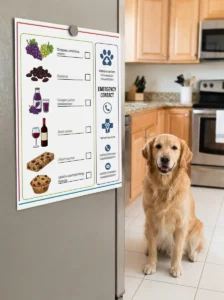
On the question of Are some dog breeds more susceptible to grape toxicity than others?: There’s no clearly established breed-specific pattern — susceptibility seems to vary by individual dog rather than breed, which is part of what makes this risk so unpredictable and worth avoiding universally rather than assuming any dog is “probably fine.” On the question of Is grape juice or wine also dangerous?: Given the unclear nature of the toxic mechanism, it’s safest to assume any product derived from grapes (juice, wine, jam containing grapes) carries similar risk and should be kept away from dogs. On the question of How much grape or raisin exposure is considered an emergency?: Given that no safe amount has been established, any known ingestion of grapes or raisins should be treated as a reason to contact your vet promptly, regardless of the quantity involved. On the question of My dog ate grapes a while ago and never showed symptoms — were they just lucky, or is the risk overstated?: Some dogs do appear to tolerate grape ingestion without apparent harm, which is part of the unpredictability of this toxicity. This doesn’t mean the risk isn’t real or that a future exposure would have the same outcome — the safest approach remains avoiding grapes and raisins entirely going forward. On the question of Does the toxicity risk change based on whether grapes are seedless or have seeds?: No meaningful difference has been established based on seed presence — the toxic mechanism, whatever it ultimately is, doesn’t appear connected to the seeds specifically, meaning seedless grapes carry the same risk as those with seeds.
That moment in our kitchen years ago taught me how quickly a well-intentioned gesture from someone who simply didn’t know better can turn into a genuine emergency. If there’s one food safety lesson I’d want every dog owner to walk away with, it’s this specific one — grapes and raisins are genuinely dangerous, the risk isn’t well understood enough to assume any amount is safe, and quick action matters more here than with almost any other food-related concern.
For a broader picture of food safety, our guides on the 10 foods dogs should never eat and the complete safe and unsafe foods list are worth reading next.