I remember being genuinely unsure when the “right” time was to switch Bruno from puppy food to adult food — there wasn’t an obvious, dramatic signal, and the advice I found ranged from a specific birthday to a vague “when your vet says so.” It took an actual conversation with our vet, factoring in his specific size and growth pattern, to land on a confident answer rather than just guessing based on a generic age.
(Worth noting upfront: I’m an experienced dog owner, not a veterinarian or nutritionist. Timing for this transition varies by breed size and individual development — your vet’s guidance for your specific puppy is more reliable than any general rule alone.)
Why Puppy Food and Adult Food Are Actually Different

Puppy food is formulated with higher levels of certain nutrients — particularly protein, fat, and specific minerals like calcium and phosphorus — to support the rapid growth and development happening during puppyhood. Adult food is formulated for maintenance, supporting a fully grown dog’s ongoing health rather than active growth, generally with somewhat lower calorie density and different nutrient ratios appropriate for a dog who’s done growing.
Feeding puppy food past the point where it’s actually needed can contribute to excess weight gain, since the higher calorie density isn’t matched by an adult dog’s lower growth-related calorie needs. Conversely, switching to adult food too early can shortchange a still-growing puppy’s elevated nutritional needs during an important developmental window.
General Timing Guidelines by Size

This is genuinely one of those areas where size matters enormously, since growth timelines differ dramatically between breed sizes.
Small breeds (generally under 20 lbs at maturity) often reach their adult size and can transition to adult food around 9-12 months old, since they mature relatively quickly compared to larger breeds.
Medium breeds (roughly 20-50 lbs at maturity) typically transition somewhere around 12 months old.
Large breeds (roughly 50-90 lbs at maturity) often benefit from continuing puppy food (ideally a large-breed-specific formula) until closer to 12-18 months, since they have a longer growth period and benefit from the controlled growth approach large-breed puppy formulas are specifically designed to support.
Giant breeds (over 90 lbs at maturity) may need puppy food even longer, sometimes up to 18-24 months, given their extended growth period.
From my experience: Bruno, being a medium-to-large mixed breed, ended up transitioning around 13 months, based on our vet’s assessment of his actual growth pattern and body condition rather than strictly following a generic age-based guideline.
Signs Your Puppy May Be Ready to Transition

Beyond general age guidelines, a few practical indicators help confirm readiness:
⦁ Your vet confirms your puppy has reached or is very close to their expected adult size
⦁ Growth rate has visibly slowed compared to earlier, more rapid puppy growth phases
⦁ Your vet’s assessment at a routine checkup specifically supports making the switch at this point
Why “Just Use the Bag’s Age Guideline” Isn’t Always Enough

Generic age guidelines on puppy food packaging don’t account for your specific puppy’s breed size and individual growth pattern, which is exactly why the size-based framework above (and ideally your vet’s specific input) matters more than blindly following a single number printed on packaging designed for puppies of all sizes.
How to Transition From Puppy to Adult Food

The same gradual transition principles apply here as with any food change, covered in detail in our guide to switching dog food without stomach upset. Generally:
⦁ Days 1-2: 75% puppy food, 25% adult food
⦁ Days 3-4: 50% puppy food, 50% adult food
⦁ Days 5-6: 25% puppy food, 75% adult food
⦁ Days 7+: 100% adult food
This gradual approach helps avoid the digestive upset that can come with switching too abruptly, even when switching between life-stage formulas rather than entirely different brands.
Adjusting Portions During and After the Transition

Adult food formulas typically have a different calorie density than puppy food, meaning the portion size that worked for puppy food may not directly translate to the same volume of adult food. Recalculating appropriate portions based on your now-adult (or nearly adult) dog’s actual weight and activity level, using the framework covered in our feeding chart guide, helps avoid inadvertently overfeeding or underfeeding during this transition.
What If I Switch Too Early or Too Late?

Switching too early, before a still-growing puppy’s needs are met, particularly for large or giant breeds, could potentially shortchange important developmental nutrition during a critical growth window — this is part of why size-appropriate timing matters more than simply following a single generic age.
Switching too late, continuing puppy food well past when it’s actually needed, risks excess calorie and certain nutrient intake relative to what a now-mature dog actually requires, potentially contributing to unnecessary weight gain or other imbalances over time.
Neither mistake is usually catastrophic if corrected once noticed, but getting the timing reasonably appropriate, with your vet’s input, helps avoid these issues in the first place.
“All Life Stages” Food: Does It Simplify This Decision?

Some commercial foods are formulated to meet nutritional standards for “all life stages,” meaning they’re calorie and nutrient-dense enough to support growth, making them technically appropriate for puppies and adults alike. This can simplify the transition question somewhat, since you wouldn’t necessarily need to switch formulas at all. That said, this approach means an adult dog may be eating a calorie-denser food than strictly necessary for maintenance, which is worth discussing with your vet, particularly for dogs prone to weight gain, where a more precisely formulated adult-specific food might be preferable.
Special Considerations for Large and Giant Breed Puppies
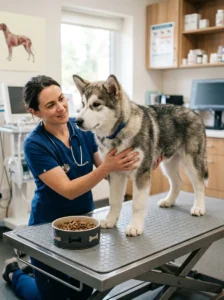
This deserves particular emphasis given the developmental joint health considerations involved. Large-breed puppy formulas are specifically designed to support more controlled, gradual growth rather than maximizing growth speed, which research suggests may help reduce the risk of developmental joint issues like hip dysplasia. Our hip dysplasia guide touches on this connection — sticking with an appropriate large-breed puppy formula for the full recommended growth period, rather than transitioning early, matters more for these breeds than it does for smaller breeds with a less extended growth period.
How Spay/Neuter Timing Interacts With This Transition

If your puppy’s spay or neuter surgery is scheduled around a similar timeframe to their expected food transition, it’s worth knowing that the procedure itself can sometimes cause a temporary, mild reduction in appetite or energy during recovery, separate from any dietary transition happening around the same time. Many vets recommend avoiding stacking too many changes simultaneously when possible — spacing out the food transition from the immediate post-surgery recovery period, rather than introducing both changes at exactly the same time, can make it easier to identify the cause of any unexpected symptoms, since you’re not trying to untangle whether a reaction relates to the surgery recovery or the new food.
Tracking Growth and Development Through the Transition Period
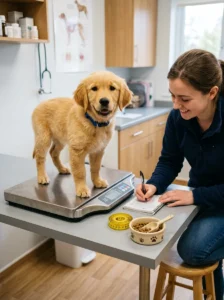
Beyond simply watching for the size and growth-slowing signs mentioned earlier, keeping a simple record of your puppy’s weight at each vet visit throughout this period provides concrete data to inform the transition timing decision, rather than relying purely on visual impression or a general sense that growth has slowed. Plotting these weight measurements, even informally, can reveal a growth curve that’s beginning to plateau — a more objective signal than subjective visual assessment alone, and something your vet can help interpret relative to expected growth patterns for your puppy’s specific breed and size category.
What This Transition Looked Like for Mishi, Adopted as an Adult

Since Mishi joined our household already past puppyhood, we didn’t navigate this specific transition with her the way we did with Bruno, but it’s worth mentioning for owners in a similar situation: if you’re adopting an already-adult dog, this particular transition question doesn’t apply in the same way, though it’s still worth confirming with your vet or the rescue/shelter what food the dog has been eating, to inform whether any transition (to your preferred adult food brand, for example) is needed, following the same gradual switching principles regardless of the dog’s life stage.
Why This Decision Deserves More Attention Than It Often Gets

In my experience talking with other new puppy owners, this particular transition often gets far less attention and deliberate planning than earlier puppy milestones like the initial vaccination series or potty training. It’s an easy thing to handle somewhat passively, switching whenever you happen to notice the bag is running low, rather than as a deliberate, vet-informed decision tied to your puppy’s actual growth status. I’d genuinely encourage treating this transition with the same intentionality as other major puppy milestones, given how directly it connects to long-term growth and weight management outcomes covered throughout this guide.
Bringing This Up Proactively at Your Next Vet Visit

Rather than waiting for your vet to bring up this transition, I’d recommend proactively asking about it at whatever routine puppy visit falls closest to your puppy’s expected size-based transition window, even if your vet hasn’t mentioned it yet. This ensures the timing gets deliberate attention tailored to your specific puppy’s actual growth pattern, rather than potentially being overlooked amid the many other topics covered during routine puppy checkups, given how much else there typically is to discuss during these earlier developmental visits.
Quick Reference
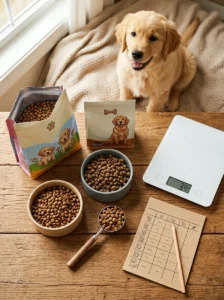
On the question of Is there a single universal age when all puppies should switch to adult food?: No — timing depends significantly on breed size and individual growth pattern, ranging from around 9-12 months for small breeds to potentially 18-24 months for giant breeds. On the question of What happens if I accidentally switch my puppy to adult food too early?: A brief period on adult food before the ideal transition point usually isn’t seriously harmful, but it’s worth switching back to an appropriate puppy formula and discussing the situation with your vet, particularly for large or giant breed puppies still in an important growth window. On the question of Should I ask my vet before transitioning, or can I just follow general guidelines?: While general size-based guidelines provide a reasonable framework, your vet’s direct assessment of your specific puppy’s growth and body condition provides more individually appropriate guidance than general rules alone. On the question of Do mixed-breed puppies follow the same size-based guidelines?: Yes, the same general principle applies — base the transition timing on your puppy’s actual or expected adult size rather than trying to determine an exact breed classification, which can be difficult to pin down precisely for a mixed-breed dog anyway.
Working through this decision with Bruno, rather than just guessing based on a generic age, gave me much more confidence that we were supporting his growth appropriately at every stage. If you’re approaching this transition with your own puppy, I’d genuinely recommend bringing it up directly at a routine vet visit rather than navigating the size-based guidelines entirely on your own.
For more on supporting your puppy’s growth and nutrition, our guides on puppy health in the first 8 weeks and best feeding schedule by life stage are excellent next reads.