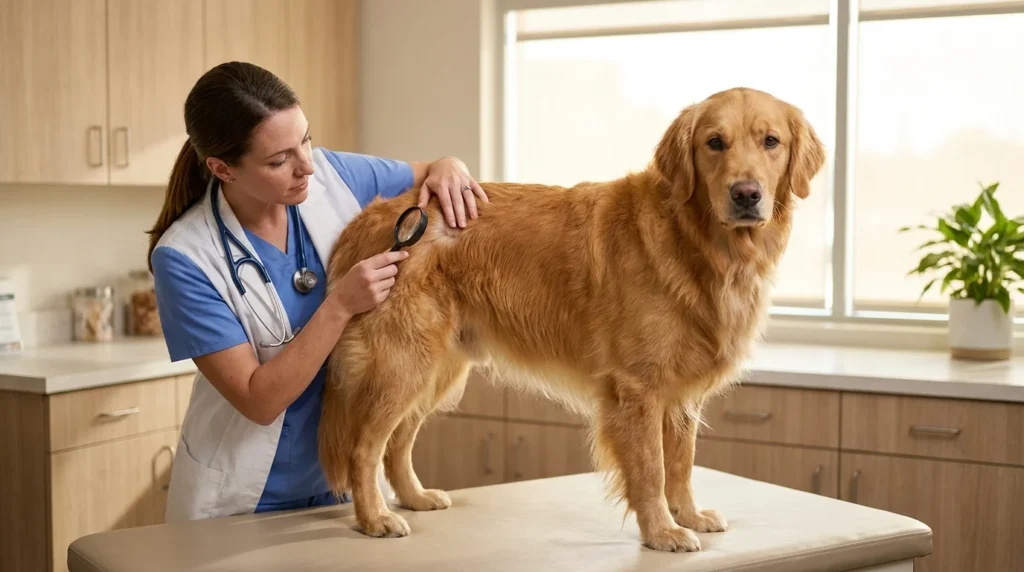
I genuinely didn’t think about air vents as a pet hair accumulation point until noticing visible buildup around ours during a particularly heavy shedding stretch with Bruno, which prompted a closer look at all the other less obvious spots throughout our home where loose fur tends to collect unnoticed.
Why These Spots Get Overlooked
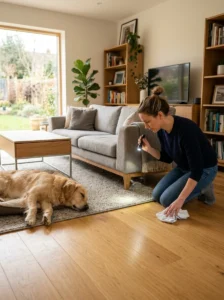
Regular cleaning routines tend to focus on visible, high-traffic surfaces — floors, furniture tops, obvious fabric items — while crevices, vents, and other less immediately visible areas accumulate hair gradually without drawing the same attention, until buildup becomes noticeable enough to prompt a closer look.
Air Vents and HVAC Returns
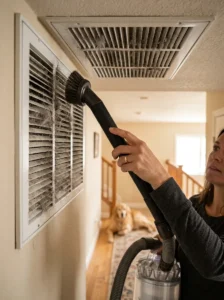
Air vents, particularly return vents where air (and any airborne hair and dander) gets pulled back into your HVAC system, are a genuinely significant accumulation point worth regular attention.
Cleaning approach:
1. Remove the vent cover if possible, which allows more thorough cleaning than working around it in place
2. Vacuum both the cover and the visible interior area using a brush attachment
3. Wipe down the vent cover with a damp cloth for any remaining residue
4. Replace and repeat regularly, particularly during heavy shedding seasons
Beyond the vents themselves, regularly replacing or cleaning your HVAC system’s air filter matters significantly in a pet household, since these filters work harder managing pet dander and hair compared to a pet-free home, and a clogged filter both reduces system efficiency and allows more hair and dander to recirculate rather than being captured.
Furniture Crevices and Seams
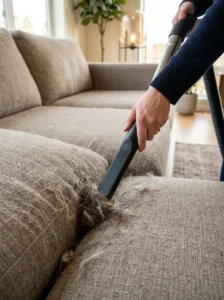
The seams, crevices, and gaps in furniture — between couch cushions, along armrests, in the folds of upholstered pieces — trap hair in a way that surface vacuuming often misses.
Effective approach:
⦁ Use a narrow crevice attachment on your vacuum, specifically designed to reach into these tight spaces
⦁ For particularly stubborn buildup, a thin, flexible brush (even a clean paintbrush) can help loosen hair before vacuuming
⦁ Periodically remove couch cushions entirely for more thorough cleaning underneath and around the frame itself, an area easily missed during regular surface cleaning
Baseboards and Corners
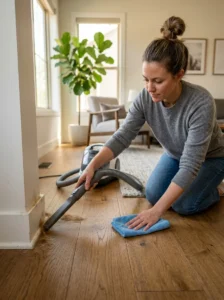
Hair tends to drift and accumulate along baseboards and in room corners, pushed there by foot traffic and air currents, similar to how dust accumulates in these same spots.
Cleaning approach:
⦁ Regular vacuuming with an appropriate attachment along baseboards specifically, not just general floor passes
⦁ A microfiber cloth or duster works well for actually wiping baseboards directly, capturing hair that vacuuming alone might not fully remove from the surface itself
Window Tracks and Sills
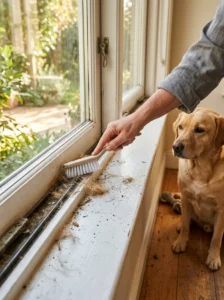
Often overlooked, window tracks and sills can accumulate surprising amounts of hair, particularly if your dog enjoys watching the world from a window perch, which both Bruno and Mishi do regularly.
Cleaning approach: A small brush or old toothbrush works well for window tracks specifically, dislodging hair and debris from the grooves before vacuuming or wiping away.
Light Fixtures and Ceiling Fans
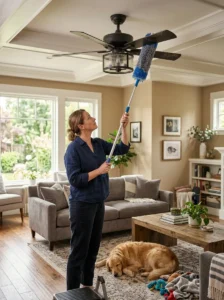
This might seem like an unlikely spot, but airborne hair and dander can settle on ceiling fans and light fixtures over time, particularly in rooms where your dog spends significant time.
Cleaning approach: Regular dusting with a microfiber duster, ideally on an extendable handle for ceiling fixtures, prevents buildup from becoming significant enough to be redistributed back into the air when the fan runs or fixtures are disturbed.
Behind and Under Large Furniture
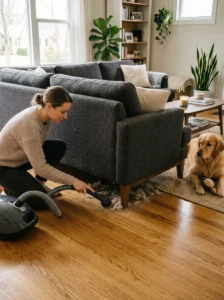
Areas behind and underneath large furniture pieces — bookshelves, dressers, beds — accumulate hair that regular vacuuming around (rather than under) these pieces misses entirely.
Cleaning approach: Periodically moving furniture, even just pulling pieces out slightly, for a more thorough vacuum underneath catches accumulated buildup that’s easy to forget about during regular surface cleaning.
Building These Spots Into a Periodic Deep-Clean Routine
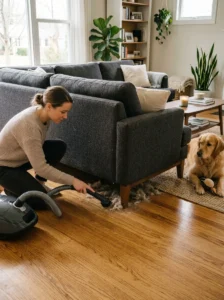
Rather than trying to address every overlooked spot during every regular cleaning session, building these less-visible areas into a periodic, more thorough deep-clean routine — monthly, or more frequently during heavy shedding seasons — keeps overall accumulation manageable without requiring constant attention to every single crevice during routine daily or weekly cleaning.
Why This Matters Beyond Just Aesthetics
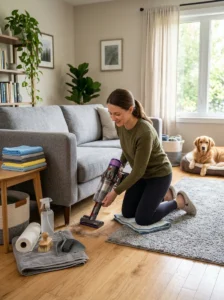
Beyond simply keeping your home looking clean, addressing these accumulation points matters for air quality, particularly relevant for anyone in the household with allergies or respiratory sensitivity, covered in our allergy-friendly breeds guide. Hair and dander accumulated in vents and recirculated through your HVAC system can contribute to ongoing airborne allergen levels beyond what’s immediately visible on surfaces.
Pet Hair in Computer and Electronics Equipment

This is genuinely worth mentioning, since it’s an accumulation point that’s both overlooked and potentially impactful beyond just cleanliness — computer towers, laptop vents, and other electronics with cooling fans can accumulate pet hair that affects cooling efficiency over time. Using compressed air periodically to clear hair and dust from these vents, particularly if your dog has access to home office or workspace areas, helps maintain both cleanliness and proper equipment function.
Curtains and Soft Window Treatments

Similar to furniture, curtains and other soft window treatments accumulate hair over time, particularly if your dog enjoys lounging near windows. Regular washing (following the care instructions for the specific fabric) and occasional vacuuming with an upholstery attachment between full washes helps manage this accumulation point that’s easy to overlook compared to more obviously hair-prone surfaces like furniture and carpet.
Pet Hair in Closets and Stored Items

If your dog has access to bedroom closets or areas where clothing and other fabric items are stored, hair can migrate into these spaces more than owners typically expect. Periodically checking and cleaning stored fabric items, particularly seasonal clothing that might sit for extended periods, prevents an unpleasant surprise when you eventually retrieve these items for use.
Building a Comprehensive Seasonal Deep-Clean Checklist

Rather than trying to remember every overlooked spot during each cleaning session, creating a simple written checklist specifically for your periodic deep-clean sessions — covering vents, furniture crevices, baseboards, window tracks, and any other spots relevant to your specific home — ensures consistent, thorough coverage rather than relying on memory alone, which tends to miss spots inconsistently from one cleaning session to the next.
Car Vents: An Overlooked Spot for Frequent Travelers

If you regularly transport your dog by car, car HVAC vents deserve the same attention as home vents, given how much hair and dander can accumulate in this smaller, more enclosed space relative to a full home’s air system. Periodically cleaning car vents, similar to the home vent technique covered earlier, and being mindful of your car’s cabin air filter (which serves a similar function to a home HVAC filter, capturing particles before they recirculate) helps maintain better air quality during car travel with your dog.
Why Overlooked Spots Matter More in Smaller Living Spaces
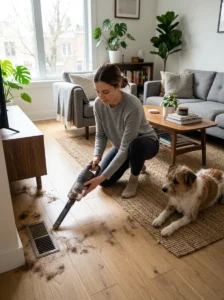
If you live in a smaller home or apartment, covered more broadly in our apartment living guide, these overlooked accumulation points can have a proportionally larger impact on overall air quality and cleanliness compared to a larger home, simply because the same amount of hair and dander concentrates in a smaller overall volume of living space. This makes the periodic deep-clean attention to these spots arguably even more valuable in smaller living situations than in larger homes with more space for things to spread out and become less immediately noticeable.
A Realistic Time Investment for Tackling Overlooked Spots
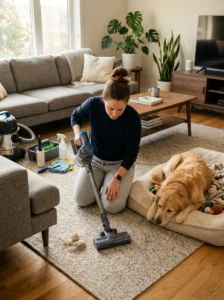
I want to offer a realistic sense of the time commitment involved, since this can otherwise feel like an overwhelming addition to an already busy cleaning routine. A genuinely thorough pass through all the overlooked spots covered in this guide — vents, furniture crevices, baseboards, window tracks, and the other areas mentioned — typically takes somewhere between thirty minutes and an hour, depending on your home’s size and how long it’s been since the last thorough pass. Treating this as a periodic, dedicated session (monthly, or seasonally at minimum) rather than something to fit into every single regular cleaning routine keeps the time investment genuinely manageable rather than feeling like a constant, ongoing burden layered onto your existing cleaning habits.
Tracking Which Spots You’ve Recently Addressed

With multiple overlooked spots to manage across a periodic deep-clean routine, keeping a simple rotation log — noting which areas you addressed during your last session — helps ensure you’re genuinely cycling through all the relevant spots over time rather than unconsciously favoring the same easier-to-reach areas repeatedly while consistently neglecting others. This kind of simple tracking, even just a basic note on your phone, has helped us maintain more consistent, comprehensive coverage than relying purely on memory of what we addressed last time.
A few quick answers: How often should I clean air vents in a pet household — This varies by your specific shedding situation, but checking and cleaning vents monthly, with more frequent attention during heavy seasonal shedding, helps keep buildup from becoming significant.. Does a HEPA filter help with pet hair and dander specifically — Yes, HEPA filtration is specifically effective at capturing the fine particles associated with pet dander, making this a worthwhile consideration for both standalone air purifiers and HVAC system filters in a pet household.. Is professional duct cleaning ever necessary in a pet household — For significant, longstanding buildup beyond what regular vent cleaning addresses, professional duct cleaning can provide more thorough results, though this is generally an occasional, periodic service rather than a frequent necessity for most households.. Are there cleaning tools specifically designed for these hard-to-reach spots — Yes — narrow crevice vacuum attachments, small handheld brushes, and extendable dusters are all specifically useful for these less accessible areas, generally worth having available as part of a complete cleaning toolkit in a pet household..
Expanding my cleaning attention beyond just the obvious, visible surfaces genuinely improved our overall home cleanliness, particularly once I started noticing how much had quietly accumulated in spots I’d never specifically thought to check. If you haven’t looked closely at your own vents, furniture crevices, and other overlooked spots recently, it’s worth a dedicated cleaning session to see what’s actually built up over time.
For related guidance, our guides on removing pet hair from carpet and furniture and managing excessive shedding are excellent next reads.