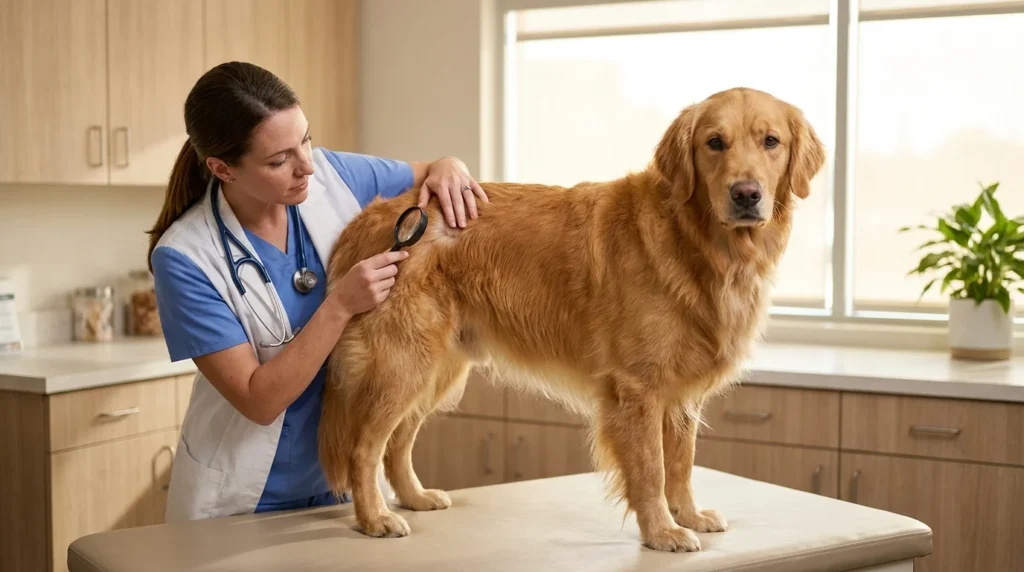
Mishi’s skin has always needed a bit more attention than Bruno’s, something that became obvious the first time I noticed her create what I’d later learn to recognize as a hot spot — a raw, irritated patch that seemed to appear almost overnight after a few days of excessive licking I hadn’t paid much attention to. That experience taught me to actually look closely at both dogs’ skin regularly, rather than only noticing a problem once it was already fairly developed. (Quick disclaimer: I’m an experienced dog owner, not a vet or veterinary dermatologist. Skin issues can have many different underlying causes, and proper diagnosis often requires a vet’s evaluation — this guide is meant to help you recognize patterns worth addressing, not replace professional care.)
Hot Spots: What They Are and Why They Happen
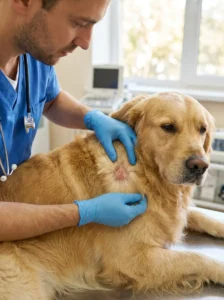
Hot spots (formally called acute moist dermatitis) are localized areas of irritated, often raw or oozing skin that develop quickly, usually as a result of a dog licking, chewing, or scratching at one spot repeatedly. What makes them tricky is that they often start as a response to something else — an allergy, a flea bite, an ear infection causing related itching — and then become their own self-perpetuating problem once a dog starts fixating on the area.
Signs of a hot spot:
⦁ A red, moist, often inflamed patch of skin
⦁ Hair loss in the immediate area
⦁ Visible wetness or oozing, sometimes with a noticeable odor
⦁ Obvious discomfort, often with continued licking or scratching at the site despite irritation
Since that first experience with Mishi, I’ve gotten into the habit of doing a quick weekly check, running my hands through both dogs’ coats to feel for any unusual warmth, wetness, or sensitivity, rather than waiting to notice something visually once it’s already developed. Hot spots specifically tend to escalate fast — what looks like a small irritated patch in the morning can be noticeably worse by evening if a dog keeps licking at it. This is one area where I’ve learned not to “wait and see” the way I might with something more stable like mild dry skin.
Rashes: Common Causes and What They Look Like
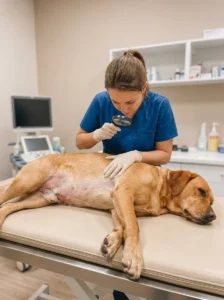
Skin rashes in dogs can stem from a variety of causes, and the appearance can vary quite a bit depending on what’s behind it:
⦁ Allergic reactions, whether environmental, food-related, or flea-related, often present as redness, small bumps, or generalized irritation, sometimes concentrated in specific areas like the belly, paws, or armpits
⦁ Contact irritation, from something your dog’s skin touched directly — certain plants, cleaning products, or new bedding material, for example
⦁ Heat rash, particularly in hot, humid weather, especially in areas with less airflow like skin folds or the belly
⦁ Yeast or bacterial overgrowth, often presenting as redness with a distinct odor, sometimes with a slightly greasy texture to the affected skin
Our guide to dog allergies covers the allergy-related causes in more depth, since allergies are one of the most common underlying triggers for recurring skin issues.
Dry Skin: Recognizing and Addressing It
Dry skin shows up differently than a rash or hot spot — typically flaking, a dull or rough coat texture, and sometimes mild itchiness without the redness or moisture associated with hot spots.
Common causes of dry skin in dogs:
⦁ Low humidity or seasonal weather changes, particularly in drier months
⦁ Over-bathing, or using shampoos not formulated for dogs, which can strip natural oils
⦁ Nutritional factors, including inadequate essential fatty acids in the diet
⦁ Underlying health conditions, including allergies or hormonal imbalances, in more persistent cases
What’s helped for mild dry skin:

⦁ Using a gentle, vet-approved dog shampoo, and not over-bathing beyond what’s actually needed
⦁ Ensuring a nutritionally complete diet, sometimes with added omega-3 fatty acids if recommended by your vet
⦁ Using a humidifier during particularly dry seasons, if dryness seems to track with weather changes
⦁ Avoiding harsh grooming products or excessive brushing that might further irritate already dry skin
Telling These Issues Apart

Since the appropriate response differs depending on what you’re actually dealing with, here’s a simple way I think about distinguishing them:
⦁ Sudden, localized, raw, and moist → likely a hot spot, often needs prompt attention since they tend to worsen quickly
⦁ Widespread, bumpy, or generally irritated without significant moisture → more likely a rash, worth investigating the underlying cause
⦁ Flaky, dull coat, mild itchiness without redness or moisture → more likely dry skin, often manageable with adjustments to bathing routine and diet
That said, these can overlap, and a proper diagnosis from your vet is the most reliable way to know exactly what you’re dealing with, especially for anything beyond very mild, clearly explainable irritation.
The Role of Coat Type in Skin Health

Something I underestimated for a long time is how much coat type influences skin health and the likelihood of certain issues. Dogs with dense double coats can be more prone to trapped moisture and heat against the skin, particularly in hot, humid climates, which can contribute to hot spots and irritation if the coat isn’t properly maintained. Dogs with thinner, single coats may have less natural protection from environmental irritants and sun exposure. Breeds with skin folds face unique challenges, since folds can trap moisture and create an environment prone to irritation and infection if not cleaned regularly.
Understanding Mishi’s specific coat type and its tendencies has helped me tailor our grooming routine more specifically to her needs, rather than applying generic advice that might be better suited to a different coat type entirely.
What I Do When I Notice a Skin Issue

1. Look closely at the affected area without causing additional irritation, noting size, color, moisture, and whether my dog seems to be in pain when I gently touch nearby.
2. Think about recent changes — new food, new grooming products, recent time outdoors, possible flea exposure, or any other shift that might explain a sudden issue.
3. Prevent further self-trauma if possible, sometimes using a recovery collar temporarily if a dog won’t stop licking or chewing at an area, since continued irritation can make even a minor issue significantly worse.
4. Call the vet for anything beyond very mild, clearly explainable irritation, rather than guessing at treatment, since the wrong approach (like the wrong type of product on an already irritated area) can sometimes make things worse.
Treatment Approaches

This varies significantly depending on the underlying cause, which is exactly why a vet’s evaluation matters for anything beyond the mildest cases:
⦁ For hot spots, treatment often involves gently clipping fur around the area (to allow air exposure and prevent matting from trapping moisture), cleaning the area, and sometimes a topical or oral medication if there’s a bacterial component
⦁ For allergic rashes, addressing the underlying allergy (whether through diet changes, flea prevention, or environmental management) is key, sometimes alongside medication to manage symptoms while the root cause is addressed
⦁ For dry skin, adjustments to bathing routine, diet, and environment are often sufficient for mild cases, while more persistent dry skin may need further investigation for an underlying cause
Seasonal Patterns in Skin Issues

Over the years, I’ve noticed Mishi’s skin sensitivity does seem to track somewhat with seasonal changes, which our vet confirmed is a common pattern, particularly for allergy-related skin issues. Pollen-heavy seasons often correspond with increased itching and irritation. Hot, humid weather can increase the risk of hot spots, partly due to increased moisture against the skin from both environmental humidity and increased panting. Drier seasons can bring on more issues with simple dry skin, separate from allergy-related irritation.
Recognizing these seasonal patterns has helped me be more proactive — paying closer attention during historically higher-risk periods rather than applying the same level of vigilance year-round regardless of season.
When Diet Changes Help Skin Issues

For some dogs, particularly those with food-related allergies contributing to their skin issues, dietary changes can make a meaningful difference. This isn’t a universal fix — many skin issues aren’t diet-related at all — but for dogs where food sensitivity is identified as a contributing factor, working with your vet on an appropriate diet, sometimes a limited-ingredient or novel-protein formula, can reduce flare-ups significantly over time.
This connects back to the broader theme throughout Mishi’s allergy management: skin issues often aren’t isolated problems with a single fix, but rather one visible symptom of a broader underlying pattern that benefits from being addressed holistically rather than treating each flare-up as a completely separate event.
Stress and Skin Health: Another Connection Worth Knowing

Similar to the gut-brain connection mentioned in our diarrhea guide, stress and anxiety can also manifest through skin issues in some dogs, sometimes through compulsive licking or chewing behaviors that develop as a stress response rather than purely a physical irritation. If a dog’s skin issues seem to correlate with stressful periods or events, rather than an obvious physical trigger, it’s worth considering this connection and discussing it with your vet, since addressing underlying anxiety may be just as important as treating the skin symptoms directly in these cases.
Preventing Skin Issues Going Forward

A few habits that have genuinely reduced how often we deal with skin issues with Mishi:
⦁ Consistent flea and tick prevention, since flea allergy reactions can quickly snowball into hot spots or broader irritation
⦁ Regular grooming and brushing, which helps me notice issues early and also reduces matting that can trap moisture against the skin
⦁ A consistent, high-quality diet without frequent unnecessary changes
⦁ Prompt attention to any licking or scratching that seems excessive, rather than assuming it will resolve on its own
A small habit that’s genuinely helped during vet visits: taking a quick, well-lit photo of any skin issue when I first notice it, before it potentially changes or improves on its own by the time we’re actually at the clinic. This has given our vet a clearer before-and-after reference a few times, especially for tracking whether a hot spot or rash is responding to treatment as expected, rather than relying purely on a verbal description of how something looked a few days earlier.
When to See the Vet

Contact your vet if you notice:
⦁ A hot spot, especially if it’s spreading or your dog seems to be in significant discomfort
⦁ Widespread rash or irritation without an obvious, easily explainable cause
⦁ Skin issues that don’t improve, or worsen, despite basic at-home care
⦁ Signs of infection — increasing redness, swelling, discharge, or odor
⦁ Persistent dry skin that doesn’t respond to adjustments in bathing and diet
⦁ Any skin issue accompanied by other symptoms like lethargy or appetite changes
A few quick answers: hot spots develop so suddenly because a dog’s continued licking and scratching at an already irritated area creates a self-perpetuating cycle, often starting from a smaller initial trigger like an allergy or flea bite. Mild, seasonal dry skin generally isn’t serious and often responds to simple adjustments, though persistent or severe dry skin can sometimes indicate an underlying issue worth discussing with your vet. Avoid human skin products on dogs generally, since a dog’s skin has a different pH balance — stick to products made specifically for dogs. And a recovery collar (cone) is often the most reliable way to physically prevent continued licking while a hot spot heals, alongside whatever treatment your vet recommends for the underlying irritation.
Learning to recognize the difference between a hot spot, a rash, and simple dry skin has made me a much more confident, proactive owner when it comes to Mishi’s skin sensitivity. Catching these issues early — before they have a chance to escalate — has made a real difference in how quickly they resolve and how uncomfortable she has to be in the meantime.
For related topics, our guides on dog allergies and fleas and ticks cover common underlying causes worth understanding.