Quick question. How many dog beds have you bought that lasted one summer? If you’re nodding, you’re in good company. I’ve lost three to rain, two to chewing, and one to a very determined labrador who treated it like a personal enemy. An outdoor dog bed has a tough job. It has to handle mud, sun, sprinklers, and teeth.
Here’s the confident answer: yes, a bed can survive all of that. You just have to pick the right material and the right shape. Let’s sort it out.
What Actually Makes an Outdoor Dog Bed Last
Forget the fancy label for a second. Three things matter most.
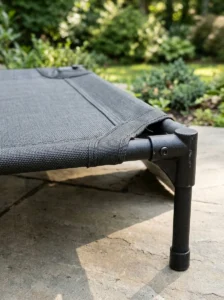
Water has to drain. A bed that soaks up rain becomes a soggy sponge that smells awful within a day. Look for mesh, slats, or fabric that dries fast.
Seams are the weak spot. Most beds don’t die from the middle. They die at the stitching, where one tug opens a hole.
And the bed needs to sit off the ground. Even a couple of inches stops mud and moisture from creeping up underneath.
Got those three? You’re already ahead of most store shelves.
The Ten Ideas
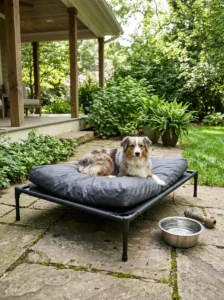
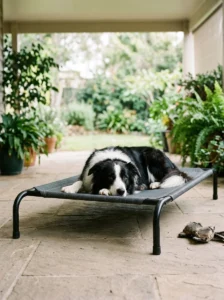
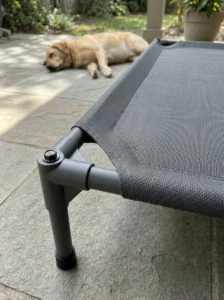
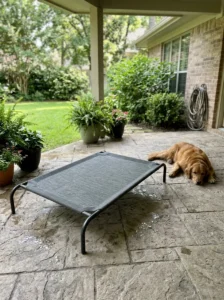
1. The raised elevated cot. A metal or heavy-duty plastic frame with tight mesh stretched across. Air flows underneath, rain drains straight through, and it dries in minutes. Many dogs like it on hot days because it keeps them off baking-hot ground.
2. The chew-resistant PVC frame bed. Sturdy tubing with a thick canvas sling. Fewer soft parts means less to destroy. Good for the dog who treats everything as a snack.
3. The waterproof-cover cushion. Pick one with a zip-off cover you can hose down. Before you buy, check the zipper. Zippers are tempting to chewers, so tuck the pull tab out of reach.
4. The plastic dog-house floor pad. A simple interlocking mat inside a shelter. Cheap, easy to swap out, and the rubbery texture is less fun to shred than fabric.
5. The covered porch daybed. If you’ve got a porch, skip the open lawn. A bed under a roof stays far drier, and the structure does half the work for you.
6. The tire bed. Yes, an old tire. Clean it well, drill a few drain holes, and add a cover that sheds water. It’s rugged and kind of charming. Just inspect it for sharp wires first.
7. The shaded cabana corner. Not a bed so much as a spot. Put a cot under a shade sail or umbrella, so your dog isn’t stuck in direct sun while the bed fades and cracks.
8. The pallet platform. Sand it smooth, seal it with a pet-safe finish, and set a washable pad on top. Check every board for splinters and loose nails, and be honest about whether your dog gnaws wood. Some do.
9. The foam-core waterproof mat. Closed-cell foam doesn’t soak up water the way regular stuffing does. Wipe it down, let it dry, done. It’s a good pick for camping and patio use.
10. The tough ripstop bed. Ripstop fabric has a woven pattern that stops small tears from spreading. It won’t make a bed chew-proof, but it buys you time.
Now here’s the tip that surprised me. Rotate your dog’s bed spots. Dogs often wear out one patch because they always lie in the same place. Move the bed a few feet every week or two, and the ground underneath stays fresher, the bed wears more evenly, and your lawn stops getting that bald circle.
Which Idea Fits Your Dog?
Let me make this easier.
If your dog is a heavy chewer, start with the elevated cot or PVC frame. Fewer soft edges, fewer problems.
If you live somewhere rainy, go with the raised cot or covered porch daybed. Water drains, and a roof helps.
If budget’s tight, grab the plastic mat or a pallet platform. Just inspect everything carefully.
And if your dog likes to dig, put the bed on a hard surface like a patio or deck. Grass gets torn up fast.
Real example. My neighbor’s border collie shredded every bed she bought, until she switched to a raised cot with a thick mesh top. Three summers later, it’s still going. Her dog still tries to chew the corner now and then, but there’s nothing soft to grab.
Mistakes and Safety Notes
A few things I learned the hard way.
Never leave a chewing dog alone with fabric they’ve started tearing. Swallowed stuffing can cause real problems, so take the bed away if you see them eating it.
Check metal frames for sharp edges and rust. Check plastic for cracks. A chewed edge can get surprisingly sharp.
And watch the weather. Outdoor beds don’t fix extreme heat or cold. On very hot days, get your dog inside. On freezing nights, same thing. If you’re not sure how your senior dog handles temperature swings, ask your vet.
Quick Questions
How often should I wash an outdoor dog bed? Hose it down every couple of weeks, and wash covers monthly or when they smell. Let everything dry fully in the sun.
Is any bed truly chew-proof? Honestly, no. Some are tougher than others, but a determined dog can beat nearly anything. Aim for chew-resistant and supervise.
Can I leave a bed out all winter? Some hold up fine, but sun, snow, and freezing temperatures wear things down faster. Bringing it inside between seasons helps it last.
So here’s your next step. Pick one idea from this list that matches your dog’s habits, and try it for two weeks. Watch what they do with it. An outdoor dog bed that survives rain and chewing doesn’t have to cost a fortune, it just has to match your dog. Which one are you trying first? And if you want to keep your pup comfortable all year, my post on cooling mats for summer is a good one to read next.