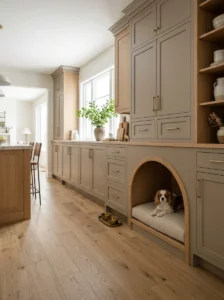
When my cousin Leah redid her kitchen, the builder asked a question she hadn’t expected: “Where does the dog sleep?” She shrugged. He sketched an arched alcove under the counter, and three weeks later her spaniel, Kipper, had a custom nook that looked like it came with the house. Her friends still ask who made it. That’s the appeal of a built in dog bed. It tucks your dog’s spot into the furniture, clears the floor, and looks planned instead of squeezed in. Here are nine ideas, plus what to check before anyone picks up a saw.
What “Real Value” Actually Means
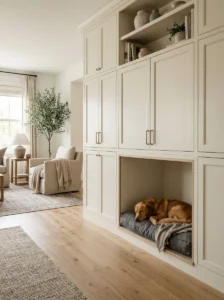
Let’s be honest. A built in dog bed won’t make your house worth a fortune, and nobody can promise it will. But it adds everyday value. The floor stays clear. Your dog gets a spot that’s properly his. And plenty of buyers like a tidy, thoughtful feature, though tastes vary.
The best ones solve a problem you already have. Is his bed always in the way? Does he park himself in the hallway? Start there.
Measure him stretched out and curled up, then add a few inches. Leave enough headroom to stand and turn around. If your dog is older or stiff, ask your vet what height and surface suit him. And if you rent, ask your landlord before you cut or fix anything.
9 Built In Dog Bed Ideas
Beside and below furniture
1. Under the kitchen counter. An arched opening in a base cabinet, with a washable cushion inside. Keep it clear of pipes, wiring, and anything that gives off heat, like the oven and dishwasher.
2. Inside a kitchen island. An open end panel facing the room. He’s near the action, and the bed looks like part of the design.
3. Under a window seat. Bench above, bed below. Add ventilation holes, and make sure the opening is wide.
4. Under the stairs. Great for awkward space. Check nothing behind the panel needs access, such as meters or fuse boxes.
Within storage
5. In a mudroom bench. Cubbies for boots on one side, a bed alcove on the other. Wipe-clean surfaces earn their keep here.
6. In a bookcase wall. Remove the bottom shelf and pad the base. Anchor the whole unit to the wall so it can’t tip.
7. Beneath a built-in desk. A cushioned gap under a home-office run. Keep cords up high and out of chewing range.
8. In a wardrobe base. The space below hanging rails, with a low arch cut in the front. Keep shoes and cleaning products elsewhere.
The ambitious one
9. A recessed wall niche. Looks stunning. But walls hide cables, pipes, and structure, so only attempt it with a qualified builder’s okay.
The Tip That Surprised Me
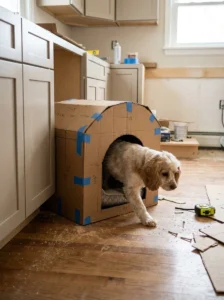
Prototype it in cardboard. Leah’s builder taped up a cardboard mock-up before cutting a single board, and Kipper walked straight in, turned around, and sat. A second mock-up for a different spot got a firm “no thanks.”
Picture saving yourself from a beautiful alcove your dog refuses to enter. Try it for a few days, with a treat and a worn T-shirt inside. Keep treats small, since they should stay a small part of his daily food. Watch where he naps now, and build there.
A Real Example From My Neighbor
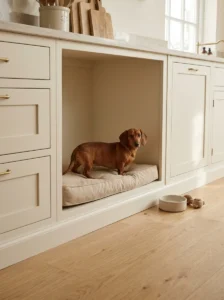
Dana planned a built in dog bed beneath her kitchen
counter for her dachshund, Mango. The first design had a low arch, but the roof sat too close, and Mango bumped his head every time he stood up. She raised the opening two inches and moved the cushion forward. “I measured his length,” she told me. “I forgot his height.”
Warnings Worth Knowing
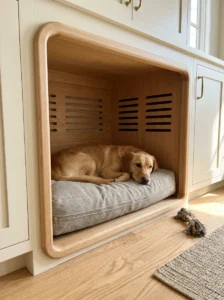
Entrapment comes first. Make sure he can always step out easily, and never fit a door that could shut him in.
Ventilation matters, because enclosed spaces trap heat and damp. Leave gaps, add small vents, and keep nooks away from radiators, ovens, and sunny glass.
Sand every edge, cover screws, and use water-based, pet-safe paint and sealants, aired out fully before he goes near them. Choose wipeable surfaces and washable cushions.
Watch for chewing. If he gnaws plywood, foam, or fabric and swallows any, call your vet straight away. Check cords, plants, and cleaning products are out of reach.
Finally, don’t block meters, fuse boxes, boiler controls, or pipework. If you’re unsure what’s behind a panel, ask a professional.
Quick Questions
Can I build one myself?
Simple designs, like a bench or a bookcase base, suit careful DIYers. Anything touching walls, plumbing, or wiring needs a pro.
Is it expensive?
Costs vary a lot. A cardboard test and a cushion are cheap, and you can scale up later.
What if my dog ignores it?
Give it a week, move the cushion, and add a familiar blanket. Some dogs just prefer the sofa.
Ready for a Built In Dog Bed?
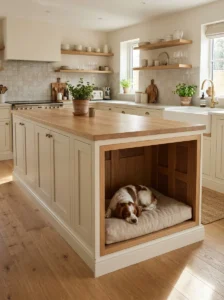
You don’t need all nine. Pick one that fits your space, mock it up in cardboard, and let your dog vote. A built in dog bed works best when it’s roomy, ventilated, and placed where he already naps. Measure twice, build once, and keep an eye on how he uses it.
Want the perfect cushion for your new nook? Have a look at my post on cozy dog beds that don’t wreck your living room. And tell me: where does your dog nap right now, and would it work as a built-in spot?