
Having spent years learning the safe and unsafe foods list for dogs, I genuinely assumed cats would follow roughly similar rules — it turns out cats have their own distinct list, with some important differences that surprised me while helping Hira navigate Coco’s diet, particularly around how much more sensitive cats are to certain foods that are perfectly fine for dogs.
(I’m an experienced pet owner, not a veterinarian. This reflects general, widely supported guidance — if your cat has a specific health condition, always check with your vet before introducing new foods, and contact your vet or animal poison control immediately if you suspect your cat has eaten something toxic.)
Why Cats Have Different Dietary Needs Than Dogs

Cats are obligate carnivores, meaning their bodies are specifically adapted to require nutrients found primarily in animal tissue, unlike dogs, who are more metabolically flexible omnivores. This fundamental difference is part of why some foods considered fine in moderation for dogs are actually inappropriate or even toxic for cats, and why a cat’s diet needs to be built around a higher, more consistent protein foundation than a dog’s diet requires.
Foods That Are Toxic to Cats
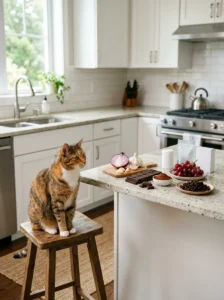
Onions, garlic, and the allium family — similar to dogs, these can damage red blood cells and cause anemia, whether raw, cooked, or powdered.
Chocolate — contains theobromine and caffeine, which cats, like dogs, cannot metabolize safely, with cats sometimes showing sensitivity at even lower doses relative to body weight.
Grapes and raisins — while less commonly discussed for cats than dogs, these carry similar toxicity concerns and should be avoided entirely.
Xylitol — found in some sugar-free products, dangerously affects blood sugar regulation in cats similarly to dogs.
Alcohol — even small amounts can cause significant harm given a cat’s small body size.
Raw dough containing yeast — can expand dangerously in a cat’s stomach and produce alcohol as it ferments, similar to the risk in dogs.
Dog food as a primary diet — this deserves specific mention, since dog food lacks adequate levels of certain nutrients cats specifically require, including taurine, an amino acid essential for cat heart and eye health that’s present in much higher concentrations in properly formulated cat food.
Foods Cats Should Never Eat Due to Specific Cat Sensitivities

Raw fish in large or regular quantities — beyond bacterial contamination risk shared with any raw protein, regularly feeding certain raw fish can break down thiamine (vitamin B1), potentially leading to a deficiency over time.
Excessive liver or organ meat — while organ meat in appropriate amounts is genuinely beneficial, excessive liver specifically can lead to vitamin A toxicity in cats given how concentrated certain nutrients are in liver tissue.
Milk and dairy products — this surprises many people given the classic “cat drinking a saucer of milk” imagery, but many adult cats are actually lactose intolerant, and dairy can cause genuine digestive upset rather than being the harmless treat popular culture suggests.
Foods That Are Generally Safe for Cats in Moderation
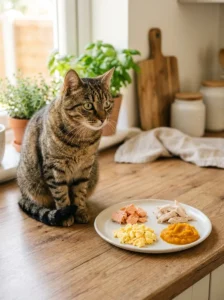
Plain, cooked chicken (no skin, no seasoning, no bones) — a good source of the animal protein cats specifically need.
Plain, cooked fish (in moderation, not as a dietary staple given the thiamine concern mentioned above) — many cats genuinely enjoy this, though it shouldn’t replace a balanced commercial diet.
Small amounts of cooked egg — a good protein source, similar to the dog guidance covered in our egg safety guide, though portions should be kept appropriately small given a cat’s much smaller size.
Small amounts of plain, cooked pumpkin — can support digestive health similarly to its use in dog diets.
Catnip — genuinely safe and often a source of real enjoyment for many (though not all) cats, generally considered non-toxic even in larger amounts.
Why “People Food” in General Deserves More Caution With Cats Than Dogs

Given the obligate carnivore status covered earlier, cats have less metabolic flexibility to handle a wide variety of human foods compared to dogs, meaning the “safe in moderation” category is genuinely narrower for cats. I’d encourage treating most human food as something to avoid sharing with a cat by default, rather than assuming a small taste is automatically fine the way it might be with many foods on a dog’s safe list.
Building an Appropriate Cat Diet
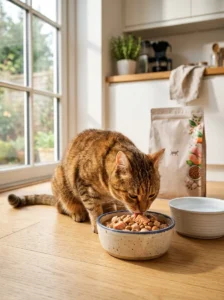
A nutritionally complete commercial cat food, specifically formulated to meet a cat’s unique nutritional needs (not a generic “pet food” or repurposed dog food), should form the foundation of your cat’s diet. Treats and any additional foods covered in the “generally safe” category above should remain a small supplement, not a significant portion of overall intake.
What to Do If Your Cat Eats Something Toxic

Similar to the urgency covered in our dog toxic foods guide, if you know or suspect your cat has eaten something from the toxic list, contact your vet or an animal poison control hotline immediately, providing as much detail as possible about what was eaten and roughly how much.
Why Reading Cat Food Labels Deserves the Same Attention as Dog Food

Similar to the label-reading principles covered in our dog food label guide, confirming a cat food’s nutritional adequacy statement for the appropriate life stage matters just as much for cats, if not more, given how nutritionally specific their needs are. Look for confirmation that the food meets established standards for your cat’s specific life stage — kitten, adult, or senior — rather than assuming any product labeled “cat food” automatically meets complete nutritional requirements.
Treats and Snacks: Applying the Same Moderation Principle
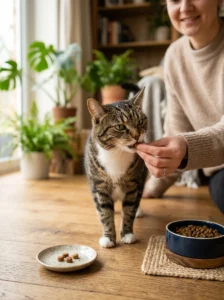
Just as covered throughout our dog treat guides, cat treats should remain a small portion of overall daily intake, generally recommended to stay under about 10% of total calories, with the rest coming from a complete, balanced cat food. Given how much smaller a cat’s overall calorie needs are compared to most dogs, it’s genuinely easy to overdo treats without realizing how significant a portion of daily intake they represent.
Why Cats Are Often More Resistant to Dietary Changes Than Dogs
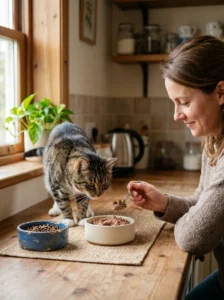
This is worth understanding if you’re considering switching your cat’s food — cats are notably prone to developing strong food preferences and can sometimes show more stubborn resistance to dietary changes than dogs, occasionally even refusing to eat an unfamiliar food entirely for a period. The same gradual transition principles covered in our dog food switching guide apply to cats, often requiring an even slower transition timeline given this tendency toward stronger food preference and resistance to change.
A Note on Water Intake and Wet vs. Dry Food
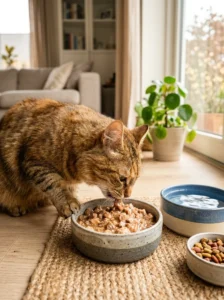
Cats, descended from desert-dwelling ancestors, often have a naturally lower thirst drive than dogs, meaning they don’t always compensate adequately for low dietary moisture by drinking more water. This is part of why many vets specifically recommend incorporating wet food into a cat’s diet, similar to the hydration benefits covered in our dog wet vs. dry food guide, since the higher moisture content can meaningfully support overall hydration in a way dry food alone often doesn’t for cats specifically.
Common Misconceptions About Cat Diets Worth Addressing
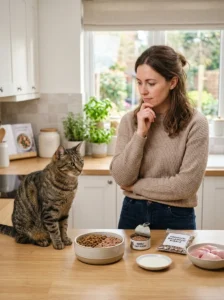
“Cats can be vegetarian or vegan.” Given their obligate carnivore status covered earlier, this is genuinely not appropriate — cats require nutrients, including specific amino acids like taurine and arachidonic acid, that are only reliably available from animal sources, making a plant-based diet a genuine welfare concern rather than a reasonable dietary choice for this species.
“Any meat is fine since cats are carnivores.” Not quite — while cats need animal protein, this doesn’t mean any meat product is nutritionally complete on its own. Muscle meat alone, without organs, bone, or proper supplementation, lacks several nutrients a complete cat diet requires, which is part of why a properly formulated commercial diet or veterinarian-guided homemade diet matters rather than simply feeding raw or cooked meat alone.
“Cats should eat exactly what their wild ancestors ate.” While this reasoning underlies some raw feeding approaches, similar to the considerations covered in our dog raw diet guide, domestic cats have somewhat different nutritional needs and risk profiles than wild felines, and any raw feeding approach should be carefully, properly formulated rather than assumed nutritionally complete simply because it mimics a wild diet conceptually.
Special Dietary Considerations for Senior Cats
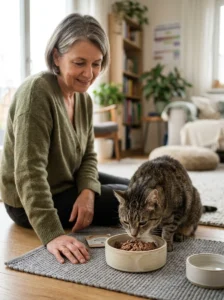
As cats age, similar to the senior dog dietary adjustments covered throughout our dog guides, nutritional needs can shift — some senior cats benefit from adjusted protein levels or specific support for kidney health, a common aging-related concern in cats specifically. This is genuinely worth a direct conversation with your vet as your cat enters their senior years, rather than assuming the same diet that worked well in adulthood remains optimal indefinitely.
How Coco’s Diet Has Evolved Over Time

Coco started on a standard kitten formula, transitioned to an adult maintenance diet around the appropriate age milestone, and now incorporates a combination of dry food with regular wet food specifically for the hydration benefit covered later in this guide. This evolution, guided by our vet’s recommendations at each stage rather than our own assumptions, has worked well and reinforced how much life-stage-appropriate nutrition genuinely matters, similar to the principle covered throughout our dog feeding guides.
A few quick answers: Is it true that cats shouldn’t drink milk — Largely yes — many adult cats are lactose intolerant, and while a very small amount might not cause obvious issues in some cats, it’s generally not recommended as a regular treat, despite the popular cultural image suggesting otherwise.. Can cats eat the same treats as dogs — Not necessarily — given the dietary differences covered throughout this guide, it’s safer to use treats specifically formulated for cats rather than assuming dog treats are automatically appropriate for a cat’s different nutritional needs.. Why do cats specifically need taurine — Taurine is an essential amino acid for cats that supports heart and eye health, and unlike dogs, cats cannot produce adequate taurine on their own from other dietary components, making it a required addition in properly formulated cat food specifically.. Is tuna safe for cats — In small, occasional amounts, plain tuna is generally considered safe, though it shouldn’t be a dietary staple given both the thiamine concern with regular raw fish feeding and the fact that tuna alone doesn’t provide complete nutrition for a cat’s needs..
Learning how genuinely different cat dietary needs are from what I’d come to know about dogs was a useful reminder not to assume cross-species knowledge transfers directly. If you’re caring for a cat, even occasionally like our cat-sitting stretches with Coco, taking the time to actually learn cat-specific food safety, rather than assuming dog rules apply, genuinely matters for keeping them safe and healthy.
For more on cat care, our guides on new cat owner essentials and how often to feed an adult cat are excellent next reads.