Myth: dogs need a big fluffy bed sitting in the middle of the living room. Nope. Plenty of dogs sleep happier tucked into a quiet, shadowy spot, and your bedroom already has one. Under your bed. A dog bed under bed setup gives your pup a little den and gives you your floor space back. Below are nine ways to pull it off, plus a few mistakes I made so you don’t have to.
Why a Dog Bed Under Bed Setup Works Better Than You’d Think
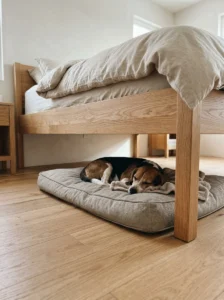
Dogs have denning instincts, and plenty of them like a low ceiling over their heads. It feels safe. My beagle mix, Juniper, ignored a ninety-dollar orthopedic bed for months. Then she wedged herself under our guest bed like she’d struck gold. Sound familiar?
Here’s a scenario you might know. It’s 2 a.m., your dog is pacing, and you’re half awake wondering why they won’t settle. Often it’s too much light, too much noise from the hallway, or too much open space. A spot under the bed blocks all three. Nobody’s saying it fixes every restless night, but some dogs find it helps them settle faster.
But not every bed frame works. You need clearance, airflow, and a floor that isn’t slippery. Measure before you buy anything. Your dog should be able to stand, turn around, and stretch out without scraping their back. Small dogs usually do fine with eight to twelve inches. Bigger dogs need more, or this just isn’t their spot. And always leave one end open so your dog can walk out whenever they want.
The Nine Ideas
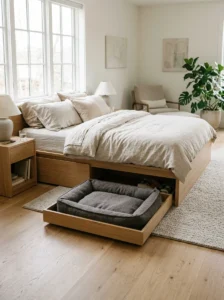
- The slide-out drawer. Build or buy a shallow wooden tray on casters, add a washable cushion, and roll it in and out. Your dog gets a real bed that vanishes by morning.
- The folded fleece nest. Fold a thick blanket into a rectangle. That’s it. It’s free, it washes easily, and it’s a great test run before you spend money.
- The flat pad. Round bolster beds don’t fit under most frames, but a two-inch flat pad does. Look for a nonslip bottom so it stays put when your dog circles three times before lying down.
- The bed skirt cave. Add a bed skirt and the space turns into a cozy hideout. Leave a gap on one side. Some dogs adore the privacy, while others find it spooky, so watch how yours reacts the first few nights.
- Bed risers. If your frame sits too low, plastic or wooden risers add three to five inches. Cheapest fix on the list. Just make sure they’re sturdy and don’t wobble.
Here’s a tip nobody tells you. Drop a worn T-shirt of yours into the spot for the first week. Your scent does half the convincing for you.
- The storage bin base. Line a large, shallow underbed bin with a towel. The sides keep bedding from scooting around, and cleanup means tossing the towel in the wash.
- The small rug and pillow combo. Lay down a washable rug, then add a pillow your dog already likes. Because it smells like home, it works on pups who turn up their noses at anything brand new.
- The raised cot. Low canvas cots let air move underneath, which is nice for dogs who run warm in summer. Measure twice, because a cot that’s too tall defeats the whole point.
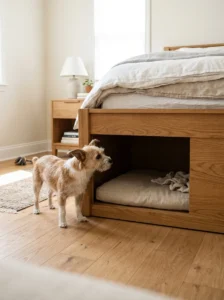
- The built-in cubby. Some platform frames have an open cubby at the foot. Pad it, add a blanket, and you’re basically finished. No buying, no building, just a spot that was hiding in plain sight all along.
Not sure where to start? Honestly, start with idea two. A folded blanket costs nothing and tells you within three nights whether your dog likes the spot. If they do, upgrade to a flat pad or the slide-out drawer. If they don’t, you’ve lost nothing, and your small space dog bed hunt just got a lot less expensive.
Check This Before Your Dog Moves In
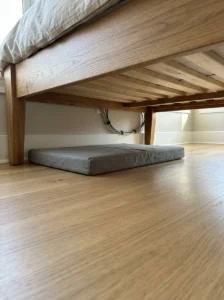
Grab a flashlight and look under there first. I once found a phone charger cord, two socks, and a dust layer thick enough to plant carrots in. Cords are chewable. Socks are swallowable. Neither belongs near your dog. Vacuum thoroughly, tuck cables away, and wipe down the floor.
Also, watch for dogs who go under and don’t come out, or who seem stressed rather than relaxed. Panting, whining, and pacing are your cues to try a different spot. This setup should feel like a choice, never a trap. And if your dog is a senior or has trouble getting up and down, ask your vet whether a thicker, more supportive bed makes sense.
Quick Questions Dog Owners Ask
Q: Will my dog get stuck under the bed?
A: Not if you measure first. Give them room to stand and turn, keep one end fully open, and skip frames with low crossbars.
Q: Can puppies use an under bed dog sleeping spot?
A: Sure, but supervise at first. Puppies chew everything, so skip loose fabric skirts and cords until they’re past the gnawing phase. Washable bedding is your friend, because accidents happen.
Q: My dog won’t go under. Now what?
A: Don’t push. Toss a few treats just inside the edge, then a little farther each day. Some dogs need a week. Some never take to it, and that’s fine too.
So here’s my challenge. Pick one idea from the list, measure your clearance this weekend, and give it a three-night trial. Pay attention to where your dog naps when nobody’s watching, because that’s usually your answer. A dog bed under bed setup isn’t fancy, but it might be the quietest upgrade you make all year. Which idea are you trying first? And if you want more cozy ways to set up your dog’s space, check out my post on small-space sleeping nooks next.