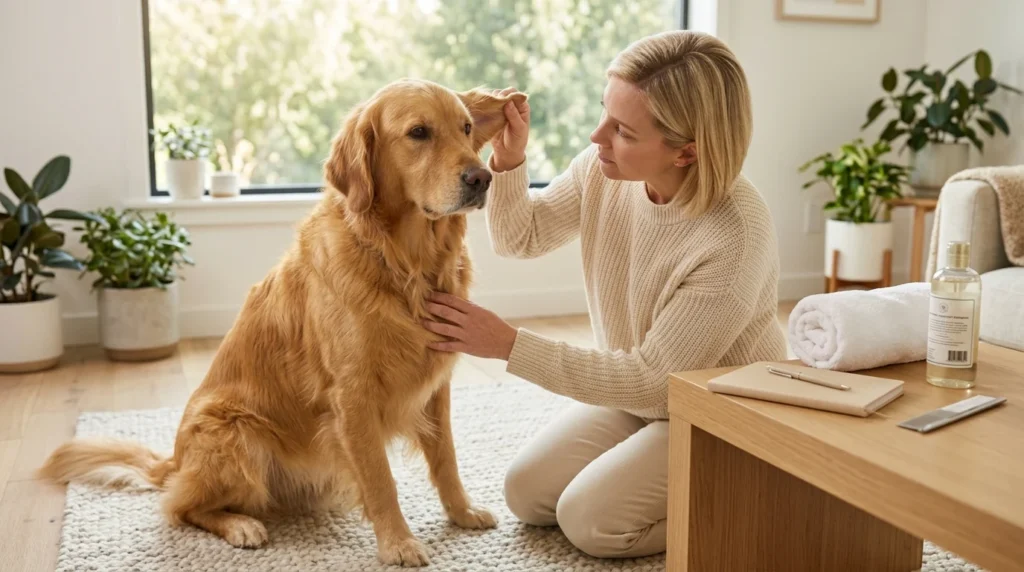
I didn’t put together an actual first aid kit for Bruno and Mishi until after a minor cut on Bruno’s paw during a walk turned into an unnecessarily stressful scramble to figure out what we even had on hand to clean and wrap it. It was a small injury in the end, nothing serious, but it made me realize how unprepared we were for even a basic situation.
Dogs get into things — minor cuts, scrapes, bee stings, upset stomachs, the occasional limp after an enthusiastic play session. Most of these aren’t emergencies, but having the right supplies on hand means you can respond calmly and effectively rather than scrambling, especially outside regular vet hours. (I’m an experienced owner, not a vet — a home kit is for managing minor situations and stabilizing more serious ones until you reach a vet, not a substitute for professional care.)
What Actually Belongs in the Kit

Gauze pads and rolls — for cleaning and covering wounds, or applying pressure to control bleeding.
Adhesive tape, specifically made for securing bandages, not regular household tape.
Self-adhering bandage wrap — the kind that sticks to itself rather than skin or fur.
Antiseptic wipes or solution (vet-approved, not human-grade alcohol-based products, which can be too harsh).
Digital thermometer — a dog’s normal temperature is higher than a human’s, generally in a range your vet can confirm, and knowing how to take it can be genuinely useful in assessing whether something’s wrong.
Tweezers, for removing splinters, ticks, or minor debris.
Blunt-tip scissors, for safely trimming fur around a wound or cutting bandage material.
Disposable gloves, to keep things clean when handling a wound.
Saline solution, useful for flushing minor wounds or irritated eyes.
Hydrogen peroxide, specifically for inducing vomiting, but only when directed by a vet or poison control — never use without guidance.
A muzzle or soft cloth — even the gentlest dog may bite when in pain or scared, not out of aggression but instinct.
A cold pack, for minor swelling or strains.
A copy of your dog’s medical records and your vet’s contact information, along with the nearest emergency animal hospital’s number, kept somewhere easy to find quickly.
A tick removal tool, useful alongside or instead of tweezers. Our guide to fleas and ticks covers proper removal technique.
Activated charcoal, only to be used if specifically directed by a vet or poison control center, never on your own judgment.
You don’t need every item immediately. I’d suggest starting with the basics — gauze, antiseptic wipes, tweezers, a thermometer, and your vet’s contact information — and building from there as you learn what’s actually useful for your specific dog’s lifestyle.
What’s Actually Gotten Used From Ours

Looking back over the years: gauze, antiseptic wipes, and the self-adhering bandage wrap have been the most used, mostly for minor scrapes from walks or playtime needing a quick clean and cover. The thermometer gets occasional use, usually when one of the dogs seemed “off” and I wanted an objective data point to share with our vet over the phone. The tick removal tool got used once, during a flea and tick season scare, and I was genuinely glad to have it. Things like activated charcoal and the muzzle have never been used, but I’m glad they’re there.
That last point is worth sitting with for a moment, since it’s easy to feel like stocking items you may never use is wasted effort. I’d push back on that framing — the entire point of a first aid kit is that most of its contents are meant to sit unused most of the time, exactly the way a smoke detector or fire extinguisher does. The value isn’t in frequency of use; it’s in being genuinely ready on the rare occasion you actually need something specific and don’t have time to improvise or go shopping.
Basic Skills Worth Knowing, Beyond Just Having Supplies

Cleaning a minor wound. Gently clean around the area with saline solution or appropriate antiseptic, avoiding anything that stings excessively. Cover with gauze if needed, and monitor for signs of infection (increasing redness, swelling, discharge) over the following days.
Controlling minor bleeding. Apply firm, direct pressure with clean gauze. If bleeding doesn’t slow within several minutes of consistent pressure, or if it’s significant, this moves from first aid to “get to the vet now.”
Taking your dog’s temperature, using a digital thermometer designed for rectal use, lubricated appropriately. This sounds unpleasant, but it can provide useful information for your vet, especially during a phone consultation when deciding whether something needs an immediate visit.
Recognizing when something’s beyond first aid. This is honestly the most important skill. A kit helps you manage minor situations and stabilize more serious ones en route to care — it’s not meant to replace professional treatment.
When First Aid Isn’t Enough

Some situations move past at-home management entirely, and recognizing this quickly matters: significant or uncontrolled bleeding, suspected broken bones or inability to bear weight on a limb, difficulty breathing, signs of severe pain or distress, suspected poisoning, heatstroke (our heatstroke guide covers warning signs), seizures, collapse or loss of consciousness, a bloated or visibly painful abdomen, and any injury from a significant fall, car accident, or animal attack. In these situations, basic first aid is about stabilizing the situation while you get to a vet as quickly as possible — not a substitute for that care.
Where You Keep It Matters More Than You’d Think

I learned this the hard way too — having a kit doesn’t help much if you can’t quickly find it during an actual situation. Ours lives in a clearly labeled box in a hall closet that’s easy to access without digging through unrelated items, and I keep a small, scaled-down version in the car for situations during walks or trips away from home. Keep it somewhere every household member knows about and can access, avoid storing it somewhere requiring you to move other items to reach (seconds matter in a genuine emergency), and consider a smaller travel version if you frequently take your dog places outside the home. Make sure it’s stored somewhere temperature-stable too, since extreme heat or cold can degrade certain supplies, particularly relevant for anything stored in a car during hot months.
Keeping the Kit Actually Useful Over Time

A first aid kit isn’t a one-time purchase. A few habits worth building: checking expiration dates on antiseptics and medications periodically, replacing used items promptly rather than assuming you’ll remember later, updating your vet’s contact information if it changes, and keeping the kit somewhere accessible, not buried in a closet you’d forget about during an actual emergency.
Certain first aid concerns also become more relevant depending on the time of year. During hot months, heatstroke-related supplies and awareness become especially important, as covered in our heatstroke guide. Reviewing and adjusting your kit slightly with the season, rather than treating it as a single static setup year-round, keeps it genuinely relevant to the risks your dog is most likely to actually encounter.
A Simple Written Emergency Plan, Beyond the Physical Kit

Beyond the kit itself, I’ve found it genuinely useful to have a simple written plan, even just a note on my phone — the nearest emergency animal hospital’s address and phone number including hours if not 24/7, our regular vet’s after-hours contact protocol, a poison control hotline number kept readily accessible, and basic information about both dogs (weight, known allergies or conditions) that would be useful to relay quickly to emergency staff. Having this organized in advance, rather than gathering it during an actual stressful situation, has been one of the more reassuring parts of feeling genuinely prepared.
If you have more than one dog, or other pets, it’s worth thinking through how your plan covers everyone, not just one animal — keeping each pet’s specific information accessible, having enough supplies for more than one animal if needed simultaneously, and considering whether different pets have different needs, like a smaller dog needing different bandage sizing than a larger one.
Building Knowledge Beyond the Kit Itself

A first aid kit is only as useful as the knowledge behind it. Some local veterinary clinics or community organizations offer pet first aid classes with genuine hands-on practice. Asking your own vet directly what they’d recommend for your dog’s breed, age, and known health considerations matters too, since general advice doesn’t always capture individual risk factors. And reviewing basic steps periodically, rather than assuming you’ll remember everything from a single read, helps, since stress during an actual emergency makes recalling details harder than expected.
A few quick answers: if your dog eats something toxic, contact your vet or poison control immediately rather than treating it at home — some toxins require inducing vomiting while others make that dangerous. Basic gauze and bandage wrap are generally fine to use from human supplies, but be cautious with antiseptics and medications. Deep wounds, wounds that won’t stop bleeding with pressure, or wounds with separated edges generally need professional evaluation. And only include medications specifically prescribed by your vet — never human medications “just in case,” since many are toxic to dogs.
That stressful afternoon scrambling to find anything useful for Bruno’s minor paw cut taught me a lesson that’s paid off many times since: a basic, well-stocked kit isn’t about expecting the worst — it’s about being prepared enough to handle the small stuff calmly and recognize quickly when something needs more.
For more on being prepared for your dog’s health needs, our guides on heatstroke warning signs and recognizing pain in dogs are worth reading next.