
For the first few years I had Bruno, dental care genuinely never crossed my mind. He ate, he played, his breath wasn’t great but I figured that was just “dog breath.” It wasn’t until a routine checkup that our vet pointed out visible tartar buildup along his gumline and gently explained that what I’d written off as normal was actually the early, still-reversible stage of something that, left unmanaged, could eventually lead to pain, infection, and tooth loss.
Vets generally describe dental disease in four stages, and understanding the progression is genuinely what made me take this seriously. Stage 1, gingivitis, is mild gum inflammation, often with visible redness along the gumline — and crucially, this stage is typically reversible with proper cleaning and care. Stage 2, early periodontitis, involves some loss of the structures supporting the teeth, though it may not be obvious without a dental exam. Stage 3, moderate periodontitis, brings more significant damage that can start affecting tooth stability. Stage 4, advanced periodontitis, involves significant bone loss around the teeth, can lead to tooth loss, and is generally much harder to reverse.
Knowing that gingivitis is reversible was the detail that motivated me most. It meant the tartar our vet pointed out on Bruno wasn’t a permanent mark against his dental health — it was a clear, actionable signal to start doing something about it before it progressed further. (Worth saying upfront: I’m an experienced owner, not a vet or veterinary dentist — this is the routine that’s worked for us, not a replacement for professional cleanings when your vet recommends them.)
Why This Matters Beyond Just Bad Breath
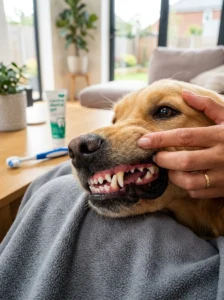
Dental disease is genuinely one of the most common health issues in dogs, and most cases are entirely preventable with consistent care. There’s also a connection between dental health and overall health that surprised me when our vet explained it: bacteria from advanced dental disease can enter the bloodstream and potentially affect other organs over time. It’s not something to be alarmist about, but it’s a good reason to take dental care seriously rather than treating it as cosmetic.
Watch for these signs:
⦁ Persistent bad breath that goes beyond typical “dog breath”
⦁ Yellow or brown buildup along the gumline (tartar)
⦁ Red, swollen, or bleeding gums
⦁ Difficulty chewing, or favoring one side of the mouth
⦁ Dropping food while eating
⦁ Pawing at the mouth or face
⦁ Visible loose or broken teeth
⦁ Reduced appetite, particularly reluctance toward harder foods or treats
Once our vet pointed out Bruno’s tartar buildup, I started actually looking at his teeth regularly instead of just assuming everything was fine. It made me realize how easy it is to miss the early signs simply because you’re not used to checking.
Some Breeds Need More Proactive Attention
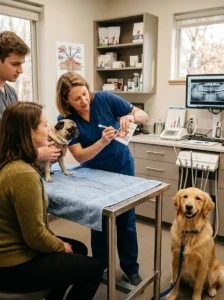
Smaller breeds often have more crowded teeth, which can trap plaque more easily, while breeds with shorter snouts may have additional alignment-related challenges given how their compressed jaw structure affects natural tooth spacing. If you have a breed known for dental sensitivity, it’s worth discussing a more proactive dental schedule with your vet rather than waiting for visible problems. Mixed-breed dogs without a clear dominant breed influence don’t get an automatic pass either — Bruno’s mixed heritage didn’t spare him from needing the same level of attention once tartar started developing.
Building a Home Routine That Actually Sticks

The single most effective thing you can do at home is regular brushing, though I’ll be honest — it took some trial and error to get both dogs comfortable with it.
Use a toothbrush and toothpaste made specifically for dogs. Human toothpaste often contains ingredients like xylitol, toxic to dogs, along with fluoride levels not appropriate for them. Vet-approved enzymatic dog toothpaste comes in flavors dogs actually tolerate, like chicken or peanut butter.
Start slow, especially with an adult dog not used to it. I started by just letting Bruno lick a bit of toothpaste off my finger so he’d associate the flavor with something positive, before ever introducing the brush itself. It took about two weeks of short, low-pressure sessions before he tolerated actual brushing.
Aim for consistency over perfection. Daily brushing is the gold standard, but even a few times a week makes a meaningful difference compared to never. I brush both dogs’ teeth most evenings now, but I don’t stress about the occasional missed day.
Use a gentle, consistent technique. Lift the lip, brush in small circular motions focused on the gumline where plaque accumulates most, and keep sessions short, especially at first.
A few things made consistency actually stick for us specifically: same time, same place — I brush in the evening, right after the last walk, which removed the daily decision-making that used to lead to skipped sessions. Short sessions especially early on, since longer early attempts created resistance. And a genuinely positive tone from day one — treats, praise, an upbeat attitude rather than treating it like a chore — has made both dogs cooperative now, not just tolerant.
It’s also worth knowing that brushing technique matters as much as frequency. Working in small circular motions specifically along the gumline, rather than just scrubbing across the visible tooth surface, targets the area where plaque actually accumulates and hardens into tartar. I didn’t realize this distinction early on and was essentially just going through the motions without focusing on the area that mattered most, which probably explains why our initial efforts with Bruno didn’t show much improvement until our vet corrected my technique.
Dental Chews: A Supplement, Not a Substitute

Dental chews can be useful alongside brushing, though they shouldn’t replace it. Look for products evaluated for actual dental benefit (your vet can point you toward reputable options), and choose appropriately sized chews to avoid choking hazards or excessive force on the teeth, especially for smaller dogs or dogs with existing issues. The mechanical action of appropriate chewing genuinely does help reduce tartar buildup between brushings.
Some dry kibble formulations are also designed with a texture that helps reduce plaque through the mechanical action of chewing, though this effect is generally modest compared to actual brushing. If you’re curious how diet fits into your dog’s broader health picture, our dog nutrition guide covers feeding fundamentals in more depth.
Why Anesthesia Is Part of a Proper Professional Cleaning
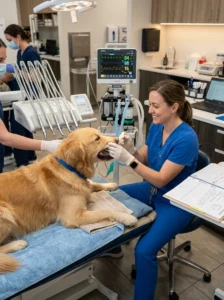
Even with a solid home routine, most dogs benefit from periodic professional dental cleanings performed under anesthesia. This allows for thorough cleaning below the gumline — where home brushing can’t reach and where the most significant disease often develops — along with a proper evaluation of each tooth.
I was initially nervous about anesthesia for a “routine” cleaning, but our vet walked me through the safety protocols and explained that a proper evaluation under anesthesia is actually the only way to thoroughly assess and treat issues below the gumline. Pre-anesthetic bloodwork is typically done beforehand to confirm a dog is a good candidate, and modern monitoring during the procedure has made this a genuinely low-risk routine procedure for most healthy dogs, which helped ease my own initial hesitation considerably. How often your dog needs this varies by breed, age, and how effective your home routine is.
This is also why I’d be cautious about anesthesia-free dental cleanings offered by some groomers and clinics, even though they can sound appealing if you’re nervous about anesthesia. These typically address only the visible portion of teeth above the gumline, since a dog needs to stay still while fully awake — meaning they can’t address tartar below the gumline and don’t allow for X-rays or thorough evaluation. When I asked our vet about this for Bruno, she explained it’s not necessarily harmful, but it shouldn’t substitute for proper anesthetic cleaning when one’s actually needed, since it can create a false sense of “all clear” while missing issues below the surface.
When to Actually Call the Vet

Beyond routine checkups, contact your vet promptly if you notice sudden, severe bad breath, visible bleeding from the gums, a loose, broken, or clearly painful tooth, significant reluctance to eat or chew, swelling around the face or jaw, or pawing at the mouth combined with visible distress.
Planning for the Cost

Professional cleanings can be one of the more significant routine veterinary expenses, worth planning for rather than being caught off guard. Costs vary based on whether extractions or other treatment are needed beyond a standard cleaning, in addition to anesthesia and monitoring. Asking your vet for a rough estimate at a routine checkup, before issues become more advanced and more expensive to treat, has helped us budget more predictably.
A few quick answers: daily brushing is ideal, but a few times weekly still helps meaningfully — consistency matters more than perfection. Never use human toothpaste, since xylitol is toxic to dogs. Earlier is easier for starting a routine, ideally in puppyhood, but it’s never too late — adult dogs can absolutely learn to tolerate brushing with patience. And dental chews can help as a supplement, but they’re not a replacement for actual brushing or professional cleanings when needed.
Looking back, the biggest mistake I made with Bruno wasn’t anything dramatic — it was simply not paying attention, assuming dental health was either “fine” or “obviously broken” without realizing there’s a long, gradual, still-preventable progression in between. Starting a routine, even years later than I should have, made a visible difference within a few months. Dental care turned out to be one of those areas where a small, consistent habit genuinely prevents a much bigger problem down the line.
For more on building out a complete care routine, our guides on puppy health in the first 8 weeks and first aid essentials every owner should have at home are worth a look.