A few summers ago, I made a mistake I still think about — taking Bruno on a longer-than-usual midday walk during one of Lahore’s brutal hot spells, underestimating just how much the heat would affect him compared to a normal evening walk. About halfway through, he started panting heavily, slowed down significantly, and seemed genuinely uncomfortable in a way that was different from normal tiredness. We cut the walk short and got him into shade and water immediately, and thankfully it didn’t progress further. But that afternoon scared me enough to completely rethink how we handle heat.
Heatstroke is one of those emergencies where minutes genuinely matter, and recognizing the early signs can make the difference between a scary close call and a real medical crisis. (Quick disclaimer: I’m an experienced dog owner, not a vet. Heatstroke is a genuine medical emergency — this guide is meant to help you recognize it quickly and take immediate first steps, but veterinary care is essential, not optional, for suspected heatstroke.)
Why Dogs Are Especially Vulnerable to Heat
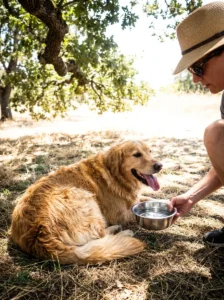
Dogs don’t sweat the way humans do — they primarily cool themselves through panting and, to a lesser extent, through their paw pads. This makes them significantly less efficient at regulating body temperature in hot weather compared to people, which is part of why heat that feels manageable to us can be genuinely dangerous for a dog.
Certain dogs are at even higher risk:
⦁ Short-nosed (brachycephalic) breeds, like Bulldogs and Pugs, since their airway structure makes panting less efficient
⦁ Senior dogs, whose bodies regulate temperature less efficiently
⦁ Puppies, for similar reasons
⦁ Overweight dogs, since excess weight makes heat regulation harder
⦁ Dogs with thick or dark coats, which absorb and retain more heat
⦁ Dogs with underlying heart or respiratory conditions
Humidity’s Role: Why It’s Not Just About Temperature

Something I learned after that scare with Bruno is that humidity plays a significant role beyond just the raw temperature number. High humidity makes panting — a dog’s primary cooling mechanism — significantly less effective, since panting relies partly on evaporation, which slows considerably in humid air. This means a moderately hot, very humid day can actually be more dangerous for a dog than a hotter but drier day, even though the temperature reading alone might suggest otherwise. Since humidity tends to spike during certain seasons here, I’ve learned to factor that into our walk planning specifically, not just relying on temperature alone when deciding whether conditions are safe for activity.
Early Warning Signs of Heatstroke
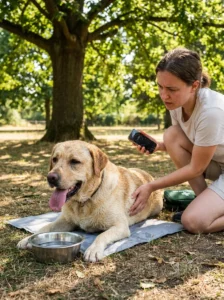
Catching this early is genuinely critical, since heatstroke can progress quickly once it passes a certain point. Watch for:
⦁ Heavy, excessive panting that seems disproportionate to the activity level
⦁ Bright red gums or tongue
⦁ Excessive drooling, sometimes thicker than normal
⦁ Lethargy or reluctance to continue moving
⦁ Rapid heart rate
⦁ Glazed eyes or a dazed appearance
With Bruno that afternoon, the panting was the first thing that struck me as different — heavier and more labored than his normal post-walk panting, paired with him slowing down noticeably even though we hadn’t been walking unusually fast. That combination is what told me something was actually wrong, not just normal heat-related tiredness.
Signs of Advancing or Severe Heatstroke
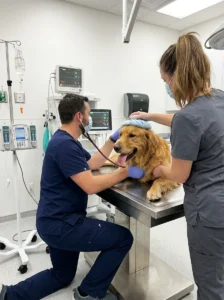
If heatstroke progresses without intervention, symptoms become significantly more serious:
⦁ Vomiting or diarrhea
⦁ Stumbling, weakness, or loss of coordination
⦁ Collapse
⦁ Seizures
⦁ Unresponsiveness or loss of consciousness
⦁ Pale or blue-tinged gums (as the condition progresses, gums can shift from bright red to pale as circulation is affected)
⦁ Significantly elevated body temperature (often above 103-104°F / 39.4-40°C, though this should be confirmed by a vet, not used as a sole at-home diagnostic threshold)
Any of these signs mean you’re dealing with a genuine emergency requiring immediate veterinary care, not at-home management.
What to Do Immediately If You Suspect Heatstroke
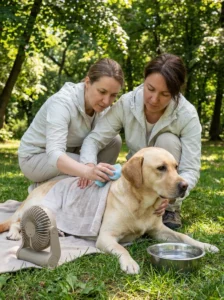
If your dog shows early warning signs, act quickly:
1. Move your dog to shade or a cool, indoor area immediately. Stop any activity right away.
2. Offer cool (not ice-cold) water if your dog is alert and willing to drink. Don’t force water into a dog that isn’t actively drinking on their own.
3. Begin cooling your dog gradually. Apply cool (not ice-cold) water to the body, particularly the belly, paws, and ears, where blood vessels are closer to the surface. A damp towel or gentle hose-down works well. Avoid ice-cold water or ice directly on the skin, since extremely rapid cooling can actually cause additional complications.
4. Use a fan or air conditioning if available, to help with evaporative cooling.
5. Check in on your dog’s behavior and breathing as you cool them, watching for any improvement or worsening.
6. Call your vet or an emergency animal hospital immediately, even if your dog seems to be improving with initial cooling. Heatstroke can cause internal damage that isn’t immediately obvious from the outside, and professional evaluation is genuinely necessary, not optional.
7. Continue cooling efforts on the way to the vet if possible, rather than stopping once you’re in the car.
A few things worth specifically avoiding: don’t use ice-cold water or ice packs directly on the skin, since this can cause blood vessels near the skin to constrict, actually trapping heat inside rather than helping release it. Don’t force water into a dog that’s not alert enough to drink on their own, due to choking risk. Don’t assume your dog is “fine” once initial symptoms ease — internal effects can continue even after surface symptoms improve. And don’t wait to see if it gets worse before calling the vet — earlier intervention generally leads to better outcomes.
Recovery After Heatstroke
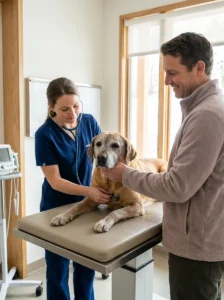
Even after a successful intervention, dogs that have experienced heatstroke need veterinary follow-up, since internal effects (on organs like the kidneys, for example) aren’t always immediately obvious and can develop in the hours or days following the initial episode. Your vet may recommend monitoring, bloodwork, or supportive care depending on the severity of what happened.
Acclimatization: Why Sudden Heat Exposure Is Riskier
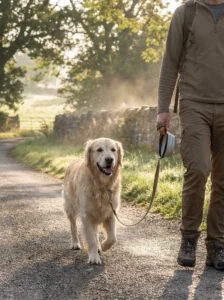
Dogs, like people, can become somewhat more heat-tolerant with gradual acclimatization to warmer conditions over time. This is part of why heatstroke risk can actually be higher during an unexpected early heat wave, or for a dog that’s recently moved from a cooler climate, compared to a dog that’s been gradually adjusting to seasonal heat over weeks.
This was a useful reframe for me — Bruno’s scare happened relatively early in a particularly hot stretch, before either of us had really adjusted our routine to the season’s intensity yet. Now, at the very first signs of seasonal heat increasing, we proactively shift our walking schedule earlier, rather than waiting until we’ve already had a scare to prompt the change.
Preventing Heatstroke: What We Changed After That Day
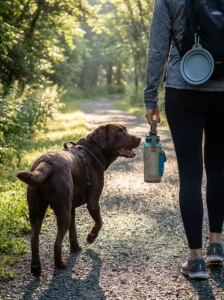
That scare with Bruno led to several genuine changes in how we manage hot weather now:
Walking during cooler hours. We shifted almost entirely to early morning or evening walks during the hottest months, avoiding midday entirely regardless of how the schedule would otherwise be more convenient.
Always carrying water. Even for shorter walks, having water available means we’re never caught without it if a walk ends up taking longer than planned or the heat feels worse than expected.
Watching the pavement, not just the air temperature. Pavement can get significantly hotter than the surrounding air temperature, which can burn paw pads even when it doesn’t feel unbearably hot to us standing on it in shoes. The classic test — pressing the back of your hand to the pavement for several seconds — has become a habit before any summer walk.
Never leaving a dog in a parked car, even briefly, even with windows cracked. Car interiors heat up extremely quickly, far faster than most people expect, and this remains one of the most common and entirely preventable causes of heatstroke.
Providing accessible shade and water at home, especially for any outdoor time, even in a yard or covered area.
Being extra cautious with high-risk dogs. If you have a short-nosed breed, a senior dog, or an overweight dog, the threshold for caution should be even lower than for an otherwise healthy, average-risk dog.
Recognizing Heatstroke Risk During Car Travel
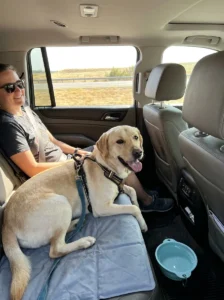
Beyond walks, car travel deserves its own specific mention, since it’s one of the most common and entirely preventable causes of heatstroke. Even on a day that doesn’t feel extremely hot, a parked car’s interior temperature can rise dramatically within minutes — well beyond what most people intuitively expect, even with windows slightly cracked.
If you’re traveling with your dog during warm weather, a few practical habits matter: never leaving a dog alone in a parked car, even for what feels like “just a few minutes”; ensuring adequate airflow and, ideally, air conditioning during travel itself; planning stops for water and bathroom breaks during longer trips, rather than pushing through extended periods without a break; and being especially cautious with high-risk dogs (short-nosed breeds, seniors, overweight dogs) during any car travel in warm weather.
Heatstroke Risk for Working or Highly Active Dogs
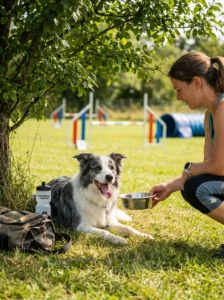
If your dog is particularly active or works alongside you in some capacity (herding, agility training, or simply a dog that loves intense play), it’s worth recognizing that the drive to keep going can sometimes override a dog’s own instinct to slow down when overheating, especially with highly motivated or high-drive breeds. This means relying solely on your dog to “tell you” when they’ve had enough isn’t always reliable in hot conditions — building in scheduled rest and water breaks proactively, regardless of how engaged your dog seems in the activity, is a safer approach than waiting for visible signs of struggle to appear first.
Heatstroke First Aid as Part of a Broader Preparedness Mindset

Our experience with Bruno also reinforced something covered more broadly in our first aid guide: having a basic understanding of emergency response before you actually need it makes a genuine difference in how effectively and calmly you can act in the moment. Knowing the cooling steps, having your emergency vet’s number readily accessible, and understanding what symptoms warrant immediate action rather than a wait-and-see approach are all things worth reviewing during a calm moment, not something to figure out for the first time while your dog is actually in distress.
A few quick answers: what counts as “too hot” varies by dog and humidity level, but generally, if it feels uncomfortably hot to you, it’s likely riskier for your dog, especially high-risk breeds — checking pavement temperature and choosing cooler parts of the day is more reliable than a single temperature threshold. Yes, heatstroke can happen even on a “normal” hot day, not just extreme heat, especially for high-risk dogs or if a dog is exercising more than usual for the conditions. It can be fatal if not treated, particularly if it progresses to severe stages without intervention. And it can develop surprisingly fast, sometimes within just 15-20 minutes of intense heat exposure for vulnerable dogs, which is part of why prevention and early recognition matter more than trying to “catch it early” once symptoms are already obvious.
That afternoon with Bruno was scary enough to genuinely change how our household handles hot weather, and I’m grateful it ended as a close call rather than something worse. Heatstroke is one of those situations where prevention is so much easier than treatment — a few simple habit changes have made a real difference in keeping both our dogs safe through Lahore’s hottest months.
For more on keeping your dog safe and healthy, our guides on first aid essentials and fleas and ticks during hot months are worth reading next.