Mishi’s floppy ears and tendency toward ear issues, covered in more detail in our ear infection guide, made learning proper ear cleaning technique a genuine necessity rather than an optional grooming extra in our house. What started as an intimidating task — I worried about hurting her or doing it wrong — became a manageable, even routine part of our regular care once I actually learned the correct technique.
(I’m an experienced dog owner, not a veterinarian. This reflects general technique for routine ear maintenance — if your dog already has signs of an active ear infection, consult your vet before attempting home cleaning, since the appropriate approach can differ for an already irritated or infected ear.)
Why Ear Cleaning Matters, Especially for Some Dogs
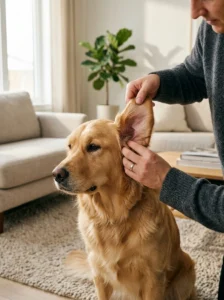
Regular ear cleaning helps prevent the buildup of wax, debris, and moisture that can contribute to ear infections, particularly important for breeds prone to this issue — floppy-eared breeds, dogs who swim frequently, or dogs with known allergy-related ear sensitivity, covered in our allergies guide.
What You’ll Need
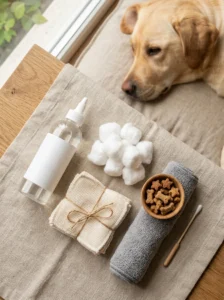
⦁ A vet-approved ear cleaning solution, specifically formulated for canine ears
⦁ Cotton balls or soft gauze pads (avoid cotton swabs for the actual cleaning process, covered in more detail below)
⦁ Treats for positive reinforcement throughout
Step-by-Step Ear Cleaning Technique
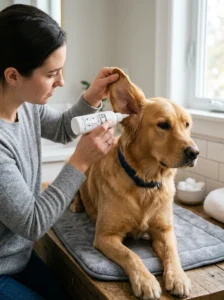
1. Choose a calm moment, ideally when your dog is relaxed rather than highly energetic or stressed.
2. Gently lift the ear flap to expose the ear canal opening.
3. Apply the ear cleaning solution according to the product’s specific instructions, typically filling the ear canal without forcing the applicator deep inside.
4. Gently massage the base of the ear for several seconds, which helps the solution work through debris and loosen buildup — you should hear a soft squelching sound, which is normal and means the solution is reaching the canal effectively.
5. Let your dog shake their head if they want to, which helps bring loosened debris and excess solution up and out of the ear canal naturally.
6. Wipe away visible debris from the outer ear and the parts of the canal you can see, using a cotton ball or gauze pad — never insert anything deep into the ear canal itself.
7. Repeat for the other ear, then reward generously.
What Not to Do
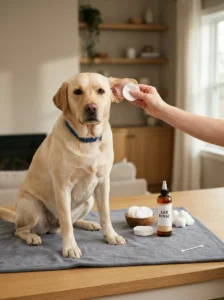
Never insert cotton swabs (Q-tips) into the ear canal. This is genuinely one of the most important things to know — swabs can push debris further into the canal, or in worse cases, cause injury to the sensitive structures inside the ear. Stick to cleaning what’s visible at the outer ear and canal opening.
Don’t clean ears that show signs of active infection without first consulting your vet, since cleaning an already irritated or infected ear can sometimes worsen discomfort or interfere with treatment, depending on the specific situation.
Don’t over-clean. For most dogs without specific ear issues, cleaning every few weeks is generally sufficient — over-cleaning can actually disrupt the ear’s natural balance and potentially contribute to irritation.
Don’t use products not specifically formulated for canine ears, including human ear cleaning products or improvised home solutions, which may not be appropriately formulated or safe for a dog’s ear structure and pH balance.
How Often to Clean Ears
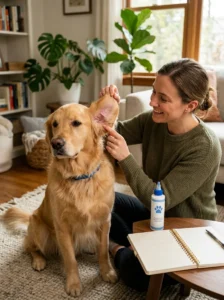
This varies significantly based on your dog’s individual risk factors. Dogs prone to ear issues, like Mishi, may benefit from cleaning every one to two weeks as a preventive measure, following your vet’s specific recommendation. Dogs without particular ear sensitivity often do well with cleaning every few weeks to monthly, simply as routine maintenance alongside regular ear checks.
Building a Positive Association With Ear Cleaning
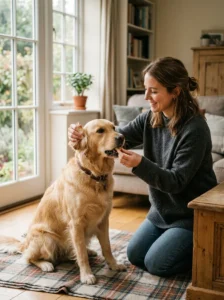
Given how sensitive ears can be, building genuine comfort with this routine matters for long-term cooperation. A few things that helped with Mishi specifically:
⦁ Starting with very brief, gentle sessions, gradually increasing as she became more comfortable
⦁ Pairing cleaning with high-value treats, not just at the end but throughout the process
⦁ Practicing gentle ear handling outside of actual cleaning sessions, building general comfort with her ears being touched
Recognizing When Cleaning Reveals a Problem
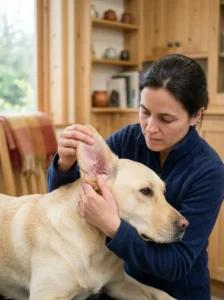
Part of regular ear cleaning’s value is the opportunity it provides to actually look at your dog’s ears closely and notice anything unusual before it becomes a bigger problem. During cleaning, watch for:
⦁ Unusual odor
⦁ Redness or visible inflammation
⦁ Excessive or unusually colored discharge
⦁ Signs of pain or discomfort when the ear is touched, beyond normal ticklishness
If you notice any of these signs, this is your cue to stop the cleaning process and contact your vet rather than continuing, since these may indicate an active infection or other issue needing professional evaluation, covered in detail in our ear infection guide.
Ear Cleaning for Dogs Who Swim Frequently

If your dog swims regularly, additional attention to ear drying (not necessarily full cleaning every time, but at least thorough drying of the outer ear and canal opening) after each swim session helps reduce the moisture buildup that contributes to infection risk in water-loving dogs.
Why Some Breeds Need More Frequent Ear Cleaning Than Others
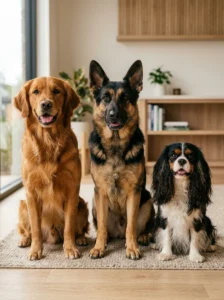
Beyond the floppy-ear consideration already covered, it’s worth understanding the broader range of risk factors that determine appropriate frequency. Breeds with excessive hair growth inside the ear canal, breeds prone to environmental allergies, and breeds with naturally narrower ear canals all face elevated infection risk regardless of whether their ears are floppy or upright. If you’re unsure where your specific dog’s breed falls on this risk spectrum, asking your vet directly during a routine visit provides more individualized guidance than general assumptions based on ear shape alone.
Recognizing the Difference Between Normal Wax and Concerning Debris
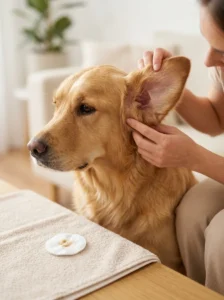
Learning to distinguish what’s actually normal during routine ear checks took some real practice. Healthy ear wax is typically a light tan or yellowish color, present in modest amounts, without strong odor. Debris that’s notably darker (brown or black), present in larger amounts, accompanied by odor, or paired with visible redness suggests something beyond normal wax buildup, warranting the veterinary evaluation covered in our ear infection guide rather than continued home cleaning alone.
Ear Cleaning Frequency After a Resolved Infection
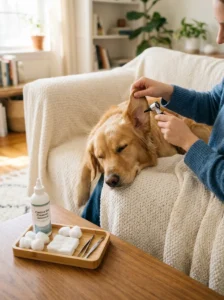
Once an ear infection has been successfully treated, it’s worth discussing with your vet whether an adjusted, somewhat more frequent preventive cleaning schedule makes sense going forward, since a dog who’s had one infection sometimes shows elevated risk for recurrence, particularly if an underlying contributing factor (like allergies) hasn’t been fully addressed. This was exactly our situation with Mishi — after her infection resolved, our vet recommended a more proactive cleaning schedule than we’d been following previously, which has genuinely helped reduce recurrence since.
Choosing the Right Ear Cleaning Solution for Your Dog

Not all ear cleaning products are formulated identically, and understanding the general categories helps you make a more informed choice, ideally with your vet’s input for your specific dog’s needs. Some formulas focus primarily on routine wax and debris removal for general maintenance, while others include drying agents specifically beneficial for dogs prone to moisture-related issues, like frequent swimmers. Still others include mild antimicrobial properties, sometimes recommended specifically for dogs with a history of recurring mild yeast or bacterial overgrowth. Your vet can help match the right formula type to your specific dog’s risk factors rather than choosing based on packaging alone.
Ear Cleaning Technique Variations for Different Ear Shapes
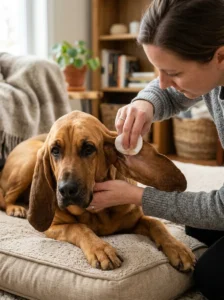
While the general technique covered earlier applies broadly, some breed-specific ear shapes warrant slight technique adjustments. Breeds with very narrow ear canals may need a gentler, more patient approach to avoid discomfort during the solution application. Breeds with significant ear hair growth sometimes benefit from gentle hair removal around (not inside) the canal opening, which some owners do themselves with practice, while others prefer leaving this specific task to a professional groomer given the precision involved.
What a Vet Ear Exam Adds Beyond Home Cleaning
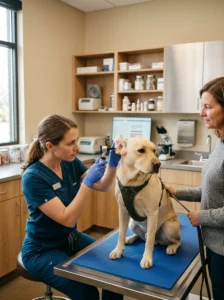
While regular home cleaning is valuable, it’s worth understanding what a professional veterinary ear exam adds beyond what you can assess at home — using an otoscope to actually visualize the eardrum and deeper canal structures that aren’t visible during home cleaning, and sometimes taking a sample for microscopic examination to identify the specific cause of any concerning findings. This is part of why persistent or recurring ear issues genuinely warrant professional evaluation rather than relying solely on home cleaning, however diligent, to fully address what might be a more complex underlying issue.
A few quick answers: How do I know if my dog’s ears actually need cleaning, or if I’m doing it unnecessarily — A quick visual check — looking for visible wax buildup, debris, or simply checking in with your vet about an appropriate routine for your specific dog’s risk factors — helps avoid both under- and over-cleaning.. Is it normal for my dog to shake their head during or after ear cleaning — Yes, this is a normal, helpful response that aids in bringing loosened debris out of the canal — it’s not typically a sign of pain unless accompanied by other distress signs.. Can I use the same cotton ball for both ears — It’s better to use separate cotton balls or pads for each ear, particularly important if you suspect one ear might have an issue, to avoid potentially transferring bacteria or yeast between ears.. What if my dog absolutely won’t tolerate ear cleaning at all — Building tolerance gradually through the positive association techniques covered in this guide usually helps over time, though for dogs with significant fear or resistance, your vet or a trainer can offer additional guidance, and in some cases, your vet may simply handle this task during routine visits instead..
Learning proper ear cleaning technique turned what initially felt like an intimidating task into a genuinely manageable, even routine part of caring for Mishi specifically, given her ear sensitivity. If you’re navigating this for the first time, starting slow, focusing on proper technique (especially avoiding cotton swabs in the canal), and building positive association will serve both you and your dog well over the long term.
For related guidance, our guides on dog ear infections and the complete grooming guide are excellent next reads.