Building our grooming toolkit happened gradually, adding tools as specific needs came up rather than buying everything at once, which actually gave me a genuinely useful sense of what’s been worth the investment versus what’s sat mostly unused. This guide reflects that real-world, tested perspective rather than a generic “everything is essential” product list.
Tier 1: Genuinely Essential, Regardless of Breed
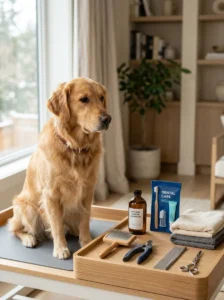
A coat-appropriate brush, covered in detail in our brush guide, matched to your specific dog’s coat type — this is the single most foundational tool for ongoing coat health.
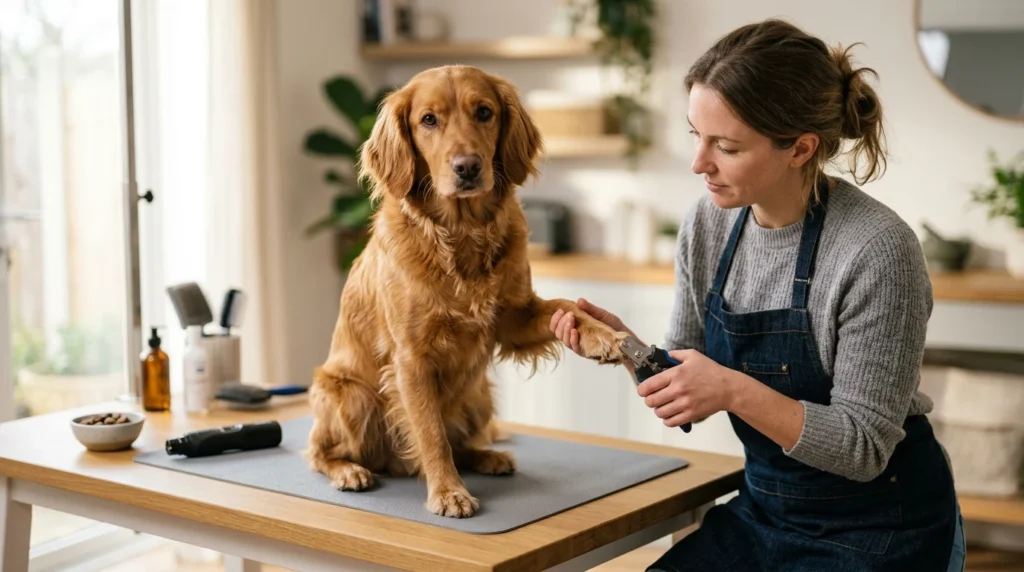
Nail clippers or a grinder, since regular nail maintenance, covered in our nail trimming guide, is a genuine health necessity, not optional.
A dog-specific shampoo, appropriate for your dog’s skin and coat needs, covered in our bathing guide.
A dental kit — toothbrush (or finger brush) and dog-safe toothpaste, given how significantly dental care, covered in our dental care guide, affects long-term health.
Towels dedicated to dog use, since bath time, muddy walks, and general care will put towels through real wear that you likely don’t want mixing with your household linens.
Tier 2: Genuinely Useful for Most Dogs
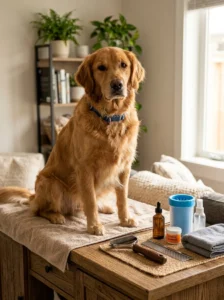
An undercoat rake or deshedding tool, particularly valuable for double-coated breeds, covered in detail in our deshedding tools comparison.
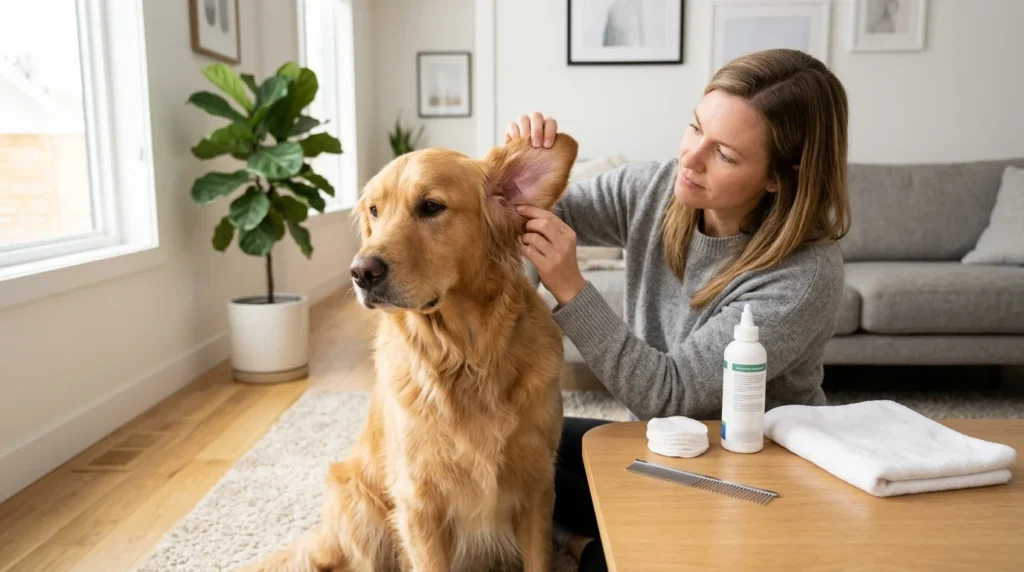
A vet-approved ear cleaner, especially important for floppy-eared breeds or any dog prone to ear issues, covered in our ear cleaning guide.
Styptic powder, for the inevitable occasional nail-trimming mishap — a small, inexpensive item that provides real peace of mind once you actually need it.
A grooming comb, useful as a finishing tool after brushing and for checking smaller, detail areas more precisely than a larger brush can manage.
Paw-cleaning supplies, particularly relevant during wet seasons, covered in our muddy paws guide.
Tier 3: Situational, Based on Your Specific Dog’s Needs
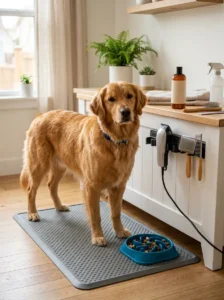
Clippers, if you’re planning any home clipping, covered in our home clipping guide — not necessary if you rely entirely on professional grooming.
A grooming table or non-slip mat, particularly useful if you have a larger dog and find floor-level grooming physically uncomfortable, or if you want a more controlled, designated grooming space.
Specialized shampoos, for dogs with specific skin conditions or sensitivities, ideally chosen with your vet’s guidance rather than general selection.
A slow-feeder or puzzle bowl, while not strictly a grooming tool, often gets grouped into general dog-care equipment and genuinely supports both physical and mental wellbeing.
What We’ve Actually Found Worth the Investment
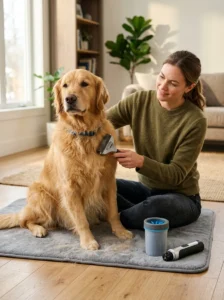
Reflecting honestly on years of use, a few specific items have genuinely earned their place in our regular rotation beyond the basics: the blade-style deshedding tool has been transformative during Bruno’s shedding seasons, the paw-cleaning cup has made monsoon season genuinely manageable, and a quality nail grinder ultimately worked better for both dogs than traditional clippers, once we built tolerance for the sound and sensation.
What We Tried but Don’t Regularly Use
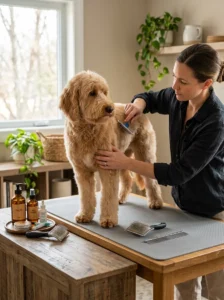
In the interest of genuine honesty, a few items we purchased but found less essential than initially expected: specialized “anti-shedding” shampoos delivered fairly modest results compared to consistent brushing alone, and a grooming table, while occasionally convenient, hasn’t proven necessary enough to justify the space it takes up given that floor-level grooming has worked fine for our needs.
Building Your Toolkit Gradually, Not All at Once
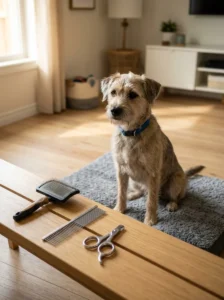
Rather than feeling obligated to purchase every item on this list immediately, I’d genuinely recommend starting with Tier 1 essentials, then adding Tier 2 and 3 items as specific needs become apparent — a deshedding tool matters more once you actually experience your dog’s first heavy shedding season, for example, rather than needing to anticipate every tool before you’ve identified your specific dog’s actual care patterns and needs.
Storage and Organization
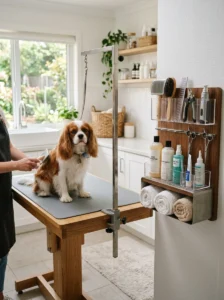
Once you’ve built a reasonably complete toolkit, keeping everything organized and accessible — a dedicated grooming caddy or drawer, for example — makes it much easier to actually maintain a consistent routine rather than needing to hunt for scattered supplies before every grooming session, which can become a barrier to consistency over time.
Quality Considerations Across Your Toolkit
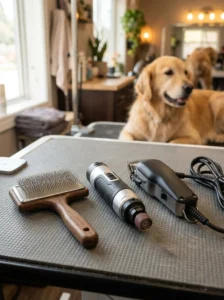
While not every tool needs to be premium-priced, investing reasonably in items used frequently (your primary brush, clippers if you use them regularly) tends to pay off through better durability and effectiveness compared to very budget options that may need frequent replacement or simply don’t perform as well.
Travel Grooming Kit: A Smaller, Portable Subset
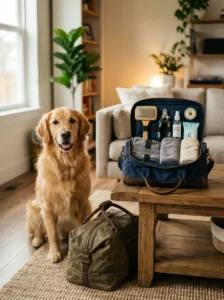
Beyond your full home toolkit, assembling a smaller, portable version for travel — a basic brush, nail clippers, a small ear cleaning solution, and a few other essentials — ensures you’re not caught without basic care capability during trips, boarding stays, or other situations away from your full home setup. We keep this travel kit packed and ready, separate from our main home supplies, which has saved genuine hassle during trips where we might otherwise have forgotten to pack individual items separately.
Budget-Friendly Starter Kit vs. Comprehensive Investment
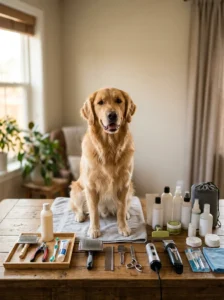
For owners just starting to build a toolkit, particularly with budget considerations in mind, it’s worth knowing you don’t need to replicate every item covered in this guide immediately. A genuinely functional starter kit — a basic appropriate brush, nail clippers, dog shampoo, and a dental kit — covers the true essentials at relatively modest cost, with additional tools added over time as specific needs and budget allow, rather than feeling pressured into a comprehensive upfront investment before you’ve even identified your specific dog’s actual care patterns.
Sharing Tools Across Multiple Dogs: What’s Appropriate
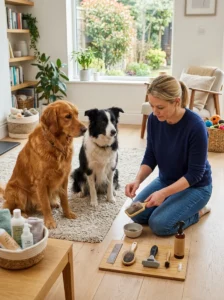
With multiple dogs in a household, it’s worth knowing which tools can reasonably be shared versus which benefit from individual, dedicated versions. Brushes and combs are generally fine to share between healthy dogs without specific skin conditions, provided you clean them between uses. Items with more direct, prolonged contact — particularly anything used during an active skin issue or infection — are better kept individual to avoid any risk of cross-contamination between dogs, similar to the general hygiene principles covered in our ear cleaning guide.
Tools Worth Considering for Specific Health Conditions
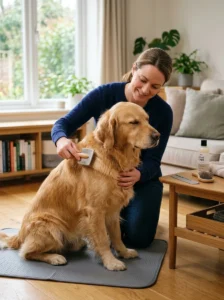
Beyond the general tiers covered earlier, dogs with specific diagnosed conditions sometimes benefit from additional, condition-specific tools — a vet-recommended medicated wipe for dogs prone to skin fold issues, a specific type of brush gentler than standard options for dogs with thin, aging skin, or specialized nail care tools for dogs with particularly thick or unusually shaped nails related to a health condition. These additions should generally follow your vet’s specific recommendation for your dog’s individual situation rather than general assumption, since they address particular needs beyond standard, healthy-dog grooming.
Evaluating Tools Through a Multi-Year Lens
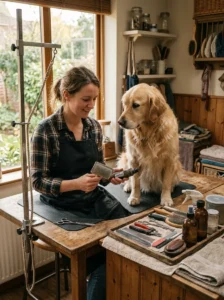
When I look back at our toolkit’s evolution over several years of owning Bruno and more recently Mishi, the items that have genuinely proven their worth are consistently the ones addressing a real, recurring need — not occasional novelty purchases that seemed appealing but didn’t end up integrated into our actual regular routine. This perspective, gained only through years of actual use, is part of why I’d encourage new owners to resist the urge to purchase everything that seems potentially useful upfront, instead building toward a toolkit informed by genuine, demonstrated need over time.
Where to Source Quality Tools
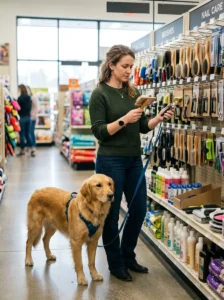
Beyond simply what to buy, where you source grooming tools matters too — established pet supply retailers, recommendations from your vet or groomer, and genuine product reviews from other dog owners tend to provide more reliable guidance than impulse purchases based purely on marketing or algorithmic recommendation. Asking your own vet or a trusted groomer for their specific tool recommendations, given their hands-on professional experience across many different dogs and coat types, often provides genuinely more useful guidance than general online research alone.
Replacing Consumable Items vs. Durable Tools
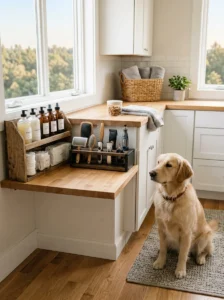
It’s worth distinguishing between durable tools (brushes, clippers, nail trimmers) that last years with proper care, and consumable items (shampoo, ear cleaner, dental supplies) that need regular restocking. Keeping a running mental or written note of which consumables are running low, similar to general household supply tracking, prevents the frustration of discovering you’re out of an essential product right when you need it for a scheduled grooming task, particularly relevant for items without an easily available last-minute substitute.
Tools That Double as Bonding Opportunities

Beyond pure functionality, it’s worth recognizing that many of these tools, used consistently and positively, become genuine bonding opportunities rather than purely functional chores. Regular brushing sessions, paw checks, and even nail trims, once comfort is established, have become moments of genuine connection with both Bruno and Mishi, not just maintenance tasks to complete efficiently. Choosing tools your specific dog tolerates comfortably, rather than purely the most efficient or highest-rated option, supports this relational dimension alongside the practical grooming function itself.
A few quick answers: Do I really need different tools for different coat types, or can I get away with one basic set — For most dogs, yes, some coat-appropriate matching genuinely matters for effectiveness, covered in detail in our brush guide — a single generic brush often underperforms compared to a tool actually suited to your dog’s specific coat.. Is it worth buying professional-grade tools, or are consumer versions sufficient — For most home grooming needs, quality consumer-grade tools are genuinely sufficient — professional-grade equipment offers some advantages but typically at a price point and learning curve that isn’t necessary for routine home maintenance.. How do I know when it’s time to replace a grooming tool — Watch for reduced effectiveness despite proper cleaning and maintenance, visible damage (bent bristles, dull blades), or any sign the tool is becoming uncomfortable or less safe to use — these are all reasonable signals for replacement.. What’s the single most important tool to invest in first — A coat-appropriate brush matched to your specific dog tends to provide the most foundational, ongoing value, since regular brushing supports coat health, reduces shedding burden, and provides regular opportunities to check for skin issues..
Building our grooming toolkit gradually, based on actual experienced needs rather than buying everything upfront, has given me genuine confidence about what’s actually worth recommending versus what sounds useful in theory but doesn’t deliver meaningfully in practice. If you’re just starting to build your own kit, I’d encourage the same gradual approach — start with the genuine essentials, then add tools as your specific dog’s needs become clear.
For more on building a complete grooming routine, our guides on the complete grooming guide and best brushes for every coat type are excellent next reads.