There’s a special kind of entryway chaos that only dog owners seem to understand. One minute your leash is hanging neatly by the door. The next, it’s buried under a jacket, tangled around a tote bag, or somehow sitting on the floor while your dog stares at you because they’ve decided it’s walk time.
I’ve been there.
A simple leash holder can make a surprisingly big difference. It gives your dog-walking gear a home, keeps the area around your door looking cleaner, and makes those last-minute “where’s the leash?” moments much less annoying.
These 9 DIY dog leash holders range from super-simple weekend projects to creative ideas that can double as entryway decor. You don’t need fancy woodworking skills, either. A few can be made with inexpensive supplies you may already have at home.
Why DIY Dog Leash Holders Are Worth Making
Dog leashes are awkward little things. They’re long, they tangle easily, and they rarely look tidy when tossed into a basket.
A dedicated spot near the door solves that problem.
The best part is that you can make a holder that fits your home instead of buying something that looks completely out of place. If your entryway has a rustic farmhouse feel, go with wood and hooks. If your space is small and modern, try a slim wall-mounted option. And if you love personalized dog decor, you can turn the whole thing into a cute little feature.
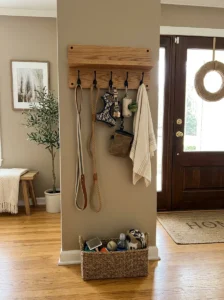
Think about what you actually grab before a walk.
Usually, it’s the leash, collar or harness, poop bags, treats, and maybe a towel if the weather has been terrible. Once you know what needs to live near the door, your DIY project becomes much easier to plan.
One small warning before you start: don’t choose a decorative hook simply because it looks cute. Your dog leash holder needs to handle repeated pulling and daily use. If your dog is strong or tends to get excited when it’s time for a walk, attach the holder securely to a wall stud or use appropriate wall anchors.
Pretty is nice.
Sturdy is better.
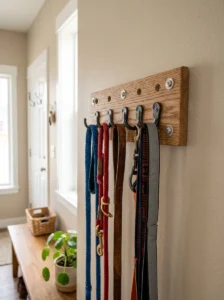
1. Rustic Wooden Board With Hooks

This is probably the easiest place to start if you want something practical that still looks like home decor.
Find a narrow wooden board, sand the rough edges, and stain or paint it in a shade that works with your entryway. Add two or three sturdy hooks across the front, then mount the board near the door.
That’s it.
You can leave the wood natural for a warm, rustic look or paint it white, black, sage green, or whatever works with your space.
Want to make it feel more personal? Add your dog’s name above the hooks.
Something as simple as “Walk Time” or “The Dog’s Spot” can turn a basic board into a fun piece of dog-themed entryway decor.
If you have more than one dog, give each leash its own hook. That tiny bit of organization can save you from untangling three leashes when everyone is ready to head outside.
2. Personalized “Walks Start Here” Leash Station
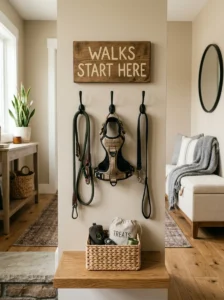
If you’re the type of dog owner who loves personalized touches, this one is for you.
Start with a small wooden plaque or unfinished sign. Paint or stain it, then add a phrase such as “Walks Start Here,” “Adventure Awaits,” or simply your dog’s name.
Attach several hooks underneath the lettering.
You can make this project as polished or as playful as you want. A black-and-white design works beautifully in a modern entryway, while distressed wood gives it more of a farmhouse feel.
Here’s a fun little detail: add a small basket underneath the hooks for poop bags and treats. Now you’ve created a mini dog walking station instead of just a leash hanger.
Just keep edible treats somewhere your dog can’t reach if they tend to help themselves.
3. Repurposed Cabinet Knobs
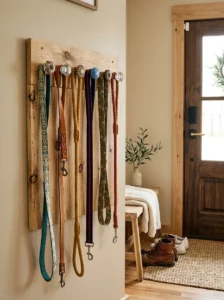
Here’s a DIY dog leash holder that can look much more expensive than it actually is.
Instead of traditional hooks, use decorative cabinet knobs.
You can find inexpensive knobs at home improvement stores, craft shops, or even reuse old ones from a furniture project. Choose mismatched vintage knobs for an eclectic look or use matching brass, black, ceramic, or wood knobs for something more coordinated.
Mount them onto a narrow board and secure the board to the wall.
The knobs work surprisingly well for lightweight leashes, collars, and harnesses. You can also dedicate one knob to your dog’s walking pouch or treat bag.
The trick is choosing knobs with enough space for the leash handle to slip over easily. A beautiful knob isn’t very useful if you’re fighting with it every morning.
And yes, mornings count.
Especially when your dog has already decided that 6:15 a.m. is the perfect time for an adventure.
4. Floating Shelf With Hidden Leash Hooks
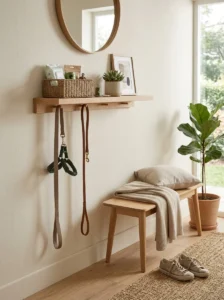
If you want storage and organization in one, consider a small floating shelf.
Install a narrow shelf at a comfortable height, then attach hooks underneath it. The shelf gives you somewhere to keep small walking essentials while the hooks handle the leashes.
You could place a small basket on top for poop bags, a lint roller, dog wipes, or other everyday items.
This is especially useful in apartments or smaller homes where every inch of entryway storage matters.
Keep the shelf shallow, though. You don’t want people bumping into it every time they walk through the door.
For a cleaner look, use neutral baskets and keep the number of items on the shelf under control. A shelf can go from “organized” to “random stuff pile” incredibly quickly.
I’ve learned that one the hard way.
5. Minimalist Leather Strap Leash Holder
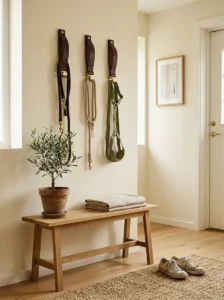
For a more modern look, skip the chunky wooden board and try leather straps.
Cut short lengths of leather, fold each one into a loop, and secure the ends to the wall with decorative screws or suitable hardware. The leash handle slips through the loop.
This creates a simple, almost Scandinavian-style look that works well in modern homes.
Brown leather paired with natural wood feels warm and relaxed. Black leather with brass hardware looks more polished.
The nice thing about this project is that it takes up very little visual space. If your entryway is narrow, that can make a big difference.
Before using leather straps, check that the material and hardware are strong enough for your leash setup. This idea is better suited to hanging the leash after walks than acting as a restraint point for your dog.
That’s an easy distinction to miss.
A leash holder is storage, not a place to tether your dog.
6. Dog Leash Holder With a Small Mailbox
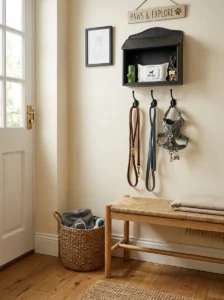
This one is perfect if your entryway is always collecting little bits and pieces.
Use a small wall-mounted mailbox or metal organizer as the main storage section. Add hooks underneath for leashes.
The compartment can hold things you use during walks, such as poop bag rolls, spare clips, dog-safe wipes, or a folded towel.
You can even give each dog their own hook and label it with their name.
The result feels less like a pet accessory and more like a proper entryway organizer.
And that’s really the goal.
You don’t want your home to scream “dog supplies everywhere.” You want the supplies to have a designated place so they blend naturally into the room.
If your dog is a serious mud enthusiast, keep a washable towel nearby, too. Future-you will be grateful.
7. Upcycled Wooden Ruler or Yardstick Holder
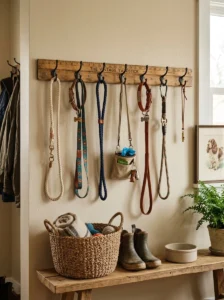
Have an old wooden ruler, yardstick, or narrow piece of reclaimed wood sitting around?
Turn it into a leash organizer.
Clean it up, sand any rough areas, and attach several small hooks along the length. You can keep the original markings for a quirky vintage look or paint over them for something cleaner.
This project works especially well for kids’ old rulers or vintage measuring sticks that would otherwise end up in a drawer.
You can also add little labels beneath the hooks.
“Leashes.”
“Collars.”
“Poop Bags.”
“Treats.”
Suddenly, the entryway has a system.
If you use reclaimed wood, inspect it carefully first. Avoid boards with loose splinters, exposed nails, or damaged sections. Your hands will be handling the hooks constantly, so smooth edges matter.
8. Entryway Peg Rail for the Whole Dog-Walking Routine
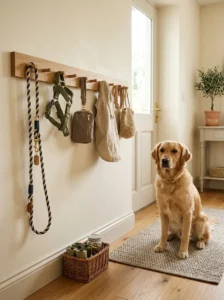
Instead of making a holder specifically for one leash, create a peg rail that handles the entire walk routine.
Use a long wooden strip and add several wooden pegs or hooks.
One section can hold the leash. Another can hold your dog’s harness. A third can hold your walking bag. Leave one or two empty spaces for seasonal items.
This is a great option for families with multiple dogs because everyone can have a dedicated spot.
And here’s the surprising tip: leave one hook intentionally empty.
It sounds silly, but empty space makes the station easier to use. When every hook is already overloaded, people start throwing things wherever there’s room. A little breathing space makes it much more likely that everything gets put back where it belongs.
You could even add a small chalkboard or name tag above each dog’s section.
It becomes part storage, part routine, and part decor.
9. Cute Dog-Shaped Leash Hook
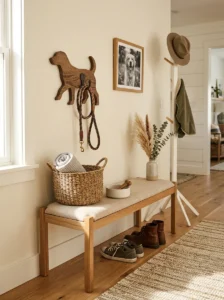
Want something a little more playful?
Make a dog-shaped leash holder.
You can cut a simple dog silhouette from wood, buy an unfinished wooden dog plaque, or repurpose a decorative dog sign. Add a hook underneath or through the design where the leash can hang.
This is especially cute in a family entryway, mudroom, or dog-friendly home office.
The design doesn’t need to be complicated. A simple silhouette can actually look better than a highly detailed shape.
Paint it to match your decor or keep the wood natural.
You can also make one for each dog and choose different breeds or colors. It gives the entryway a personal touch without taking up much space.
Just make sure the hook itself is secure. The decorative dog shape may be lightweight, but the hardware still needs to hold up to everyday use.
A Few Things to Check Before Mounting Your Leash Holder
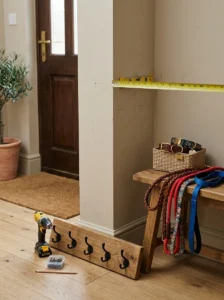
Before drilling holes into the wall, stop and think about where the holder will actually be used.
The ideal spot is close enough to the door that you can grab the leash without crossing the entire house. But don’t put it somewhere where the leash will constantly block a walkway.
Measure the leash handle, too.
Some retractable leashes and bulky rope leashes need more room than a standard flat leash. If you have multiple dogs, account for that before deciding how many hooks you need.
And don’t forget your dog’s size and habits.
A giant breed with a heavy-duty leash needs stronger hardware than a tiny dog with a lightweight leash. Your holder doesn’t necessarily need to support the weight of the dog, but it should comfortably hold the gear you plan to hang on it.
If you’re renting, removable mounting options may be worth considering. Just check the manufacturer’s weight limits and your lease rules before installing anything.
Keep the Holder Away From Chewers
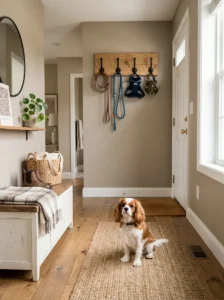
This one is easy to overlook.
If your dog likes chewing anything they can reach, don’t install the leash station at nose level. Leather straps, dangling leash handles, wooden pegs, and loose accessories can become very tempting.
A leash holder should make your life easier, not become your dog’s newest chew toy.
Mount it where you can reach it comfortably but where your dog can’t casually grab the gear.
The Best DIY Dog Leash Holder for a Small Entryway
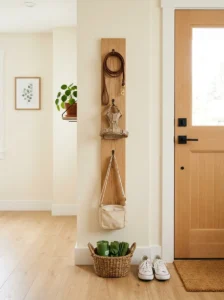
If your entryway is tiny, don’t try to squeeze a giant storage station beside the door.
Go vertical.
A narrow wooden board with two or three hooks is probably the simplest solution. You get plenty of hanging space without using much wall area.
A leather loop system is another good choice if you want the holder to visually disappear into the room.
For renters, a small lightweight organizer with removable mounting hardware can work well, provided the setup is rated for the weight you’re putting on it.
The biggest mistake in a small entryway is trying to store too much stuff in one place.
Keep only what you actually use for walks.
Your dog’s everyday leash.
Harness.
Poop bags.
Maybe a small treat pouch.
Everything else can live somewhere else.
Make a Dog Walking Station Instead of Just a Leash Hook
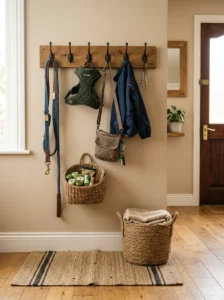
Once you have the leash holder installed, look around the rest of your entryway.
Could you make the whole area work better?
A small basket can hold poop bags. A washable mat can catch muddy paws. A hook can hold your walking jacket. A tiny container can store spare leash clips or tags.
You don’t need to turn your entryway into a pet store.
Think of it as creating a landing zone.
When you come home from a walk, the leash goes here. The harness goes there. The muddy towel gets tossed into the laundry basket. Everything has a place.
That routine sounds almost too simple, but it makes a messy entryway much easier to manage.
And it saves those frustrating moments when you’re standing by the door with one shoe on, your dog bouncing around, and absolutely no idea where the leash disappeared.
A Quick Safety Check Before You Call It Finished
Give the holder a firm test after installation.
Check that the screws are tight. Make sure the board doesn’t wobble. Look for sharp edges or exposed hardware. If you’re using adhesive mounting strips, follow their weight limits rather than guessing.
Don’t attach the holder to a fragile decorative surface just because it’s convenient.
And never use the holder as an anchor for your dog.
It should store the leash when you’re not using it. That’s all.
If you notice the wall flexing or the hardware pulling away, stop using the holder until you’ve fixed the mounting system.
A few extra minutes of checking now can save you from a broken hook, damaged wall, or a pile of dog gear on the floor later.