Day three with my beagle, Biscuit. I’m standing in the street in my slippers, arm stretched like a kite string, while one very small dog hauls me toward a squirrel. A neighbor waved. I couldn’t wave back, because both my hands were busy. That morning I started collecting dog leash hacks, and a few of them fixed more than I expected.
The Problem With “Just Hold the Lead”
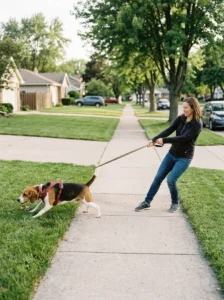
Nobody tells new owners that walking is a skill. For you and for your dog. Leads tangle, hands cramp, dogs lunge, and you start dreading the one part of the day that should be fun.
The good news is that small changes help a lot. Below are the hacks I wish I’d known in week one. Pick a few and try them. And if your dog pulls hard, lunges at other dogs, or seems anxious on walks, a good trainer is worth every penny.
12 Dog Leash Hacks to Try
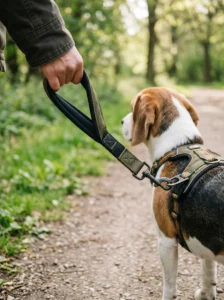
1. Pick the right length. Four to six feet suits most everyday walks. Shorter feels tight, and longer tangles around legs and lampposts.
2. Choose grip over style. A padded or rope handle saves your palms. Thin nylon bites when a dog pulls, and you’ll feel it by day two.
3. Go crossbody, with care. Loop the handle over your head and across your chest. Your hands are free for bags and phone. But skip this with big, strong dogs or known bolters, because a sudden lunge can pull you off your feet.
4. Use the traffic handle. Many leads have a second small loop near the clip. Grab it near roads and crowds for extra control.
5. Test the clip every walk. Squeeze it, tug it, and look for rust or stiffness. A clip that sticks today can fail next month.
6. Keep a spare. One by the door, one in the car, one in your coat. You’ll forget the real one exactly once.
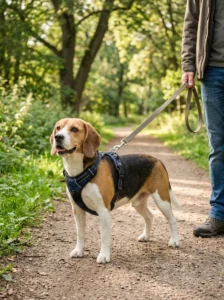
7. Mark the J. A relaxed lead hangs in a loose J shape. Reward your dog with a treat at your hip whenever it does. He’ll start choosing that spot.
8. Be a tree. When the lead goes tight, stop. Stand still until it slackens, then walk on. Slow at first. But it teaches him that pulling gets him nowhere.
9. Clip your bag dispenser to the lead. Never to his collar, where it bangs against his neck.
10. Rinse muddy leads. Hang them to dry fully. Damp rope grows smells, and wet fabric weakens over time. Check the stitching while you’re at it.
11. Go reflective for dark evenings. Reflective thread on the lead helps drivers spot the pair of you.
12. Match the lead to the job. Short for town, longer for quiet, safe, open spaces. A long line gives sniffing freedom, but only where it’s safe and legal.
The Tip That Surprised Me
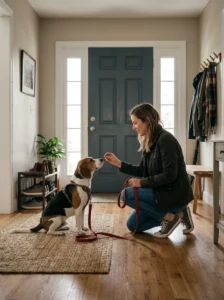
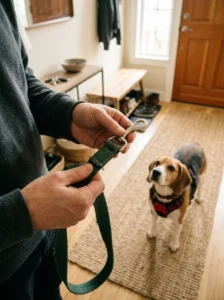
Start the walk before you leave the house. Here’s what I mean. Biscuit used to spin and bark the second I touched the lead. Then a trainer suggested asking for a calm sit before I clipped on and before I opened the door. If he popped up, I waited. Twenty seconds, sometimes more.
Picture a doorway, a patient human, and a dog who finally sits like he means it. Walks started calmer, because the excitement got no reward on the way out. Same dog. Different first minute.
A Real Example From My Neighbor
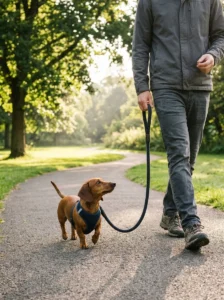
Dana’s dachshund, Mango, tugged so hard that Dana’s shoulder ached by Friday. She changed three things in one week. A padded handle, treats at her hip, and stopping dead whenever the lead tightened. By week two, the lead mostly hung loose. “He didn’t change,” she told me. “I did.”
Mistakes and Warnings Worth Knowing
Never wrap the lead around your hand. If your dog bolts, it can cause a nasty injury. Hold it with a relaxed grip and keep your thumb out of any loops.
Be careful with retractable leads. Thin cords can burn skin, snap, or let a dog dart into a road. Many trainers prefer a fixed lead for everyday walks.
Don’t yank. Jerking can hurt his neck and makes some dogs pull harder. Check that his collar or harness fits well, with two fingers under the strap.
Replace frayed leads. Weak stitching and worn webbing fail at the worst times.
If your dog suddenly refuses to walk, limps, or seems sore, ask your vet before assuming he’s being stubborn.
Quick Questions
Is a harness better than a collar?
Some dogs do better in a harness, especially pullers. Ask your vet or a trainer what suits yours.
How long should walks be?
It depends on age, breed, and health. Short and happy beats long and miserable.
Can I use treats on every walk?
Yes, but keep them small. Treats should stay a small part of his daily food.
Ready to Try These Dog Leash Hacks?
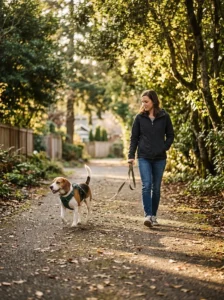
You don’t need all twelve. Pick two or three, maybe the padded handle, the J rule, and the calm sit at the door, and try them this week. These dog leash hacks work best with patience, small treats, and a lead you trust.
Want a pocket-friendly reward for good walking? Have a look at my post on easy homemade dog treats. And tell me: what’s the one thing your dog does the moment he sees a squirrel?