Bringing Bruno home for the first time is still one of the most overwhelming weeks I can remember — in the best way, but overwhelming nonetheless. I had toys, food, a crate, and absolutely no idea what I was actually supposed to be tracking health-wise. I spent a lot of late nights googling things that, looking back, I wish had just been organized into one simple checklist. So that’s what this is.
Something I didn’t expect going into puppyhood: the process of bonding with a new puppy — all that time playing, cuddling, and just being around them — is also exactly what builds the foundation for noticing when something’s off later. Owners who know their puppy’s normal patterns most intimately tend to catch subtle changes earliest, simply because they have such a clear baseline to compare against. That’s part of why this checklist isn’t purely clinical — it’s organized around building that baseline awareness from day one, not just hitting medical milestones. (And, the usual caveat — I’m an experienced owner sharing what worked, not a vet. This organizes what to watch for; it doesn’t replace your puppy’s actual veterinary care.)
Week One: Settling In and That First Vet Visit
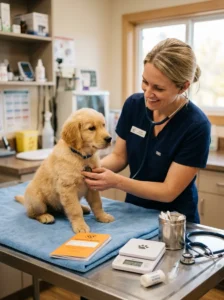
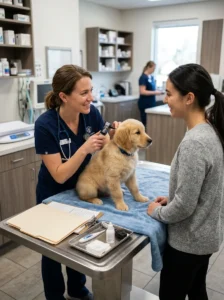
The first week is mostly about adjustment — for your puppy and for you. That said, one health task shouldn’t wait: scheduling a vet visit within the first few days, even if your puppy seems perfectly healthy.
What this first visit typically covers:
⦁ A full physical exam to check for any underlying issues
⦁ Confirming and continuing the vaccination schedule, if it’s already started with a breeder or shelter
⦁ A fecal exam to check for intestinal parasites, extremely common in puppies
⦁ Establishing a baseline weight and discussing feeding amounts
⦁ A chance to ask all the questions you’ve been stockpiling
I brought Bruno in on day three, mostly out of nervous-new-owner energy, and it turned out genuinely useful — our vet caught mild signs of intestinal parasites that were easily treated early, before becoming a bigger digestive issue.
Other week-one priorities: puppy-proofing your home (electrical cords, small objects, toxic plants, accessible trash), establishing a consistent spot for food and water, and starting to track basic patterns — how much they’re eating, drinking, sleeping, and their bathroom habits.
What to Bring to That First Appointment

Looking back, I wish I’d been more prepared for Bruno’s first appointment. Worth bringing or knowing ahead of time: any records from the breeder, shelter, or rescue (including vaccination and deworming history if available); a list of questions, since it’s easy to forget what you wanted to ask once you’re actually there; information about what your puppy has been eating, so your vet can advise on whether to continue or transition; and a small treat or two (check with the front desk on policy) to help create a positive association with the vet’s office from the very first visit.
That last point made a genuine difference for us. Bruno still gets excited rather than anxious about vet visits years later, and I credit at least some of that to making those very first appointments feel as positive as possible.
Week Two: Establishing Routine and Watching for Red Flags

By the second week, most puppies start settling into a more predictable rhythm, which makes it easier to notice if something seems off. Track these basics daily, even informally: appetite, energy level, stool consistency (should be relatively firm, not persistently loose), and urination frequency, which becomes increasingly important as house training begins.
Red flags that warrant a vet call at this stage:
⦁ Persistent vomiting or diarrhea
⦁ Lethargy that doesn’t match normal puppy nap patterns
⦁ Refusing food for more than a single meal
⦁ Visible pain or discomfort
⦁ Coughing, sneezing, or nasal discharge
I started keeping a simple note on my phone tracking Bruno’s meals, naps, and bathroom breaks. It felt slightly excessive at first, but it made it so much easier to notice patterns and answer questions accurately at vet visits, rather than relying on vague memory.
Week Three to Four: Continuing the Vaccination Series
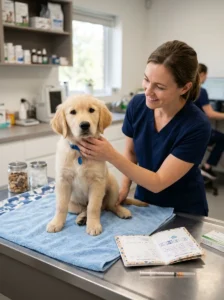
This is typically when the next round of core vaccines happens, continuing the series started in week one. Our complete vaccination schedule guide covers the full timeline, but the key thing during this window is consistency — sticking to the recommended timing rather than delaying appointments, since gaps leave your puppy more vulnerable during an already high-risk window.
Also worth starting around this time: discussing deworming schedules with your vet, since puppies commonly need multiple rounds, not just a single treatment; asking about flea and tick prevention appropriate for your puppy’s age and weight; and beginning very gentle, positive socialization in controlled, low-risk environments, balanced against avoiding high-traffic dog areas until vaccines are further along.
Week Five to Six: Growth, Energy, and Early Development

By this stage, you should have a decent sense of your puppy’s normal energy level, appetite, and habits, making this a good time to start paying closer attention to physical development too.
Things to monitor: steady, appropriate weight gain (your vet can tell you what’s expected for your puppy’s breed and size), coordination and movement (puppies are naturally clumsy, but persistent limping or favoring a limb is worth mentioning), teeth coming in (puppy teething typically starts around this period, and increased chewing is completely normal), and continued consistency in stool and appetite.
This is also roughly when many of the basics of house training and early obedience start clicking, which ties health and behavior together more than people often expect — a puppy who’s uncomfortable or unwell often shows it through behavior changes before anything more obvious.
Week Seven to Eight: Rounding Out Early Care

By the end of the first eight weeks, most puppies are well into their vaccination series, settling into routines, and showing their actual personality more clearly.
Checklist for this stage: confirm the next round of vaccines is scheduled, revisit the deworming schedule with your vet, discuss spay/neuter timing (which varies based on breed, size, and your vet’s recommendations), start thinking about pet insurance if you’re considering it (enrolling earlier often means fewer pre-existing condition exclusions), and continue building your own health log.
Common Puppy Health Issues Worth Knowing the Names Of
Beyond the major concerns like parasites, a few other issues worth knowing about during this window: puppy strangles, a rare but serious skin condition causing swelling and lesions primarily around the face; hypoglycemia, particularly in very small or toy-breed puppies, where low blood sugar can cause weakness, trembling, or lethargy if a puppy goes too long without eating (part of why consistent, frequent small meals matter more for tiny puppies); and umbilical hernias, a small bulge near the belly button that’s relatively common and often resolves on its own, though your vet should evaluate it.
None of these are meant to cause alarm — most puppies never experience any of them — but knowing they exist means you’re less likely to panic over something genuinely benign, and more likely to recognize something that does need an extra call.
A Simple Weekly Health Log Worth Building

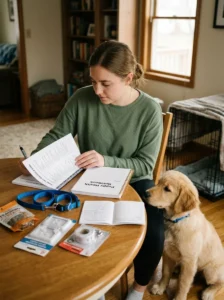
I built a simple version of this for Bruno that I still think is worth recommending to any new puppy owner — date, weight (track at each vet visit, or weekly with a home scale), appetite notes (normal, reduced, increased), energy level, bathroom notes (any changes in frequency or consistency), and anything unusual, even small things, since it’s better to note it and find it irrelevant later than forget something that mattered. This kind of simple tracking became genuinely useful well beyond the first eight weeks — it’s still something I keep up with both Bruno and Mishi today.
It’s worth adding that none of this requires becoming an anxious, hyper-vigilant new owner either. The goal isn’t to scrutinize every detail with worry, but to build familiarity calmly enough that genuine deviations stand out clearly when they happen. Most days, most of what you’re noting will simply confirm that everything is normal, which is itself useful information, not wasted effort.
Mistakes I Made So You Don’t Have To
Skipping the early vet visit because “he seems fine.” Puppies can have underlying issues — like parasites — that aren’t obvious without an actual exam.
Being inconsistent with vaccine timing. I rescheduled one of Bruno’s appointments for convenience early on, not realizing how much the timing actually mattered for closing the immunity gap properly.
Not puppy-proofing thoroughly enough. I genuinely underestimated how much trouble a curious, fast-growing puppy could get into in spaces I thought were already safe.
Assuming all puppy behavior is “just puppy behavior.” Persistent lethargy, repeated vomiting, ongoing diarrhea aren’t typical puppy energy and deserve attention rather than being written off.
Adjusting for Breed and Size

The general timeline here applies broadly, but specifics can vary. Toy and small breeds sometimes have different feeding frequency needs given the hypoglycemia risk mentioned above. Large and giant breed puppies may have different growth-related monitoring needs, particularly around joint development. Asking your vet to flag anything breed-specific during that first visit ensures your checklist is tailored, not just generic.
A few quick answers: expect at least two to three vet visits during the first eight weeks to stay on schedule with vaccines and deworming. Occasional soft stool, especially during food transitions, isn’t unusual, but persistent diarrhea or vomiting should prompt a visit. Gentle, controlled socialization can begin early, generally balanced against avoiding high-risk environments like dog parks until the vaccination series is further along. And consistency — tracking appetite, energy, and bathroom habits regularly — is genuinely the most important thing, since it’s what makes a real change noticeable against normal day-to-day variation.
Looking back at those first eight weeks with Bruno, the biggest shift for me was moving from reactive panic to organized tracking. You don’t need to be a vet to notice patterns — you just need a simple system and the willingness to ask questions, even ones that feel small.
For the next stage of care, our guides on the full vaccination schedule and how often you should visit the vet going forward are good places to continue.