
A close family member dealing with mild dog allergies has made this topic genuinely relevant for our own household gatherings over the years, and researching it properly taught me that the popular concept of “hypoallergenic dogs” is more nuanced, and a bit more limited, than marketing language often suggests.
(I’m an experienced dog owner, not an allergist or veterinarian. If allergies are a significant concern for you or a family member, spending real time around a specific breed (or even a specific individual dog) before committing, and consulting an allergist for personalized guidance, matters more than relying purely on breed reputation.)
What “Hypoallergenic” Actually Means (And Doesn’t)

This is the most important thing to understand before researching specific breeds: no dog breed is completely allergen-free. Dog allergies are typically triggered by proteins found in dander (skin flakes), saliva, and urine — not just loose fur itself, though fur can carry dander and distribute it more widely throughout a home.
“Hypoallergenic” breeds are more accurately described as lower-shedding or lower-dander breeds, which can mean less allergen distributed throughout your home and potentially a milder reaction for some allergy sufferers, but this isn’t a guarantee of zero reaction, since individual allergic sensitivity varies enormously, and the specific proteins triggering one person’s allergy might differ from what’s most relevant for another.
Why Shedding Level Matters for Allergies
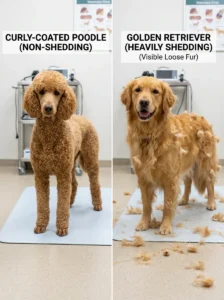
Breeds that shed less tend to redistribute less dander throughout a home, since dander often travels attached to loose fur. This is part of why curly or wire-coated breeds, which tend to retain shed fur within the coat (requiring regular grooming to remove, rather than shedding loosely throughout a home), are commonly recommended for allergy-conscious households, even though the dog is still producing the same underlying allergens.
Poodle (Standard, Miniature, and Toy)
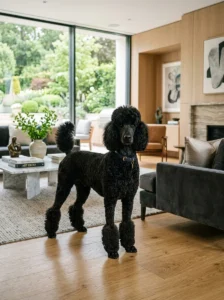
Poodles are among the most consistently recommended breeds for allergy sufferers, given their curly, low-shedding coat that retains loose fur rather than distributing it throughout a home. Our dedicated breed guide covers their temperament and care needs in detail, though it’s worth knowing this breed requires significant regular grooming to manage that same coat characteristic that makes them lower-shedding.
Portuguese Water Dog

Known for a curly, low-shedding coat similar in some respects to the Poodle, Portuguese Water Dogs are another frequently recommended option for allergy-conscious households, combined with an active, intelligent temperament suited to engaged owners.
Bichon Frise

Small, curly-coated, and generally low-shedding, Bichon Frises are commonly recommended for allergy sufferers, though like other curly-coated breeds, they require consistent grooming maintenance to manage their coat properly.
Schnauzer (Miniature, Standard, and Giant)

Schnauzers have a wiry, low-shedding coat that’s often well-tolerated by allergy sufferers, combined with a generally alert, intelligent temperament across the various size varieties of this breed.
Afghan Hound

Despite their long, flowing coat, Afghan Hounds are sometimes cited as relatively allergy-friendly due to lower dander production in some individuals, though their coat does require very significant grooming commitment given its length and texture.
Chinese Crested

This distinctive breed comes in both hairless and “powderpuff” coated varieties, with the hairless variety in particular often well-tolerated by allergy sufferers given minimal hair to distribute dander, though skin care needs are correspondingly more significant given their exposed skin.
Why Individual Dogs Matter More Than Breed Generalizations Here

Given that allergic reactions relate to specific proteins that vary somewhat between individual dogs (not uniformly across an entire breed), spending time with a specific dog you’re considering — ideally over several visits rather than a single brief encounter — gives far more reliable information about your or your family member’s actual reaction than breed reputation alone. Some allergy sufferers find they react differently to individual dogs even within the same generally low-shedding breed.
Practical Steps Beyond Breed Selection

Even with a lower-shedding breed, a few practical habits help manage allergen levels in a home:
Regular grooming and bathing, which helps remove loose dander and fur before it accumulates in your living space, mattering significantly even for naturally low-shedding breeds.
Designating allergy-sensitive areas, like bedrooms, as dog-free zones, which many allergists recommend regardless of breed choice, to maintain at least some allergen-reduced space within the home.
Frequent cleaning, including vacuuming with a HEPA filter and regular washing of bedding and soft furnishings, which helps manage accumulated allergens regardless of breed.
Air purifiers with HEPA filtration, which some allergy sufferers find genuinely helpful for managing airborne allergen levels.
Breeds Generally Not Recommended for Allergy-Sensitive Households

While individual reactions vary, breeds with heavy, double-coated fur that sheds significantly and distributes widely throughout a home — like Huskies, German Shepherds, and Golden Retrievers, despite their wonderful temperaments covered elsewhere on our site — are generally less suited to households with significant allergy concerns, simply due to the volume of loose fur and associated dander they typically produce.
When to Consult an Allergist Before Committing

Given how significant a decision bringing home a new dog represents, and how individually variable allergic reactions can be, consulting an allergist for guidance — including potentially allergy testing specific to dog dander, or supervised exposure to a specific breed or individual dog before committing — is worth the extra step for anyone with a documented, significant dog allergy history, rather than relying purely on breed reputation and hoping for the best.
Understanding Allergen Severity Levels and What They Mean Practically

Allergic reactions to dogs exist on a spectrum, from mild symptoms (occasional sneezing, slight itchiness) to more significant reactions (persistent respiratory symptoms, severe skin reactions). Understanding where your or your family member’s specific sensitivity falls on this spectrum matters for realistic decision-making — someone with very mild sensitivity might do perfectly well with most lower-shedding breeds and good home management practices, while someone with severe, clinically diagnosed dog allergies might need much more cautious consideration, potentially including extended trial periods with a specific dog before committing, or in some cases, reconsidering dog ownership entirely given genuine health risk.
The “Hairless” Breed Category: A Different Approach

Beyond curly or wire-coated breeds, hairless breeds like the Chinese Crested (covered briefly earlier) and the Xoloitzcuintli represent a different approach to lower-allergen ownership, given minimal hair to carry and distribute dander. These breeds require different care considerations given their exposed skin — sun protection, temperature sensitivity, and skin care needs that differ meaningfully from coated breeds, representing genuine tradeoffs worth understanding if you’re specifically drawn to this category for allergy management purposes.
Building a Realistic Trial Period Before Committing

Given how individually variable allergic reactions can be, even with generally allergy-friendly breeds, building in a genuine trial period — extended visits with a specific dog, ideally over multiple occasions and including time in spaces similar to your actual home environment — provides far more reliable information than relying purely on breed reputation. Some breeders and rescue organizations are willing to facilitate this kind of extended exposure specifically for allergy-concerned prospective owners, which is worth asking about directly during your search process.
Comparing Cat and Dog Allergens

It’s worth knowing, particularly for households with mixed pet preferences, that cat and dog allergens are generally different proteins, meaning someone allergic to cats isn’t necessarily allergic to dogs, and vice versa. This distinction matters for honest self-assessment — confirming the specific source of a documented or suspected pet allergy, ideally through allergist testing, provides much more useful information than assuming general “pet allergies” apply equally across different animal species.
Allergy Management Beyond the Dog Itself

Some allergy-conscious households find that managing other environmental allergens alongside their dog-specific strategies provides more comprehensive relief than focusing on dog-related allergens in isolation. Since allergy symptoms can be cumulative — meaning multiple smaller allergen exposures combine to produce more significant symptoms than any single source alone — addressing dust, pollen, and other environmental allergens through general home management can sometimes make dog-related allergen exposure more tolerable than addressing the dog factor alone would achieve.
When Allergy Symptoms Persist Despite Breed Selection and Management

If you’ve chosen a generally lower-shedding breed and implemented the management strategies covered throughout this guide, but symptoms remain genuinely troubling, it’s worth having an honest conversation with an allergist about additional options — this might include allergy immunotherapy (allergy shots) specifically targeting dog allergens, which some individuals pursue specifically to make dog ownership more comfortable long-term, representing a more involved but sometimes genuinely effective option beyond breed selection and home management alone.
A few quick answers: Is there truly a 100% hypoallergenic dog breed — No — all dogs produce some level of allergens through dander, saliva, and urine. Lower-shedding breeds simply tend to distribute less allergen throughout a home, which can mean a milder reaction for some allergy sufferers, but not guaranteed allergen-free coexistence regardless of breed choice or grooming diligence.. Can allergies develop even with a low-shedding breed after years of no reaction — Yes, allergic sensitivity can develop or change over time, even to an animal someone has lived with for years without prior issue, which is part of why ongoing awareness matters even after an initial successful adjustment period.. Do mixed-breed dogs with a Poodle parent (like Goldendoodles or Labradoodles) inherit the low-shedding trait reliably — Not entirely reliably — coat type in mixed breeds can vary even within the same litter, meaning a “doodle” mix doesn’t guarantee the same low-shedding characteristic as a purebred Poodle, which is worth understanding if allergy management is a primary motivation for choosing such a mix.. Should I get a puppy or visit an adult dog to test for allergic reaction — Visiting and spending meaningful time around an adult dog of the breed you’re considering generally gives more reliable information than assumptions based on a puppy, whose coat and dander production may change somewhat as they mature..
Researching this topic for our own family situation taught me to set aside the oversimplified “hypoallergenic” marketing framing in favor of a more nuanced understanding — lower-shedding breeds can genuinely help, but individual reaction testing and realistic expectations matter more than chasing a guarantee that doesn’t actually exist in absolute terms. If allergies are a real consideration for your household, I’d genuinely recommend the extra step of spending real time around a specific dog before making a final decision.
For related guidance, our guides on Poodle breed information and choosing the right breed for your lifestyle are excellent next reads.