Cones are the only way to stop a dog from licking stitches.” That’s what I thought, right up until Hazel’s spay. My spaniel hated the plastic cone so much she walked into every doorframe in the house. My vet suggested a soft recovery suit instead, and it worked for her. A DIY dog surgery recovery suit can be a cheap, comforting option. But it’s not right for every dog or every surgery, so let’s talk about when it is.
Why Try a Suit (and When to Skip It)
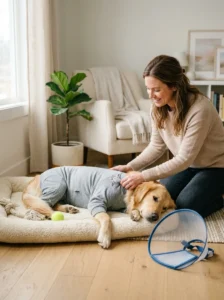
Cones are clumsy. They bang into furniture, make drinking awkward, and some dogs simply refuse to settle in one. A soft suit covers the area without the plastic, and some dogs find it far less stressful.
But ask your vet before you cut anything. Some incisions can be covered safely. Others need air, regular checking, or sit where fabric can’t reach, like the face, ears, and paws. And some dogs will chew through any suit in minutes. Those dogs need the cone, full stop.
So ask three things. Is a suit okay for this surgery? How long should it stay on? How often should I check the site? Some vets happily approve a snug cotton suit. Others don’t. Follow what yours says, because a homemade suit is a comfort tool, not medical care.
Then measure. Chest, neck, and back length from collar to tail base. Aim for snug but not tight, with two fingers sliding under the fabric at the chest. The material should lie flat over the incision without pressing on it.
10 DIY Dog Surgery Recovery Suit Ideas
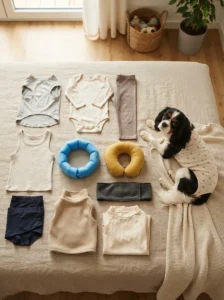
Pick what suits your dog’s size and surgery site, and check it with your vet first.
1. The Old T-Shirt. Soft cotton, free, and already in your drawer. Cut leg holes, slide it on, and knot any extra fabric at the back. Best for small and medium dogs after tummy surgery.
2. The Baby Onesie. Thrifted ones suit toy breeds nicely. The snaps under the belly make toilet breaks easy. Snip a small hole for the tail.
3. The Leggings Tube. Cut a section of stretchy leggings, add leg holes, and you’ve got a close-fitting layer that stays put. Check it isn’t squeezing.
4. The Cotton Tank Top. Light and breathable, so it’s good for warm weather. Skip anything with a hood or ties.
5. The Boxer Briefs Wrap. Cotton briefs with a tail hole can cover rear-end incisions on some dogs. Only if your vet agrees, and watch for bunching.
6. The Pool Noodle Collar. Slice a pool noodle lengthwise, trim it to length, and thread your dog’s collar through it. It’s a soft cone alternative that keeps some dogs from reaching around. Ask your vet whether it blocks enough.
7. The Travel Pillow Collar. A human neck pillow, slipped over the neck and fastened gently behind the collar, makes a squashy barrier. Some dogs find it far less annoying than a cone.
8. The Fleece Belly Band. Cut a strip of fleece, wrap it round the middle, and fasten with hook-and-loop. Easy to adjust as swelling changes. Don’t pull it tight.
9. The Fleece Vest. Warm for small, short-coated dogs in winter. But watch for overheating, and take it off if your dog pants.
10. The Two-Suit System. Make two of whichever you choose. Damp or dirty fabric next to an incision is no good, so keep a clean spare ready.
Safety, Fit, and Real-Life Tips
The Tip That Surprised Me
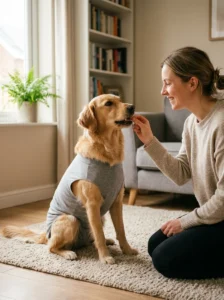
Practice. Seriously. If the surgery is planned, put the suit on for a few minutes in the days before, with treats and a cheerful voice. Hazel froze like a statue the first time. By day three she was wagging in it. A dog who already knows the feeling is calmer when recovery starts.
Here’s how it went for us. Day one was a charity-shop onesie, a tail hole, and a lot of treats. She tried to wriggle out twice, then gave up and napped. We checked her stitches every morning and evening, and swapped to a clean spare each day. Wash suits in fragrance-free detergent and dry them fully.
Warnings That Matter
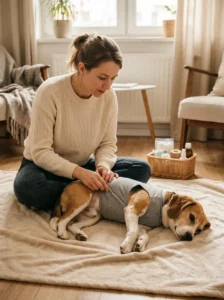
Check the incision at least twice a day, and look under the suit every time. Redness, swelling, discharge, a bad smell, or a gap in the wound? Call your vet straight away. Don’t wait.
Fabric shouldn’t be tight. Watch for fast breathing, scratching, or rubbing. Avoid zips, buttons, and dangling ties, since chewed bits can be swallowed. Keep it dry, too, because damp fabric against a wound isn’t helpful.
And if your dog tugs at it or chews the hem, switch back to the cone. No shame in that. Hazel tugged her hem on day four, my vet said cone for a week, and she was fine.
Can a suit replace the cone for every dog? No. Some dogs reach everywhere or chew through fabric. Your vet decides.
How long does it stay on? Whatever your vet says. Many want the site protected until it’s healed.
Ready to Make a DIY Dog Surgery Recovery Suit?

You don’t need all ten. Ask your vet, pick one that fits your dog, and make a spare. A DIY dog surgery recovery suit should keep your dog comfortable and the incision protected, nothing more. Keep a close eye on the site and follow your vet’s advice.
Want something yummy for when they’re feeling better? Check out my post on soft, easy homemade dog treats. And tell me: did your dog fight the cone, or tolerate it like a champ?