
Bruno has always been a dry kibble dog, perfectly content with the same crunchy food day after day. Mishi, on the other hand, became noticeably pickier about dry food as she’s gotten older, and we eventually started mixing in some wet food to keep her interested and eating consistently. Managing both has given me a pretty practical, real-world perspective on this debate, beyond just the theoretical pros and cons.
(Worth noting upfront: I’m an experienced dog owner, not a veterinarian or nutritionist. This reflects general comparative information — your vet can offer guidance specific to your dog’s health needs, dental considerations, and individual preferences.)
The Core Differences

Dry food (kibble) typically has lower moisture content (around 10%), is more calorie-dense per volume, generally costs less per feeding, and has a longer shelf life once opened, particularly important in a hot climate where food can spoil faster.
Wet food has much higher moisture content (often 70-80%), is generally more palatable to many dogs due to stronger aroma and texture, typically costs more per calorie, and needs refrigeration once opened, with a shorter usable window.
Neither is inherently “better” in an absolute sense — both can provide complete, balanced nutrition when chosen from reputable brands meeting established nutritional standards. The right choice often depends on your specific dog’s needs, preferences, and your own practical circumstances.
Potential Benefits of Dry Food

Convenience and cost. Dry food is generally easier to store, transport, and measure, and tends to be more budget-friendly per calorie compared to wet food.
Dental benefits, to a modest degree. The crunching action of dry kibble can provide some mechanical cleaning benefit for teeth, though this effect is generally modest compared to actual dental care like brushing, covered in our dental care guide.
Longer shelf life. Once opened, dry food typically stays fresh for weeks when stored properly, compared to the much shorter window for opened wet food.
Less mess, generally, compared to wet food, which can be messier to serve and clean up after.
Potential Benefits of Wet Food

Higher moisture content supports hydration, which can be particularly relevant for dogs who don’t drink much water on their own, or during hot weather when extra hydration support is valuable.
Often more palatable, which can make a genuine difference for picky eaters or dogs with reduced appetite, such as some senior dogs or dogs recovering from illness.
Easier to eat for dogs with dental issues. The soft texture can be more comfortable for dogs with missing teeth, dental pain, or other conditions that make chewing dry kibble uncomfortable.
From my experience: This was exactly Mishi’s situation. As her interest in her usual dry food started declining, we discovered that mixing in some wet food brought her appetite right back, and our vet confirmed this wasn’t an unusual pattern for an aging dog whose preferences and comfort with crunchy textures can shift somewhat over time.
Common Misconceptions About Wet vs. Dry Food

“Wet food is always more nutritious.” Not necessarily — nutritional quality depends on the specific formulation and brand, not simply whether the food is wet or dry. Both formats can be high-quality or lower-quality depending on the actual ingredients and formulation.
“Dry food alone causes dental problems if you don’t feed wet food.” This oversimplifies things — dental health depends on much more than food format alone, including genetics, breed, and actual dental care habits like brushing.
“Mixing wet and dry food is always fine.” Generally true, but it’s worth paying attention to total calorie intake when combining formats, since it’s easy to inadvertently overfeed when adding wet food on top of a full dry food portion rather than adjusting the overall amount.
Can You Mix Wet and Dry Food?

Yes, many owners do this successfully, and it can offer a practical middle ground — combining the convenience and dental benefits of dry food with the palatability and hydration benefits of wet food. The key consideration is calculating total calories from both components together, rather than treating them as separate, additive portions without adjustment.
We currently feed Mishi a combination — primarily dry food with a wet food topper — which has worked well for keeping her appetite consistent while still getting the practical benefits of a primarily dry-food-based diet.
Cost Comparison

Dry food is generally more economical per calorie, which matters for larger dogs or multi-dog households where food costs add up significantly. Wet food, while often more expensive, may be worth the cost difference for dogs with specific needs (palatability issues, hydration concerns, dental comfort) where the benefit clearly outweighs the added expense.
Considerations for Specific Situations

Puppies often do well with either format, or a moistened combination, though this is worth discussing with your vet for breed-specific and growth-related recommendations.
Senior dogs, as we’ve experienced with Mishi, sometimes benefit from wet food or a combination, particularly if dental comfort or appetite has become a factor.
Dogs prone to obesity may benefit from the lower calorie density typically found in wet food (due to higher water content), allowing for a larger-feeling portion at the same calorie level, though this should be balanced against overall cost and your vet’s specific recommendations.
Dogs with dental disease often find wet food more comfortable to eat, at least during active treatment or recovery, even if they typically eat dry food normally.
Working or highly active dogs may benefit from the higher calorie density of dry food, making it easier to meet elevated calorie needs without requiring an impractically large volume of food.
Transitioning Between Formats

If you’re switching your dog from one format to another, or introducing a new food alongside their current one, doing so gradually helps avoid digestive upset. Our guide to switching dog food without stomach upset covers the general transition principles, which apply whether you’re switching formats or just switching brands within the same format.
Texture Preferences and Individual Dog Personality

Beyond the practical and health-related considerations, it’s worth acknowledging that some of this really does come down to individual preference, similar to how people have personal food preferences that don’t necessarily map onto objective nutritional reasoning. Bruno has simply never shown much interest in wet food even when we’ve offered it, while Mishi’s preferences have shifted over time. Rather than assuming there’s always a deeper explanation for every food preference, sometimes it’s worth simply respecting that dogs, like people, have individual tastes that don’t need to be overanalyzed, as long as whatever they’re eating provides complete, balanced nutrition.
How Wet Food Affects Stool Consistency and Frequency

Something we noticed once we started incorporating wet food for Mishi: stool volume and consistency shifted somewhat compared to her fully dry-food routine, generally trending toward slightly softer stool given the higher moisture content of her overall diet. This isn’t inherently a problem, but it’s worth knowing about in advance so you’re not alarmed by a textural change that’s simply a normal response to a genuine dietary shift, rather than a sign something is wrong. If stool becomes notably loose or shows other concerning signs beyond a mild textural shift, that’s worth discussing with your vet rather than assuming it’s purely related to the format change.
Considering Your Dog’s Drinking Habits

A practical question worth asking yourself when weighing wet versus dry food: does your dog drink an adequate amount of water on their own? Dogs who are reliably good drinkers may see less marginal hydration benefit from wet food’s higher moisture content compared to dogs who are notoriously poor water-drinkers, for whom the built-in hydration of wet food can make a more meaningful practical difference. Observing your own dog’s typical water intake, rather than assuming every dog benefits equally from wet food’s hydration properties, can help inform whether this particular benefit is especially relevant for your specific situation.
Storage Logistics: A Practical Factor Often Overlooked
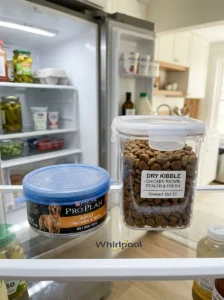
Beyond the nutritional and palatability comparisons, the practical logistics of storage genuinely factor into which format works better for a given household. Dry food’s long shelf life once opened makes it far more forgiving for households with unpredictable schedules, travel, or simply less day-to-day attention to food freshness. Wet food’s shorter window once opened — generally needing refrigeration and use within just a few days — requires more active management, which can be a genuine practical drawback for some households even if the food itself might otherwise be a good fit for a particular dog’s needs. We’ve found that smaller wet food cans or pouches, rather than large containers, help reduce waste and the logistical burden of managing leftover opened wet food, even though this sometimes means a slightly higher cost per total volume.
Combining Formats for Different Meals of the Day

Some owners, rather than mixing wet and dry food within the same meal, choose to offer different formats at different mealtimes — dry food in the morning, for example, and wet food in the evening. This approach can offer similar overall benefits to mixing within a single meal, while potentially simplifying portion calculation slightly, since each meal’s calorie content can be calculated independently rather than needing to account for a blended ratio within a single bowl. This is simply a matter of preference and what feels most manageable for your own routine, rather than one approach being objectively superior to the other.
Quick Reference

On the question of Is one format definitively healthier than the other?: No — both wet and dry food, from reputable brands meeting nutritional standards, can provide complete and balanced nutrition. The better choice depends on your specific dog’s needs, preferences, and your practical circumstances. On the question of Does wet food actually help with hydration in a meaningful way?: Yes, the higher moisture content does contribute to overall daily water intake, which can be a genuine benefit for dogs who don’t drink much water voluntarily or during particularly hot weather. On the question of Is it more expensive to feed wet food exclusively?: Generally yes, wet food tends to cost more per calorie than dry food, which is worth factoring into your decision, especially for larger dogs or multi-dog households. On the question of Can I switch my dog’s format based on the season, like more wet food in summer?: This is a reasonable approach some owners use, particularly for the hydration benefit during hot weather, as long as any transition is done gradually rather than abruptly to avoid digestive upset.
Managing Bruno’s straightforward dry-food preference alongside Mishi’s evolving needs has shown me there’s no single universally “correct” answer here — it really does come down to your specific dog’s preferences, health considerations, and what works practically for your household. If your dog’s needs or preferences seem to be shifting, as Mishi’s did, it’s worth having an open conversation with your vet about whether a change in format might genuinely help.
For more on feeding fundamentals, our guides on how much to feed your dog and reading a dog food label are excellent next reads.