Mishi’s early reaction to grooming — genuine anxiety rather than simple mild resistance — was significantly more challenging than anything Bruno presented, and it took real patience and a more deliberate approach to build the comfort she has with grooming today. This guide covers what actually helped, beyond just generic “be patient” advice.
(I’m an experienced dog owner, not a professional trainer or behaviorist. This reflects what’s worked through real trial and error — for significant, persistent grooming-related fear or aggression, a certified trainer or veterinary behaviorist can offer more specialized, individualized support than general guidance alone.)
Understanding Why Some Dogs Genuinely Struggle With Grooming
Grooming resistance isn’t simple stubbornness — it often stems from genuine fear, past negative experiences (particularly relevant for rescue dogs with unknown history, like Mishi), sensitivity to specific sensations or sounds, or a lack of positive early exposure during the critical socialization window. Understanding this distinction matters for choosing an appropriate, compassionate response rather than treating resistance as defiance to be corrected.
Identifying Your Dog’s Specific Triggers
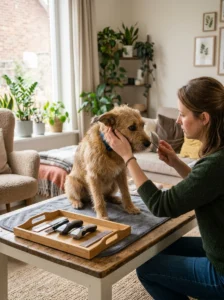
Rather than treating “grooming resistance” as one uniform problem, identifying specific triggers helps target your approach more effectively:
⦁ Is it the tools themselves — the sound of clippers, the sensation of a specific brush type?
⦁ Is it specific body areas — paws, ears, tail, or a particular sensitive spot?
⦁ Is it the overall restraint — being held still, rather than any specific tool or area?
⦁ Is it associated with a specific past experience, if you have any history information about your dog?
With Mishi, we eventually identified that the actual brushing itself wasn’t the primary issue — it was specifically the sensation of being held still for an extended period that triggered her anxiety, which completely changed how we approached building her comfort.
Starting From Wherever Your Dog Currently Is
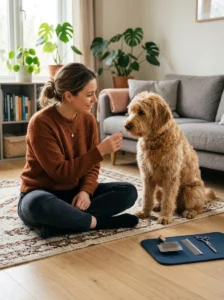
This sounds obvious, but it’s genuinely important: rather than starting with a generic “beginner” grooming approach, start from your specific dog’s actual current comfort level, even if that means starting much more basically than you’d expect to need to.
For Mishi, this meant starting with simply being near grooming tools (not even touching her with them) paired with treats, well before attempting any actual grooming contact.
The Power of Genuinely Short Sessions
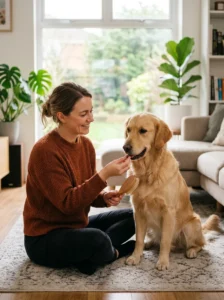
I cannot overstate how much shortening our sessions helped, even when it felt almost absurdly brief — sometimes just a few seconds of actual brush contact before stopping and rewarding, rather than attempting anything resembling a complete grooming session. Gradually, almost imperceptibly slowly, these sessions extended as Mishi’s comfort genuinely grew, rather than us pushing for faster progress than she was ready for.
Counter-Conditioning: Building New Associations
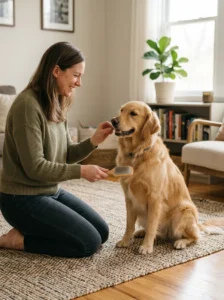
This is the core principle behind successfully working with genuine grooming anxiety — systematically pairing the previously frightening stimulus (a specific tool, a specific handling type) with something genuinely positive, repeatedly, until the association itself shifts.
Practical application:
⦁ Show the tool, give a treat, put the tool away — repeated many times before ever actually using the tool on your dog
⦁ Touch with the tool very briefly (even just resting it against the coat without actual brushing motion), treat immediately, remove
⦁ Gradually increase actual contact duration only as your dog shows genuine comfort with the current stage, not based on an arbitrary timeline
Recognizing Genuine Calm vs. Shutdown
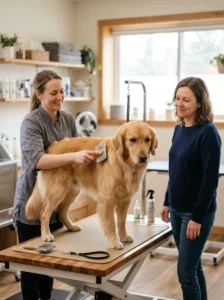
This distinction matters significantly and took me time to learn to recognize accurately. A dog who’s genuinely comfortable shows relaxed body language — soft eyes, loose body posture, willingness to take treats normally. A dog who’s “shutting down” (sometimes called learned helplessness) might appear still and tolerant on the surface, but shows tense body language, reluctance to take treats, or other subtle stress signals — this isn’t genuine progress, even though it might superficially look like cooperation. Learning to recognize this distinction, rather than mistaking shutdown for calm tolerance, matters enormously for genuinely helping a grooming-anxious dog rather than just pushing through their distress.
When to Bring in Professional Support
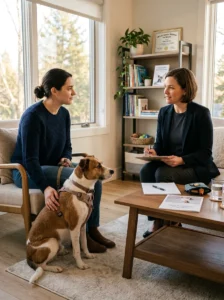
If progress seems genuinely stalled despite consistent, patient effort, or if your dog shows signs of significant fear or any aggressive response during grooming attempts, working with a certified trainer or veterinary behaviorist provides more specialized support than general guidance can offer. This isn’t a failure on your part — some dogs, particularly those with unknown or difficult history, genuinely benefit from more structured, individualized professional guidance.
Considering Professional Groomers for Anxious Dogs
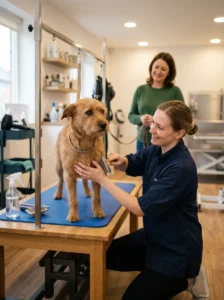
It’s worth knowing that some professional groomers specifically specialize in working with anxious or fearful dogs, using particularly gentle, patient handling techniques. If home grooming progress feels genuinely stuck, working with a groomer experienced in this specific area, alongside your own continued home practice, can provide additional, complementary support.
Medication and Anxiety Management for Severe Cases

For dogs with particularly significant grooming-related anxiety, your vet may discuss whether anti-anxiety medication, used short-term for specific situational triggers, could support the broader behavioral approach during the more intensive desensitization period. This is a conversation worth having directly with your vet for genuinely severe cases, rather than something to pursue independently.
What Success Actually Looked Like for Mishi
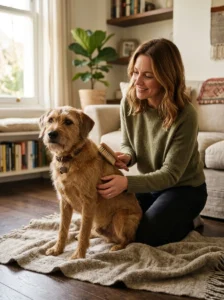
I want to share this honestly, since “success” doesn’t always mean complete transformation: Mishi still isn’t as effortlessly cooperative with grooming as Bruno, and probably never will be, given her individual temperament and history. But she’s gone from genuine panic and resistance to calm, willing participation in regular grooming, which represents enormous, genuine progress even if it’s not identical to a naturally easygoing dog’s experience. Setting realistic expectations about what success looks like for your own specific dog matters for recognizing and appreciating real progress, rather than measuring against an unrealistic standard.
How Mishi’s Background Likely Shaped Her Grooming Anxiety
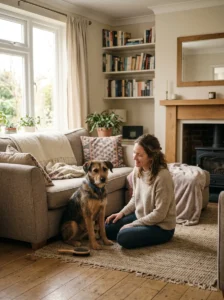
While we don’t know Mishi’s complete history before joining our family, the general pattern of her anxiety — particularly intense around restraint and being held still — fits a common pattern seen in rescue dogs without thorough early positive grooming exposure, or potentially with some negative past experience we’re not aware of. Understanding this likely context, even without complete certainty, helped me approach her resistance with more compassion and patience than I might have if I’d assumed it was simply an arbitrary personality trait unrelated to any genuine underlying cause.
The Role of Trust-Building Beyond Just Grooming Sessions
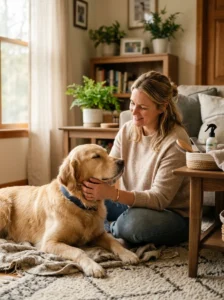
Something that genuinely helped Mishi’s grooming progress was the broader trust we built through consistent, positive interaction outside of grooming specifically — reliable routines, patient training, and generally predictable, gentle handling in all aspects of her care. This broader foundation of trust seemed to genuinely support her grooming-specific progress, suggesting that grooming-specific desensitization work doesn’t happen in isolation from the overall relationship and trust you’re building with your dog more generally.
Recognizing Your Own Frustration and Managing It

I want to address something honestly: working through Mishi’s grooming anxiety was occasionally genuinely frustrating, particularly during stretches where progress felt slow or even like it was regressing. Learning to manage my own frustration — taking a break from a session if I noticed my own patience wearing thin, rather than pushing through irritated, which she would have picked up on — became its own important skill alongside the technical desensitization work itself. Your own emotional state during these sessions genuinely affects your dog’s experience, making self-awareness and self-management a real part of this process, not separate from it.
Adjusting Tools for an Anxious Dog’s Specific Needs

Beyond the desensitization process itself, sometimes the actual tools used need adjustment for an anxious dog. We found that switching to a gentler grooming glove instead of a more intensive brush for Mishi’s initial sessions made a genuine difference, even though it was less efficient than the tools we used with Bruno — prioritizing her comfort and building tolerance over efficiency mattered more in those early stages. As her comfort grew, we were eventually able to transition to more standard, efficient tools without triggering the same anxious response that an earlier introduction would have caused.
Involving Other Household Members Consistently
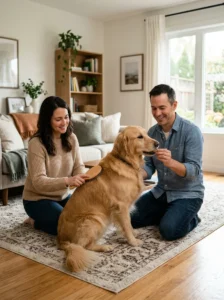
If multiple people in your household handle grooming tasks, maintaining a consistent, equally patient approach across everyone involved matters for an anxious dog specifically. Inconsistency — one household member rushing through a session while another takes a more patient approach — can confuse and potentially set back progress with a dog who’s already navigating genuine anxiety about the process. We made sure everyone in our household understood and committed to the same gradual, patient approach with Mishi specifically, rather than allowing inconsistent handling to undermine the progress we were building.
A few quick answers: How long does it typically take to build comfort with a genuinely anxious dog — This varies enormously by individual dog and the severity of their anxiety, but expect this to be a process measured in months rather than days or weeks for significant cases, requiring genuine patience throughout.. Should I just force grooming through if my dog resists, since it needs to happen anyway — This isn’t recommended — forcing through genuine fear or distress tends to reinforce negative association rather than building comfort, making future sessions harder rather than easier, even though it might accomplish a single grooming task in the moment.. Is it normal for a rescue dog to have more grooming anxiety than a dog raised from puppyhood — This can be more common, particularly if a rescue dog has unknown or difficult history, though it’s not universal — some rescue dogs adapt to grooming without particular difficulty, while some dogs raised from puppyhood still develop grooming-related anxiety for other reasons.. Can grooming anxiety ever fully resolve, or will my dog always need extra patience — This varies by individual dog — some dogs show dramatic improvement approaching what would be considered fully comfortable, while others, like Mishi to some degree, show significant improvement without ever quite reaching the same effortless ease as a naturally easygoing dog, which is still a genuinely positive outcome worth recognizing..
Working through Mishi’s grooming anxiety taught me genuine patience and a much deeper appreciation for how individual a dog’s comfort level and history can be, even within the same household as a much more naturally easygoing dog like Bruno. If you’re navigating similar resistance with your own dog, I’d encourage starting from wherever your dog genuinely is right now, however basic that starting point might seem, rather than comparing to a generic timeline or another dog’s experience.
For related guidance, our guides on the complete grooming guide and dog anxiety more broadly are excellent next reads.