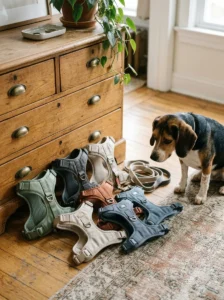
I own five harnesses. Four live in a drawer, and my beagle, Biscuit, wears the fifth. Every one was “the one” in the shop, and every one was wrong in some small, irritating way. Too tight under the legs. Too fiddly to buckle. Too easy to wriggle out of. If you’re about to buy another, these dog harness secrets would have saved me about a hundred dollars.
Why So Many Harnesses End Up in the Drawer
Most of us buy by looks and a size label. But sizing varies wildly between brands, and dogs are built differently even within one breed. A deep-chested whippet and a barrel-chested bulldog can weigh the same and need totally different cuts.
One quick note. If your dog limps, flinches when you put the harness on, or walks differently in it, check with your vet. A harness can’t fix a sore body.
The 12 Dog Harness Secrets
1. Measure, don’t guess. Wrap a soft tape around the widest part of the chest, just behind the front legs, then measure the neck. Write the numbers down and compare them with each brand’s chart.
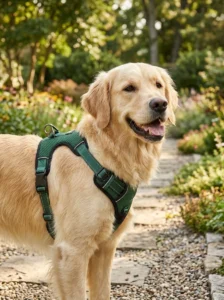
2. Two fingers, not one. You should slide two fingers under every strap. Tighter rubs. Looser lets a dog back out.
3. Check the armpits. Straps sitting right behind the front legs can chafe. Leave a little space, and watch for redness or hair loss there.
4. Front clip or back clip. A back clip is comfy for calm walkers. Some dogs who pull respond better to a front clip, which gives you more steering. Neither is magic. Training still does the heavy lifting.
5. Mind the shoulders. A strap across the front of the shoulders can cramp some dogs’ stride. If the front legs look stiff or short-stepped, try another style.
6. Padding where it counts. Soft lining helps short-coated dogs. But thick padding gets warm in summer, so look for breathable mesh.
7. Test the escape. Pull gently backward on the lead. Can your dog slip out? Escape artists often do better with four adjustment points and a belly strap.
8. Choose a closure you’ll actually use. Step-in styles suit dogs who hate things over their heads. Snap buckles beat fiddly ones in the rain.
9. Go bright or reflective. Dark evenings arrive fast. Reflective stitching helps drivers spot you, and a vivid color helps you spot your dog in long grass.
10. Check the hardware. Look for a metal D-ring and stitched, reinforced straps, with no flimsy plastic where the lead clips on. Tug it hard in the shop.
11. Puppies outgrow them. Buy adjustable and recheck the fit every couple of weeks.
12. Wash it. Mud, drool, and rain build up. Follow the label, dry it fully, and check the stitching while you’re at it.
The Tip That Surprised Me
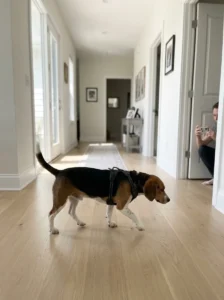
Film your dog walking in it. Sounds silly, but it’s the best fit test I know. Ask a friend to record your dog from the side and the front as he trots up and down the hallway. Then watch it back in slow motion.
I’d have sworn Biscuit’s old harness fit perfectly. The video showed his front legs swinging in short, stiff steps. Picture the relief of spotting that at home instead of after a month of grumpy walks. Never pull the tags off until you’ve done the hallway test.
A Real Example From My Neighbour
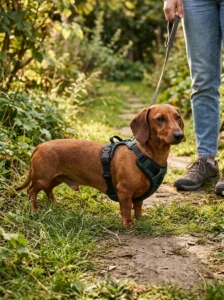
Dana’s dachshund, Mango, slipped out of three harnesses in a row. She was convinced he was a Houdini. Turns out, long-bodied dogs often need a harness with a longer belly strap and an extra adjustment point behind the ribs. She measured again, switched cuts, and he’s stayed put ever since. Same dog. Better fit.
Mistakes and Warnings Worth Knowing
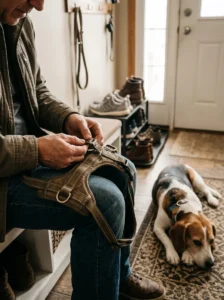
Don’t leave a harness on all day or when your dog is unsupervised. Dogs chew straps, and damp fabric can rub. Take it off after walks and give your dog’s skin a quick check.
If you notice redness, hair loss, scratching, or a dog who suddenly hates being harnessed, stop using it and ask your vet. Don’t push through discomfort.
And don’t buy by weight alone. Always measure.
Finally, a harness isn’t a safety guarantee. Keep an eye on the clips and stitching, and replace anything frayed. A worn strap can snap at the worst possible moment.
Ready to Use These Dog Harness Secrets?
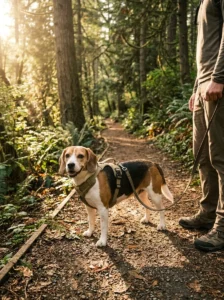
You don’t need to tick off all twelve. Measure your dog tonight, pick two secrets from this list, and try them before your next purchase. These dog harness secrets work best when you test the fit at home and watch how your dog moves. If you’re stuck between sizes, ask your local shop to let you try both.
Want a treat for your patient model? Have a look at my post on easy homemade dog treats. And tell me: how many unused harnesses are lurking in your drawer?