“Homemade is always safer than shop-bought.” I believed that for years, until my vet gently pointed out that a chew I’d proudly baked was too hard for my beagle’s teeth. Biscuit was fine. My confidence wasn’t. Homemade dog chews do give you control over every ingredient, but control only helps if you use it well. So here are eight ideas, plus the rules I follow to keep them safe.
Why “Homemade” Doesn’t Automatically Mean Safe
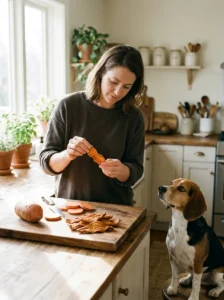
When you make a chew yourself, you know exactly what’s inside. No mystery fillers, no long ingredient lists, no sweeteners you can’t pronounce. That’s a real advantage.
But no chew is risk-free. Any chew can break into pieces, and a hard one can be tough on teeth. Size, texture, and your dog’s chewing style matter as much as the recipe. A gentle nibbler and a power chewer need different things, and a puppy needs different things again.
So start with your own dog. Ask your vet what suits his size, age, and teeth, especially if he has allergies, dental problems, or a sensitive stomach. Then introduce one new chew at a time, and watch how he does.
8 Homemade Dog Chews Worth Making
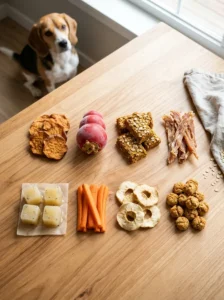
1. Dehydrated sweet potato chews. Slice plain sweet potato about a quarter inch thick and dry it in a low oven, around 250°F (120°C), for two to three hours until chewy, not rock hard. Cool completely.
2. Frozen stuffed rubber toy. Pack a sturdy rubber toy with plain mashed pumpkin or a little plain, unsweetened yogurt, then freeze overnight. Check the label for xylitol.
3. Oat and pumpkin crunch bars. Mix 2 cups oat flour, 1/2 cup plain pumpkin puree (not pie filling), and one egg. Roll thick, cut into bars, and bake at 350°F (175°C) for 25 minutes. Leave them in the cooling oven for crunch, then break any that look too hard.
4. Chicken strips. Slice plain, cooked chicken breast thinly and dry it in a low oven until chewy. Skip salt, oil, and seasoning.
5. Frozen broth cubes. Simmer plain chicken in water with no salt, onion, or garlic, strain out every bone, and freeze the liquid in a tray. A cool lick-and-crunch treat.
6. Frozen carrot sticks. Cut a carrot into a size that suits your dog and freeze it. Many dogs love the crunch. For tiny dogs, thaw slightly first.
7. Dehydrated apple rings. Remove the core and seeds, slice thin, and dry until chewy. Serve a few pieces, since the sugar is concentrated.
8. Egg and oat nibbles. Blend 1 egg, 1 cup oat flour, and a splash of water. Spoon tiny rounds onto parchment and bake until firm. They’re crunchy, small, and easy to portion.
The Tip That Surprised Me
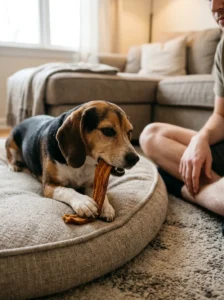
Size matters more than recipe. A chew that’s too small is a swallowing risk, and one that’s too big is hard to manage. A rough guide is to make it bigger than your dog’s muzzle can swallow whole, but check with your vet.
And take it away when it gets small. Picture a happy dog working on a chew for twenty minutes, then a sudden gulp of the last bit. I always pick up the final stub and replace it with a fresh one. Keep treats a small part of daily food, too, since chews add calories.
Safety Rules and Real-Life Questions
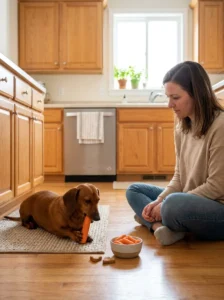
Always supervise. Never leave a dog alone with any chew. Never give cooked bones, which can splinter. Skip anything with onion, garlic, chives, grapes, raisins, chocolate, macadamia nuts, or xylitol.
Avoid rock-hard chews. If a chew is hard enough to hurt your knuckle, it’s too hard for his teeth. Break it, soften it, or skip it. If you ever notice a cracked tooth, bleeding gums, or sudden reluctance to eat, call your vet.
Store them properly. Dehydrated chews keep a week or two in an airtight container. Anything with yogurt, pumpkin, or fresh produce should stay in the fridge or freezer. If it smells off or looks fuzzy, bin it.
My neighbor Dana learned the supervision rule the hard way. Her dachshund, Mango, gulped the end of a carrot stick whole. He was fine, but she’s cut them shorter ever since and watches every chew. “I’d never walked away,” she told me. “I just looked at my phone.”
Are homemade chews really safer?
Not always. You control the ingredients, which helps, but size and hardness are your job too.
Can puppies have them?
Many can, in soft, small versions. Ask your vet first.
How often?
A few times a week for most dogs. Ask your vet what fits his diet.
Ready to Make Homemade Dog Chews?
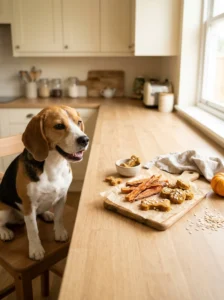
You don’t need all eight. Pick one, maybe the sweet potato or the frozen stuffed toy, and try a small batch this weekend. Homemade dog chews work best when they’re plain, sized for your dog, and supervised. Start gentle, watch how he chews, and adjust.
Want an easy bake to go with them? Have a look at my post on three-ingredient pumpkin dog biscuits. And tell me: is your dog a gentle nibbler or a power chewer?