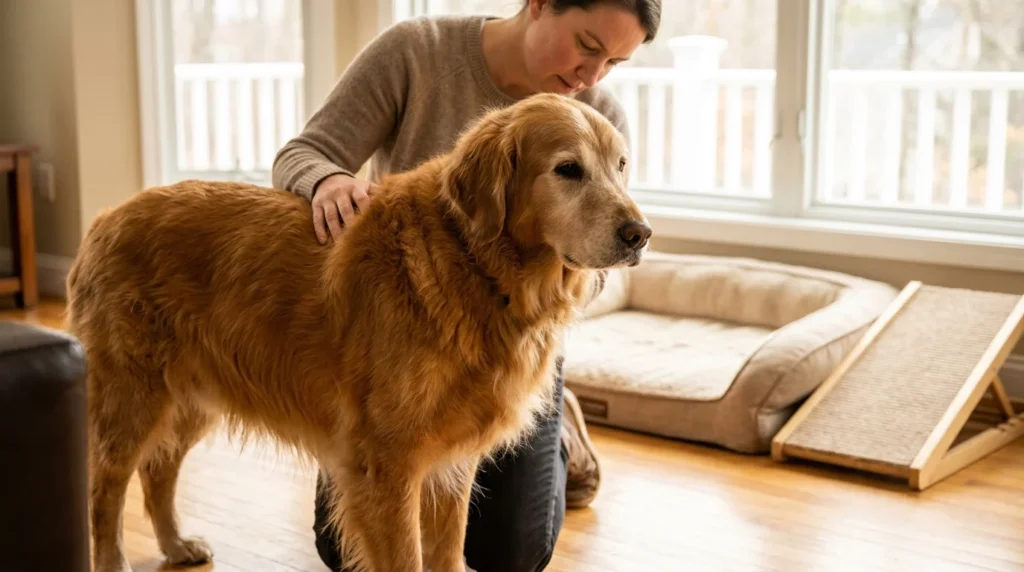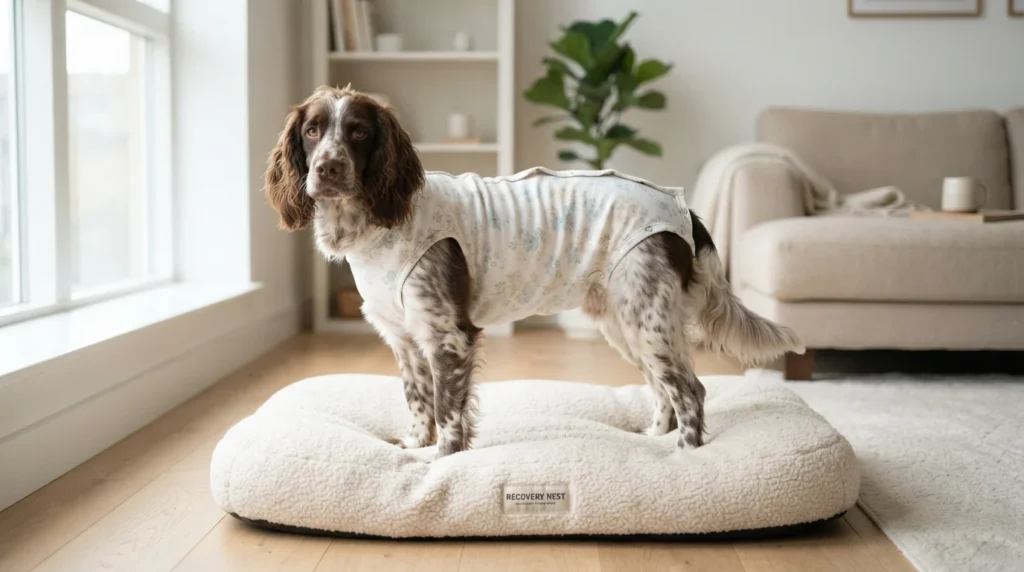
Learning which common cleaning products were actually risky for Bruno and Mishi genuinely surprised me, since several products I’d been using without a second thought turned out to carry real, documented risks for dogs that I’d simply never considered before researching this properly.
(I’m an experienced dog owner, not a toxicologist. This reflects general guidance on commonly recognized risks — if you suspect your dog has ingested or had significant exposure to any cleaning product, contact your vet or animal poison control immediately rather than relying solely on this guide.)
Why Cleaning Product Safety Deserves Real Attention

Dogs interact with your home’s surfaces far more directly than most people initially consider — walking on floors with bare paws then licking them, lying on recently cleaned surfaces, or simply being in a space with airborne residue from certain products. This makes cleaning product choice a genuine, ongoing safety consideration, not just an occasional concern during active cleaning.
Household Chemicals to Avoid or Use With Extreme Caution
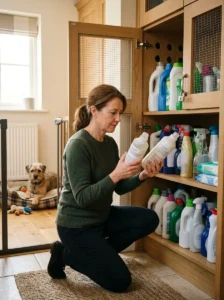
Bleach, even when diluted for cleaning, can cause irritation if a dog walks on a recently cleaned, still-damp surface and then licks their paws, or if they’re exposed to concentrated fumes in a poorly ventilated space.
Ammonia-based cleaners, beyond the general irritation risk, are specifically worth avoiding around any area where a dog might have previously had an accident, since the smell can resemble urine and potentially encourage remarking, covered in our urine stain cleaning guide.
Phenol-based disinfectants, found in some general-purpose cleaners, are specifically known to be toxic to dogs and cats, sometimes even at lower exposure levels than other cleaning chemicals.
Concentrated essential oils, often found in “natural” cleaning products marketed as gentler alternatives, can actually pose genuine risk to dogs despite the natural marketing framing — certain essential oils are toxic to dogs even in relatively small amounts.
Fabric softener sheets and concentrated laundry products, which can cause irritation or more serious issues if a dog chews on or ingests them directly.
What “Pet-Safe” Labeling Actually Means (And Doesn’t)
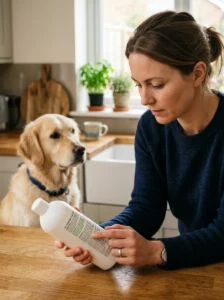
This is worth understanding clearly: “pet-safe” labeling on cleaning products isn’t universally regulated with a single, consistent standard, meaning the term can be used somewhat loosely by different manufacturers. Looking at the actual ingredient list, rather than relying purely on marketing language, gives a more reliable picture of genuine safety than the label claim alone.
Genuinely Safer Cleaning Approaches
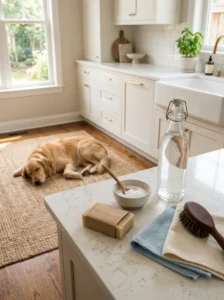
Diluted white vinegar works as a genuinely effective, low-risk cleaner for many surfaces, with minimal toxicity concern compared to many commercial chemical cleaners, though it’s worth noting some dogs are sensitive to the smell, which typically dissipates as it dries.
Baking soda serves as both a mild abrasive cleaner and odor absorber, with very low toxicity risk, making it a versatile, low-risk option for various cleaning tasks.
Castile soap-based cleaners, plant-based and generally gentler than many synthetic detergents, work well for various surfaces with lower toxicity concern.
Products specifically formulated and tested for pet households, from reputable manufacturers who provide genuine ingredient transparency rather than relying purely on marketing language.
Floor Cleaning Specifically
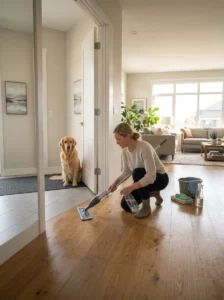
Given how directly dogs interact with floors — walking, lying down, sometimes even licking — floor cleaning products deserve particular attention. Ensuring floors are completely dry before allowing your dog access after cleaning, regardless of which product you use, reduces direct paw and skin contact with any cleaning residue, even with generally lower-risk products.
Laundry Considerations for Pet Bedding and Items
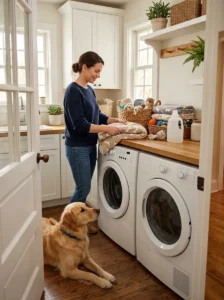
When washing your dog’s bedding, toys, or other items, covered in our household odor guide, using a milder, fragrance-free detergent and ensuring thorough rinsing (avoiding excessive detergent residue) reduces the risk of skin irritation from residual product on items your dog will have direct, prolonged contact with.
Air Fresheners and Plug-In Products

Some air freshener products, particularly certain plug-in or diffuser-style products using concentrated fragrance oils, can cause respiratory irritation in sensitive dogs, or in the case of certain essential oil diffusers, pose more significant toxicity risk depending on the specific oils used. If you use these products, ensuring adequate ventilation and choosing options without known problematic ingredients reduces this risk.
Reading Labels and Researching Before Purchasing
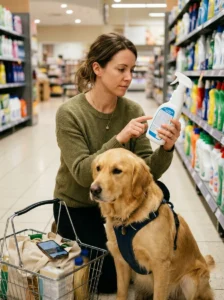
Building the habit of actually checking cleaning product ingredient lists, similar to the food-label-reading habit covered in our dog food label guide, helps you make genuinely informed choices rather than relying purely on marketing claims, whether that’s “pet-safe,” “natural,” or “non-toxic” — terms that don’t always carry the rigorous, consistent meaning consumers might assume.
What to Do If You Suspect Cleaning Product Exposure

If your dog shows signs of irritation — excessive drooling, vomiting, difficulty breathing, or skin irritation — after potential cleaning product exposure, contact your vet or an animal poison control hotline immediately, providing as much detail as possible about the specific product involved.
Building a Genuinely Dog-Safe Cleaning Routine

Beyond product selection alone, a few practical habits support overall safety: keeping your dog in a separate room or area during active cleaning with any chemical products, ensuring adequate ventilation during and after cleaning, allowing appropriate drying time before allowing your dog back into a cleaned space, and storing all cleaning products securely, out of reach, similar to the food-safety storage habits covered in our toxic foods guide.
Cleaning Products and Multi-Pet Households
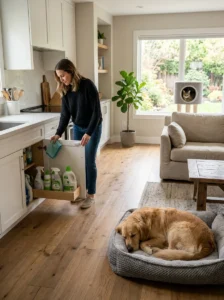
If your household includes both dogs and cats, it’s worth knowing that cats are notably more sensitive to certain chemicals than dogs, including some essential oils and specific compounds found in certain cleaning products. Choosing cleaning products genuinely safe for the most sensitive pet in your household, rather than assuming dog-safe automatically means safe for all pets present, provides a more reliable safety margin in mixed-pet homes.
Outdoor Cleaning Products and Lawn Care Chemicals
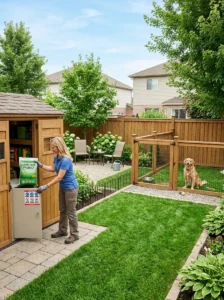
Beyond indoor cleaning products, it’s worth extending this same safety-conscious thinking to outdoor spaces your dog accesses — lawn fertilizers, pesticides, and other yard treatment chemicals can pose genuine risk, sometimes requiring a specific waiting period before pets should access a treated area. If you use lawn care services or products, confirming pet-safety guidelines and appropriate reentry timing protects your dog in outdoor spaces just as the indoor guidance throughout this article protects them inside your home.
Building Cleaning Product Safety Into New Product Evaluation
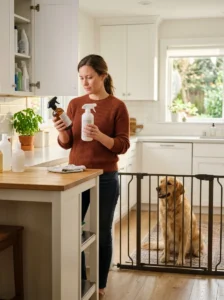
Going forward, I’d encourage building ingredient-checking into your general process whenever considering a new cleaning product, rather than treating this as a one-time research project limited to your current product lineup. As you naturally replace or try new products over time, applying this same evaluative lens consistently ensures your household’s safety standards remain current rather than only reflecting research done at a single point in time.
Dishwasher and Laundry Detergent Pods: A Specific Hazard Worth Naming

These concentrated, often colorful and appealing-looking pods deserve specific mention given their genuine attractiveness to curious dogs and the concentrated chemical exposure they represent if punctured or chewed. Storing these specifically out of reach, in a closed cabinet rather than an open shelf or accessible container, matters given how visually appealing these particular products can be to a dog who might mistake them for a toy.
Pool and Spa Chemicals

If you have a pool or spa, the chemicals used for maintenance — chlorine, pH adjusters, and other pool-specific products — deserve the same careful storage and handling consideration as household cleaning products, given their concentrated nature and potential for serious harm if accessed directly by a curious dog. Secure storage in a dedicated, dog-inaccessible area, separate from general household cleaning supply storage, adds an additional layer of protection given how concentrated these specific products typically are compared to standard household cleaners.
What Genuinely Changed in Our Household After This Research

Looking back at the specific changes we made after researching this topic seriously: we switched our primary all-purpose cleaner to a genuinely gentler, ingredient-transparent option, moved our cleaning supply storage to a cabinet with a child-and-pet-proof latch, and built the habit of keeping both dogs in a separate room during any active cleaning involving stronger products, allowing full drying time before they’re allowed back into the space. None of these changes were dramatic or expensive, but together they’ve given us genuine, ongoing peace of mind about this aspect of household safety.
A Note on Overcorrecting Into Anxiety About Normal Household Products
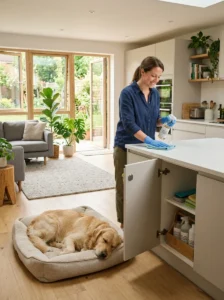
While this guide encourages genuine, informed caution, I want to close by noting that it’s possible to overcorrect into excessive anxiety about every household product, which isn’t a healthy or sustainable goal either. The aim is informed, reasonable precaution — knowing which specific products and ingredients deserve real caution, while not feeling that your entire home has become a minefield requiring constant vigilance. Most everyday cleaning, done with reasonably chosen products and basic common-sense precautions like adequate ventilation and drying time, is genuinely safe for a household with dogs, even without pursuing every single recommendation covered throughout this guide simultaneously.
A few quick answers: Are “natural” cleaning products automatically safer for dogs — Not necessarily — some natural ingredients, particularly certain essential oils, can actually pose genuine risk to dogs despite the natural marketing framing, making ingredient-specific research more reliable than the natural/synthetic distinction alone.. How long should I keep my dog away from a recently cleaned surface — This varies by product, but generally allowing surfaces to fully dry, and following any specific product label guidance on ventilation or contact time, provides a reasonable safety margin before allowing your dog back into the space.. Is it safe to use scented candles around dogs — Generally lower risk than some other fragrance products, though ensuring adequate ventilation and being mindful of any specific sensitivity your dog might show is still worth considering, particularly with heavily scented or specialty candle products.. Can I use the same cleaning products throughout my entire home, or do I need different products for areas my dog frequents most — You can generally use consistent products throughout, provided you’re choosing genuinely lower-risk options as covered in this guide — the key principle is overall product safety, not necessarily varying products by specific room..
Genuinely researching cleaning product safety changed several of our household habits, mostly in small, manageable ways — swapping a couple of products, being more mindful about ventilation and drying time, and reading labels more carefully going forward. If you haven’t reviewed your own household’s cleaning products with this lens before, it’s worth a closer look, since some commonly used products carry risks that aren’t always obvious from general marketing or assumption.
For related guidance, our guides on the complete safe and unsafe foods list and getting rid of dog odor are excellent next reads.